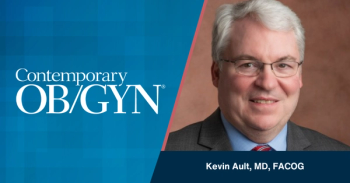
Maternal RSV immunization creates an important opportunity for obstetric and pediatric clinicians to coordinate newborn prevention strategies, according to Kevin Ault, MD.
Ashley Michnick, PharmD, PhD, explained that early findings support RSVpreF pregnancy safety, while emphasizing the need for continued monitoring.
An interim analysis recently published in JAMA found no statistically significant increases in key pregnancy complications among individuals who received the RSVpreF vaccine (Abrysvo; Pfizer) during pregnancy.
Ashley Michnick, PharmD, PhD, research associate, Department of Population Medicine, Harvard Medical School, Boston, Massachusetts, and corresponding author of the research letter, explained the real-world safety outcomes during the first full respiratory syncytial virus (RSV) season after vaccine approval.
The study assessed 54,011 pregnancies across 5 US health plans, of which 10,273 (19.0%) received the RSVpreF vaccine between 32 weeks 0 days and 36 weeks 6 days of gestation, from September 22, 2023, through June 14, 2024. After 1:1 matching, 6857 vaccinated pregnancies were compared with 6857 unvaccinated pregnancies matched on gestational age, calendar quarter, baseline vaccine-seeking behavior, and key clinical factors. Investigators evaluated risk of preterm birth, hypertensive disorders of pregnancy (HDP), premature rupture of membranes (PROM), and preterm PROM.
“From essentially large health plans of primarily commercially insured pregnant individuals in the United States, we matched those who received the RSVpreF vaccination during pregnancy…to those who did not receive that vaccine,” Michnick said. “For none of the outcomes that we were looking at did we find any increased risks.”
After adjustment using Cox proportional hazards models, there were no statistically significant increases in preterm birth, HDP, PROM, or preterm PROM. Mean maternal age at delivery was 33 years, and most pregnancies were among individuals of White or unknown race. The study used robust matching to reduce confounding, including prior hypertensive disorders, immunocompromising conditions, and baseline likelihood of vaccination.
Michnick emphasized that this report represents only an early snapshot.
“This is an interim report of an ongoing cohort study, and even that ongoing cohort study is just one part of a larger safety surveillance framework for this vaccination during pregnancy,” she said. Final results are planned for 2029.
The findings differ slightly from earlier surveillance signals. Prior work and Vaccine Safety Datalink analyses reported small but statistically significant increases in hypertensive disorders of pregnancy (adjusted relative risk, 1.14, and HR, 1.09, respectively), though those studies had less robust control for confounding. In contrast, the current analysis required evidence of vaccine-seeking behavior and used more extensive adjustment strategies.
Michnick noted the importance of real-world data rigor.
“When we use real-world data like we did in this study, there can be differences between patients who chose to be vaccinated and those who didn’t,” she said. “Sometimes these differences have to do with underlying health factors that could actually influence the safety profile of the vaccine. So we were really careful in this study to do our absolute best to measure those potential confounding factors that might have led to a difference between those who had received the vaccine, and those who hadn't, and to make sure to account for those factors before we reported on the safety profile. [This way,] we could do our best to replicate or to imitate what a randomized control trial does, which is ensure that any difference that we're seeing is truly a difference due to the vaccine, as opposed to a difference between the populations who did and did not receive the vaccine.”
She stressed that clinicians should frame these data in the context of RSV risk to infants.
“Practitioners can reassure their patients that we know what people are concerned about, and we’re concerned about it too. We’ve got our eye on the data,” she added. Ongoing analyses will expand to include Medicaid populations and more diverse racial and ethnic groups to better reflect the pregnancy population in the United States.
Reference
Michnick AI, MacDonald SC, Cosgrove A, et al. Interim safety of RSVpreF vaccination during pregnancy. JAMA. Published online January 8, 2026. doi:10.1001/jama.2025.23452