



Imaging
Latest News
Advertisement
Latest Videos



Shorts

0:29
MRI and endometriosis with Hugh Taylor, MD
a month ago
by
Hugh Taylor, MD(+1 more)

1:12
Using Ultrasound AI's FDA-cleared predictive delivery date technology
8 months ago
by
Raquel Dardik, MD(+1 more)

0:22
Importance of annual mammogram for potential cardiovascular disease discovery
8 months ago
by
Sean Raj, MD, MBA

1:26
AI assistance in ultrasound screening for placenta accreta spectrum
8 months ago
by
Alexandra L. Hammerquist, MD(+1 more)

0:38
Difficulties of screening dense breast tissue
a year ago
by
Carrie B. Hruska, PhD

Advertisement
More News
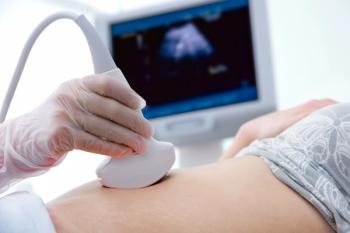
Obstetric ultrasound of pregnancies less than 10 weeks gestational duration is an essential skill for the obstetric provider and has unique considerations.
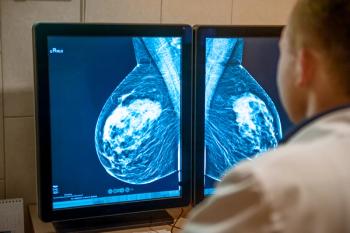
Supplemental molecular breast imaging more than doubled invasive cancer detection rates in women with dense breasts.
The use of dynamic MRI for pelvic organ prolapse is essential for properly counseling patients and interpreting radiographic findings.
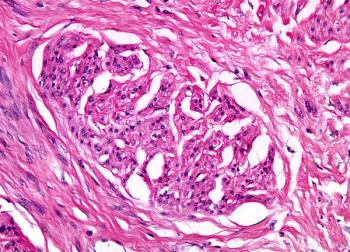
The American College of Obstetricians and Gynecologists (ACOG) recently published an updated committee opinion regarding morcellation of presumed uterine leiomyoma. Here are the key points.

“Opioids affect placental development and function in animal models, but human data on their association with ischemic placental disease are limited,” wrote the authors.
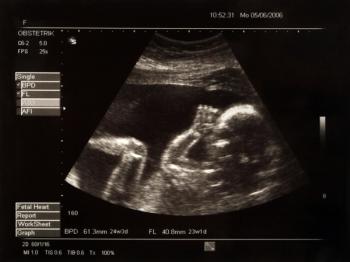
Despite the umbilical artery (UA) Doppler pulsatility index being used to detect elevated fetoplacental vascular resistance, the metric is confounded by variation in fetal cardiac function and is only moderately predictive of placental pathology.
A Chinese study found that low‐dose computed tomography (LDCT) imaging is a viable alternative to standard dual‐energy X‐ray absorptiometry (DXA) scans for the opportunistic screening of osteoporosis.
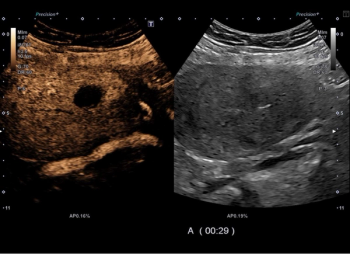
A prospective observational study in the Journal of Ultrasound in Medicine has concluded that for pretreatment evaluation of uterine fibroids (UF), transabdominal contrast-enhanced ultrasound (CEUS) represents a viable alternative to traditional contrast-enhanced magnetic resonance imaging (MRI).
Peer-Reviewed
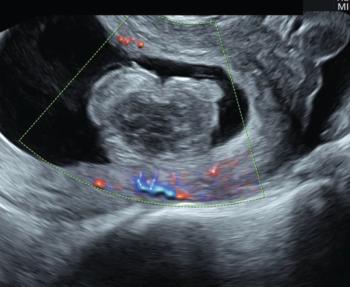
Ultrasound technology can be an indispensable tool for the management of suspected early pregnancy loss.

A new study by French investigators shows that adenomyosis confined to the outer myometrium is associated with primary infertility—but not more diffuse disease.
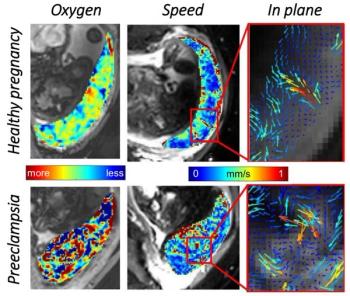
A new study offers important new insights into various placental functions and describes a new physiological phenomenon.
“There is a large osteoporosis treatment gap that has become a global crisis in the care of this disease,” said principal investigator E. Michael Lewiecki, MD."

The diagnostic capability of diffusion-weighted magnetic resonance imaging (DWI) to assess vertebral marrow changes in postmenopausal women with osteoporosis has been confirmed by a prospective study published in La radiologia medica and it may be a safer alternative to DEXA.

A small study using neuroimaging explored a possible association between prenatal exposure to organophosphate pesticides (OPs) and deficits in certain brain functions in adolescents.
New data suggests that while imaging practice patterns have changed over the past 20 years, exposure in pregnancy may vary by a woman’s age and race.
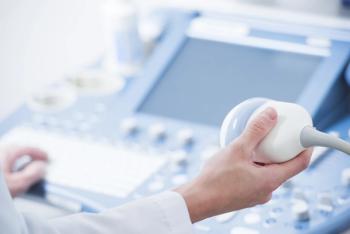
Proper positioning, careful choice of probe, and leveraging of post-processing capabilities all can improve ultrasound quality in this patient population.

The amount of ionizing radiation conferred by an ordinary chest x-ray significantly increases the already high risk of breast cancer in young women with BRCA1/2 germline mutations, according to a recent international retrospective cohort study.
Advertisement
Advertisement
Trending on Contemporary OB/GYN
1
Neurokinin receptor antagonists improve menopausal sleep disturbance
2
TMS 2026: HSDD biopsychosocial approach, night sweats red flags, misread WHI data
3
Brain fog at menopause: Separating normal change from dementia
4
Stephanie Faubion, MD, on the first menopause therapy discussion
5