HPV vaccination before pregnancy was linked to lower odds of preterm birth in a Swedish study of 624,713 births.
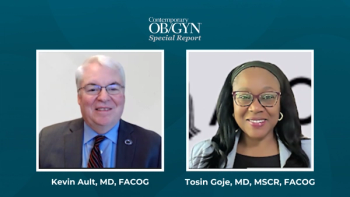
Kevin Ault, MD, FACOG, explains ACOG's extension of the maternal RSV vaccine window to March 1 and the role of passive immunity in protecting newborns.
ACOG's updated 2026-27 respiratory virus immunization guidance extends the maternal RSV vaccine window and reinforces the role of passive immunity in protecting newborns, according to Kevin Ault, MD, FACOG, co-author of the clinical guidance and lead author of its influenza recommendations.
As detailed in
Ault said the extension is designed to add flexibility for a later-peaking season.
“For ob-gyns who are prescribing, as well as midwives and family doctors who are prescribing the maternal RSV vaccine, we've extended the recommendation for another month, to the first of March,” he said, noting that during last year's season, “in January, rates were still peaking. We had a little bit of a later RSV season.” The practical result, he added, is that “you're going to still be vaccinating people in February.”
Ault emphasized that the benefit of maternal vaccination operates through antibody transfer.
“The mother is making antibodies. Those antibodies cross the placenta and get into fetal circulation, so the newborn is born with a complement of antibodies to protect them against RSV and flu and COVID and pertussis, or whooping cough,” he said. All vaccines in the 2026-27 recommendations, he noted, are aimed at protecting newborns from respiratory infections during their most vulnerable early months.
Per the guidance, maternal RSV vaccination reduced the risk of infant hospitalization by 51% to 70%, while the monoclonal antibody nirsevimab reduced RSV-related hospitalization by 63.6% to 93% within the first RSV season. If the vaccine is not given during pregnancy, infants should receive clesrovimab or nirsevimab at birth.
Ault said accumulating real-world evidence continues to mirror the phase 3 trials.
“Nearly every week, it seems like there's a new safety study or a new effectiveness study coming out about the things we have in our toolbox as far as the monoclonal antibodies or maternal immunization. They really match what we saw in the phase 3 clinical trials,” he said.
“Tens of thousands of infants are being hospitalized every year in the United States because of RSV, and we're making a dent in that,” Ault said, an observation consistent with the guidance's note that as many as 80,000 children under age 5 are hospitalized for RSV annually, with the highest rates among infants 6 months and younger.
Reference: