Get caught up with Contemporary OB/GYN! This list helps you navigate our top stories from the week, all in one place.
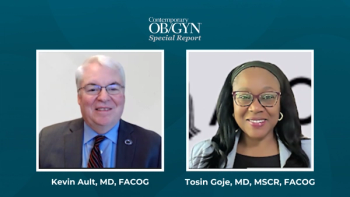
Kevin Ault, MD, FACOG, explains that maternal COVID-19 and influenza vaccination protects newborns and reduces severe maternal illness, stillbirth, and prematurity.
Maternal COVID-19 and influenza vaccination protects not only newborns but also pregnant patients themselves, reducing risks of severe maternal illness, stillbirth, and prematurity, according to Kevin Ault, MD, FACOG, co-author of ACOG's 2026-27 respiratory virus immunization guidance. The discussion continues Ault's remarks on the updated recommendations, detailed in
Ault emphasized that newborns face a level of respiratory risk comparable to older adults.
“One of the things that providers and patients don't realize is that newborns get hospitalized at the same rate as 65-year-olds. It's the classic U-shaped curve. The most people at risk for these respiratory infections are the youngest and the oldest,” he said.
Ault distinguished COVID-19 and influenza from RSV by their capacity to cause severe illness in the mother.
“COVID and influenza are a little different, though, because they cause severe maternal illness. A few years ago, we saw hundreds of deaths during the worst part of the COVID pandemic. We saw dozens of deaths from the 2009 flu pandemic,” he said, noting that vaccination prevents maternal hospitalizations, intensive care unit stays, and emergency department visits.
That protection is reflected in the guidance data. Per the guidance, maternal COVID-19 vaccination lowered the risk of emergency department and urgent care visits for pregnant women by 58%, and extended protection to infants, with vaccine effectiveness of 50% to 54% against COVID-related hospital contacts in the first 2 months of life regardless of trimester of administration. Despite this, only 11.1% of pregnant women received a COVID-19 vaccine during the 2025-26 season, down 25.7% from the prior year.
Ault pointed to accumulating data linking vaccination to reductions in stillbirth and preterm birth.
“There's also a fair amount of data, both about COVID and influenza, and some of it's been published very recently, about preventing stillbirth and prematurity,” he said.
He described a direct mechanism for COVID-related stillbirth.
“Stillbirth as a consequence of COVID makes perfect sense because the COVID virus, the SARS-CoV-2 virus, actually infects the placenta. So there's a direct mechanism of placental damage that leads to stillbirth,” Ault said.
Prematurity, he explained, often stems from deteriorating maternal health. “Obstetricians get in there and do iatrogenic preterm births because of deteriorating maternal status, and there are probably some other mechanisms as well,” he said, concluding that both vaccines offer “definite benefits to the pregnancy, to the newborn, and to maternal health.”
Per the guidance, ACOG's strong COVID-19 recommendation is based on more than 5 years of research and millions of administered doses, with no increased risk of miscarriage, stillbirth, preterm birth, small-for-gestational-age birth, or birth defects identified.
Reference: