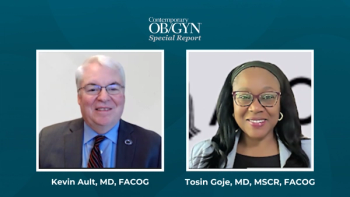
Experts address COVID-19 vaccine myths, safety evidence, and how to frame the benefits of vaccination in pregnancy.
Research indicates that LMWH prophylaxis effectively mitigates the high risk of pregnancy loss and reduced natural fecundity associated with protein S deficiency.
A retrospective case-control study conducted at Peking University People's Hospital found that the administration of low-molecular-weight heparin (LMWH) could significantly improve pregnancy outcomes and live birth rates in women with protein S (PS) deficiency. The research, published in MedScience, indicates that this form of hereditary thrombophilia is closely associated with an elevated incidence of pregnancy loss and impediments to spontaneous conception.1,2
Despite established risks, international guidelines lack consensus on thromboprophylaxis for PS deficiency during pregnancy, with recommendations varying from routine prophylaxis to surveillance-only approaches.²
The study, conducted between November 2012 and May 2024, analyzed 35 pregnant women with PS activity levels indicative of suspected deficiency. Researchers compared 20 women who received LMWH prophylaxis with 15 who received standard care without anticoagulation, alongside a control group of 70 healthy pregnant women.1,2
Specific diagnostic criteria for suspected PS deficiency included activity levels below 55% in the non-pregnant state, below 30% in the second trimester, or below 24% during the third trimester period.² Investigators observed that 2 or more consecutive miscarriages were significantly more frequent in the PS deficiency group compared to the control group (12/35 vs. 4/70, P = 0.0001).¹
“Ten pregnant women with PS deficiency conceived by in vitro fertilization-embryo transfer (IVF-ET), which was significantly higher than the number of controls who conceived by IVF-ET (4/70, P = 0.0012),” wrote the study investigators.
The primary focus of the analysis was the impact of LMWH on live birth rates among the 35 women with PS deficiency.¹ Within the LMWH-treated group, there was a higher maternal age and a greater utilization of aspirin combination therapy, reflecting a clinician preference for "more aggressive management in perceived higher-risk patients."²
The results showed a dramatic difference in outcomes1:
In a subgroup analysis of women aged older than 32 years, the benefits were clearly observed, with LMWH achieving 100% live birth rates versus 33.3% in untreated patients. Multivariable logistic regression, adjusting for factors such as maternal age, VTE risk score, and IVF conception, yielded an adjusted odds ratio of 31.10 for live birth with LMWH treatment.²
Regarding safety, no hemorrhagic complications or heparin-induced thrombocytopenia occurred in the LMWH-treated group, supporting the safety profile of prophylactic anticoagulation in this population.² Additionally, neonatal outcomes, including birth weight, Apgar scores, and congenital anomalies, showed no significant differences between the treated and untreated groups.²
While secondary outcomes such as VTE, preeclampsia, and fetal growth restriction occurred too infrequently to permit meaningful statistical comparison, the study authors concluded that the "elevated live birth rate might be attributable to the administration of LMWH during gestation."¹
The study provides preliminary evidence that LMWH prophylaxis may significantly improve live birth rates in pregnant women with suspected PS deficiency, particularly among older patients.²,² However, the authors acknowledged significant limitations, including the retrospective design, small sample size, and the lack of PROS1 genetic testing for most participants due to cost considerations.²
Overall, results support the consideration of LMWH prophylaxis for pregnant women with significant PS deficiency, especially those with additional risk factors like advanced maternal age. Future research areas include prospective randomized trials, investigation into optimal timing of prophylaxis, and the evaluation of whether combination therapy with aspirin provides incremental benefit over LMWH monotherapy.1,2
References: