
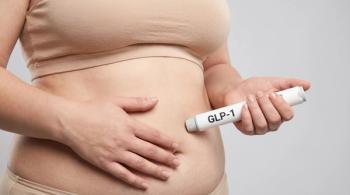
ACOG advises against GLP-1 receptor agonists in pregnancy and recommends considering discontinuation 1 to 2 months before conception.
Among pregnant patients receiving methadone or buprenorphine for opioid use disorder, neither the maternal dose nor drug levels measured in umbilical cord tissue tracked with how severe neonatal opioid withdrawal syndrome (NOWS) became, according to a research letter in JAMA Network Open. Based on those results, the investigators cautioned against lowering medication for opioid use disorder (MOUD) doses during pregnancy as a way to protect newborns from severe withdrawal.
Newborns exposed to methadone tend to experience NOWS more often and more severely than those exposed to buprenorphine, but the reasons are poorly understood. Earlier work examining cord blood and tissue produced conflicting results, in part because of small cohorts. The research team focused on umbilical cord tissue, which captures drug exposure accumulated across the third trimester and is less variable than serum or urine testing.
Data came from a prospective cohort spanning multiple sites, with enrollment from July 2016 to December 2025. To be included, patients had to have been on methadone or buprenorphine without interruption for 30 days or more before giving birth, deliver at or beyond 34 weeks’ gestation, and have cord tissue collected at birth. A certified laboratory used mass spectrometry to measure each medication along with its main metabolite: 2-ethylidene-1,5-dimethyl-3,3-diphenylpyrrolidine (EDDP) for methadone and norbuprenorphine for buprenorphine.
Each site evaluated newborns with its own protocol, using either modified Finnegan scoring or the Eat-Sleep-Console method. Infants were classified as having severe NOWS if they needed pharmacologic treatment, had elevated Finnegan scores, or did not meet Eat-Sleep-Console criteria.
The 92 pregnancies in the analysis produced 94 neonates, and mothers had a median (IQR) age of 31.0 (27.0-35.0) years. The group included 12 Black (13.0%), 5 Hispanic (5.4%), and 81 White (88.0%) participants; most had public insurance, and smoking during pregnancy was common. Of the neonates, 53 had methadone exposure and 40 had buprenorphine exposure.
Overall, 41 neonates (43.6%) developed severe NOWS. The rate was higher with methadone than with buprenorphine (33 neonates [55.6%] vs 11 neonates [27.5%]; P = .01), and the gap persisted after the investigators accounted for gestational age, maternal smoking, and study site (adjusted odds ratio, 3.42; 95% CI, 1.17-9.96, P = .02).
Higher maternal methadone doses corresponded with higher cord concentrations of both methadone (ρ = 0.64; P < .001) and EDDP (ρ = 0.45; P = .002). No significant relationship emerged between maternal buprenorphine dose and cord levels of buprenorphine or norbuprenorphine.
Those cord concentrations, however, were similar in neonates with and without severe NOWS. Maternal dosing followed the same pattern for both medications (methadone: median [IQR], 127.5 [71.3-170.0] vs 120 [85.0-137.5] mg; P = .25; buprenorphine: median [IQR], 16.0 [8.0-20.0] vs 16.0 [12.0-20.0] mg; P = .82). Peak Finnegan scores showed no correlation with either maternal dose or cord drug levels (methadone: ρ = 0.10; P = .50; buprenorphine: ρ < 0.01; P = .10). Results held when the definition of severe NOWS was limited to the 22 infants who received pharmacologic treatment.
The authors acknowledged that the cohort was too small to support causal analyses of why patients received one medication over the other, a choice that often hinges on maternal clinical stability. Racial and ethnic diversity was limited, and NOWS evaluation differed by site, although results were similar across definitions.
According to the authors, “Although methadone exposure carried higher overall NOWS risk than buprenorphine, withdrawal severity within each group was not explained by maternal dose or fetal drug levels; this suggests differences between medications may reflect pharmacologic properties, placental transport, or fetal adaptation rather than absolute exposure alone.”
Rather than lowering doses, the investigators recommended continuing to tailor MOUD dosing to each patient’s clinical stability, with the goal of reducing the risk of relapse and overdose.
Reference:
Townsel C, Turner M, Biroon F, et al. Umbilical cord methadone and buprenorphine levels and neonatal opioid withdrawal severity. JAMA Netw Open. 2026;9(10):e2641876. doi:10.1001/jamanetworkopen.2026.41876