
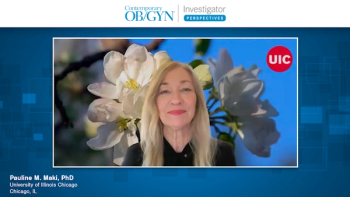
Pauline M. Maki, PhD, explains that OPTION-VMS provided reassuring news about the safety of fezolinetant (Veozah): No new or emerging adverse events were evident in the real-world study.
Pauline M. Maki, PhD, explains that OPTION-VMS provided reassuring news about the safety of fezolinetant (Veozah): No new or emerging adverse events were evident in the real-world study.

Menopausal brain fog is common, and hormone therapy has neutral cognitive effects, according to Pauline M. Maki, PhD.
Pauline M. Maki, PhD, explains the difference between measuring sleep objectively with actigraphy and asking women to rate their sleep on a questionnaire.
Pauline M. Maki, PhD, reviews early OPTION-VMS findings showing improvements in hot flash bother, work productivity, depression, and anxiety with fezolinetant (Veozah).
Pauline M. Maki, PhD, introduces OPTION-VMS and explains why real-world data are needed to test whether randomized trial findings for nonhormonal VMS therapy generalize to everyday patients.

Because only one third of nocturnal wakefulness during the menopausal transition is directly linked to hot flashes, VMS-targeted therapies alone are insufficient for many women with sleep disruption—and cognitive behavioral therapy for insomnia, supported by sleep society guidelines and accessible through free digital platforms, should be part of every clinician's sleep management toolkit, according to Pauline M. Maki, PhD.

SWAN data from 2066 women demonstrate that sleep disturbance has a greater independent effect on health-related quality of life than VMS alone, with the combination of both symptoms producing the most pronounced impact on physical functioning and energy—findings that support prioritizing sleep as a treatment target alongside vasomotor symptoms in menopausal care, according to Pauline M. Maki, PhD.
