
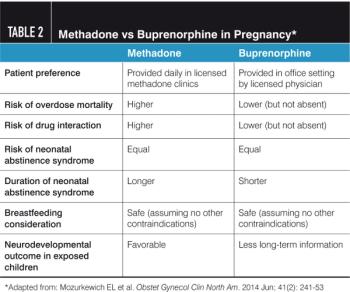
Both treatmetn methods require careful considerations when determining how to care for pregnant patients with OUD.
Both treatmetn methods require careful considerations when determining how to care for pregnant patients with OUD.

Although there are numerous benefits to telehealth, there are also many things to consider when beginning or expanding a telehealth program or clinic, including for obstetrics and/or gynecology.

Emergent treatment of severe acute-onset persistent hypertension constitutes an important component of high-quality obstetric care.

A new study examines whether reproductive hormones influence immune response to influenza vaccination.

Even after diagnosis, female patients with bladder cancer continue to suffer worse outcomes than males following definitive treatment.

Environmental health occupies a unique place in perinatal and reproductive health counseling

To improve health outcomes, today’s physicians must be able to communicate effectively with their patients. One approach many experts encourage physicians to use is motivational interviewing (MI), a series of techniques to get at the root of patient concerns and help encourage them to make healthy behavior changes.

A new analysis tested the hypothesis that maternal anthropometric characteristics were associated with increased risk of subsequent childhood cancer development.

Insulin or an oral antihyperglycemic agent? Get the expert information you need to make the correct call.

When selecting candidates for office hysteroscopy, individual patient self-assessment of pain tolerance and anxiety can help determine who would benefit most from an office-based procedure

For ob/gyns who are seeking concrete steps to incorporate the newest evidence into practice, refer to these easy steps.

As more patients turn to ob/gyns for wellness exams, physicians need to stay up-to-date on current recommendations.

New research examines whether postpartum echocardiography could play a role in CVD detection for women with a history of preeclampsia.

A recent model challenges the rationale of limiting oral contraceptive dispensing as a means to control costs.

Most vitamins and supplements do very little towards improving heart health, but a recent report identified two supplements and one dietary measure that may be beneficial.

Although breastfeeding has long been hypothesized to worsen postpartum cardiomyopathy, a new prospective study challenges the connection.

Ob/gyns must be aware of the different treatment recommendations for various scenarios pre- and post-delivery.

The USPSTF recommends diabetes screening as part of a cardiovascular risk assessment in asymptomatic adults who are overweight or obese and aged between 40 and 70.

Pain relief can be life changing for patients with chronic pain, but ob/gyns need to be mindful of how to prescribe medication properly.

A recent meta-analysis found that women with endometriosis have an increased risk of nearly 40% for certain types of cancers.

A recently published Chinese study is the first of its kind to summarize all evidence on endometrial risk associated with exposure to EDCs.

While the combination drug should only be used as a last resort, ob/gyns still need to be aware of its potential risk for pregnant and lactating patients.

The FDA suggests that American women are not eating enough fish, though consumers still need to be mindful of which fish to avoid.

Although PFMT has been primarily evaluated for urinary incontinence, new research suggests it may also have benefits for women who report painful sex.

Ob/gyns treating patients with epilepsy should be aware of their higher risk for sexual dysfunction while also recognizing that the cause may be multifactorial.

The World Health Organization (WHO) has released two Zika virus (ZIKV)-related updates, one on epidemiology and the other with information for travelers.

A recent study examined whether using an expanded definition for hypertension would result in better identification of women at risk for gestational hypertension.

When a patient is interested in having the device removed, her physician needs to examine several factors before deciding on a surgical approach.

The sheer number of code options can be intimidating, but mastering a few concepts can alleviate some of the stress.

New research indicates that while combined oral contraceptives can be used to reduce heavy menstrual bleeding, evidence points to other contraceptive options as being even more effective.