

The letter from the federal agency allows further phase 2 development for refisolone under an investigational new drug application.
The letter from the federal agency allows further phase 2 development for refisolone under an investigational new drug application.

Ramu Perni highlights how the "one tube" workflow streamlines obstetric practices by enabling add-on RBC and platelet antigen tests.

Off-label use of HSDD medications in postmenopausal women is common, highlighting unmet treatment needs and a gap between patient search behavior and clinical terminology.

The incidence of SUI at 6 weeks post partum was 8.7% for the PEFLOW group compared to 13.9% for those receiving usual care (P = .03).

Investigators developed an automated method to categorize maternal morbidity, finding that infection and hypertension account for nearly 45% of nontransfusion-related complications.

ACOG now recommends a combination of transvaginal ultrasonography and endometrial tissue sampling for the initial evaluation of most patients presenting with postmenopausal bleeding.
According to ACOG, approximately 90% of patients diagnosed with endometrial cancer have postmenopausal bleeding. Read more on the College's updated recommendations below.

Institutions can meaningfully reduce racial disparities in urine toxicology testing at delivery by eliminating universal testing and adopting any standardized criteria-based screening protocol—provided the criteria are grounded in clinical evidence rather than demographic variables that function as proxies for race.

Conditions like chorioamnionitis change the pH of the surgical environment, which can prevent local anesthetics from working optimally, according to Beth Ann Clayton.

New research indicates significant disparities in immediate STI antibiotic administration in emergency departments based on pregnancy status.

Moving LiSWT into formal postpartum care guidelines will require randomized controlled trials with adequate sample sizes, defined treatment parameters, long-term follow-up, and dedicated safety data in lactating patients, with cost-effectiveness analysis also identified as a priority research direction.

Scott Sullivan, MD, describes a new strategy of training ER staff in hospitals without OB services to manage "drop-in" obstetric emergencies through simulation and remote support.

According to Amy Sarma, MD, moving beyond episodic office visits to multimodality care strategies is essential for reducing adverse cardiovascular outcomes in high-risk patients.
Scott Sullivan, MD, highlights that a third of Virginia is a maternity desert, creating even more severe gaps for patients requiring maternal-fetal medicine.

Routine ultrasound screening at 35 to 37 weeks demonstrates limited accuracy for large-for-gestational age according to new data published in AJOG.

"Given the upper limits of the CI, a relatively higher risk of more than 12% for autism is unlikely to be associated with acetaminophen exposure," the study authors noted.

"These recommendations underscore the important and nuanced role of BMI in women’s health," write the authors.

MMRC data highlight that preventing pregnancy-related infection deaths requires multilevel interventions spanning patient education, provider training, and system readiness, with the AIM obstetric sepsis bundle representing a practical framework while broader outcomes evidence remains limited.

Get caught up with Contemporary OB/GYN! This list helps you navigate our top stories from the week, all in one place.

Investigators behind a national EHR study of perinatal GLP-1 RA prescribing acknowledge that the data cannot distinguish inadvertent early-pregnancy exposure from planned preconception discontinuation, and call for deeper, outcomes-focused research to build on the prescribing trends they identified.

While mortality declined by 9.8% in non-ban states, states with abortion bans saw much smaller declines and descriptive increases among non-Hispanic Black and Asian individuals.

New data from JAMA Cardiology indicates that 17.8% of women developed hypertension within 7 years of their first pregnancy, influenced by genetics, BMI, and HDP history.


Natalia C. Llarena, MD, FACOG, highlights the importance of clinical diagnosis and earlier symptom recognition for endometriosis to help patients find relief faster.

The FDA cleared the Onclarity HPV Self-Collection Kit, allowing patients to collect samples at home for processing via the FDA-cleared BD Onclarity HPV Assay and BD COR System.
LiSWT may offer a noninvasive option for postpartum pelvic pain, with potential benefits across both chronic and earlier-stage scar-related dysfunction.

A randomized controlled trial among sexually active premenopausal women found that anterior wall PRP injections vs control led to greater improvement in sexual function.

The Ringza slow-release vaginal ring has launched in Canada and is designed to be re-used for up to 1 year.
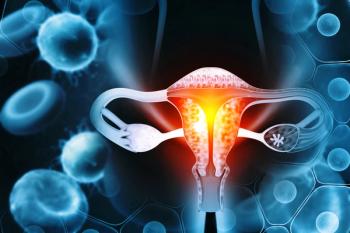
PinkDx announced an IJGC publication of data that demonstrated signals associated with endometrial cancer can be detected from a vaginal swab.
In this discussion, Ramu Perni, MD, MBA, details the benefits of using a non-invasive prenatal red blood cell fetal antigen test for pregnancies affected by or at risk for HDFN.