
NK receptor antagonists significantly improved sleep disturbance in menopausal women at 4, 12, and 24 weeks in a meta-analysis of RCTs.
Hormone therapy was associated with more frequent, longer migraines in postmenopausal women, but not with greater severity or analgesic use.
Hormone therapy was associated with increased frequency of migraine attacks (mean difference [MD] 1.16 attacks/month; 95% CI, 0.19 to 2.14) and longer duration of migraine episodes (MD 0.95 days/month; 95% CI, 0.23 to 1.67) in postmenopausal women, according to results of a systematic review and meta-analysis presented at
Migraines are estimated to affect 10% to 29% of women during the menopause transition, when they often worsen and become more frequent, especially during perimenopause, because of unpredictable estrogen drops, according to The Menopause Society. Hormone therapy has proven successful in managing a wide array of bothersome menopause symptoms, especially hot flashes, but fluctuations in estrogen levels may influence migraines.2
Investigators searched PubMed, Embase, Cochrane Library, and Scopus up to March 2026 for studies reporting migraine outcomes in postmenopausal women using hormone therapy. The review evaluated incidence, severity, frequency, duration, and analgesic use, independently of the route of administration.
Data extraction followed PRISMA guidelines, and pooled estimates were calculated using random-effects models, with I2 used to assess heterogeneity. Five studies with 23,702 women were included. The pooled analysis showed a mean migraine incidence of 18.94% (95% CI, 12.90 to 26.93).
Despite the increases in attack frequency and duration, no significant differences were observed in the number of analgesics used per month (MD 0.70; 95% CI, –1.60 to 3.00) or in migraine severity scores (MD 0.11; 95% CI, –0.08 to 0.31).
The authors reported that the findings suggest hormone therapy may raise migraine burden without affecting symptom intensity or treatment needs, and that further clinical trials are still necessary to better understand the physiopathology and to guide more efficient treatments.1
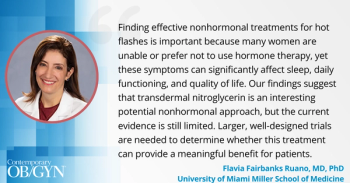
“Migraines can have a significant impact on quality of life, particularly during the menopause transition when many women experience changes in their symptoms. More research is needed to better understand the relationship between hormone therapy and migraine and to help guide individualized treatment decisions,” said Flavia Fairbanks Ruano, lead author from the University of Miami Miller School of Medicine.
“Hormone therapy remains the most effective treatment for bothersome vasomotor symptoms and can be used safely in many women with migraine,” added Stephanie Faubion, medical director for The Menopause Society.
“Because women with migraine may be more likely to seek treatment for menopause symptoms, the findings of this study may reflect underlying differences between women who use hormone therapy and those who do not. More research is needed before drawing conclusions about the effect of hormone therapy on migraine burden.”