
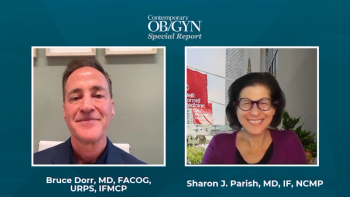
Blood levels alone cannot confirm safe testosterone dosing. Asking about androgenic effects and allowing months for response are central to care.
MenoMEC fills a gap in guidance for non-hormone vasomotor symptom therapy, according to Mary Jane Minkin, MD.
The Menopause Medical Eligibility Criteria (MenoMEC) recommendations, published in Menopause, were developed through a modified Delphi process by a panel of 15 expert physicians from specialties including gynecology, oncology, cardiology, endocrinology, neurology, hematology, psychiatry, and bone health. Statements reaching at least 70% agreement in an online survey were adopted; the rest were resolved at an in-person consensus meeting in March 2025, and the recommendations were finalized in March 2026. Modeled on the US Medical Eligibility Criteria for Contraceptive Use, the MenoMEC grid rated transdermal and oral hormone therapy, on-label non-hormone therapies, and off-label non-hormone therapies on a 1-to-4 scale ranging from no restriction on use to unacceptable health risk, with separate ratings for initiation and continuation. The panel supported neurokinin-targeted therapies such as fezolinetant (Veozah) and elinzanetant (Lynkuet) as first-line non-hormone options where accessible but noted limits on access and cost and the need for routine liver function monitoring.
Before MenoMEC,1 clinicians in the United States had little structured guidance for selecting non-hormone therapy for vasomotor symptoms, according to Mary Jane Minkin, MD, FACOG.
“We clearly needed to have a set of guidelines and education about non-hormonal therapies for vasomotor symptoms,” Minkin said.
Until a little more than 3 years ago, the only FDA-approved non-hormone option for vasomotor symptoms was low-dose paroxetine, which outperformed placebo in randomized trials but did not approach the efficacy of estrogen. Newer non-hormone agents held their own against estrogen for relief of vasomotor symptoms and for sleep and were being studied in breast cancer survivors, Minkin said.
Hormone therapy could not be offered to every patient. Cancer survivors were a key group, because vasomotor symptoms may stem from the disease, its treatment, or both.
“Women who are on aromatase inhibitors who have breast cancer have even worse hot flashes than if they weren’t taking it,” Minkin said. Some patients with ovarian cancer also should not receive estrogen. Patients with significant clotting disorders, such as thrombophilias or antiphospholipid antibodies, who were not receiving anticoagulation should avoid oral estrogen, with some hesitancy even for transdermal formulations. Women with certain cardiac diseases or elevated atherosclerotic cardiovascular disease risk were also candidates for a non-hormone pathway.
The most consequential misconception was that estrogen led inevitably to breast cancer, a fear rooted in coverage of the Women’s Health Initiative (WHI) results released in 2002.2 Because many clinicians had received little menopause training, MenoMEC was intended to support education of both practitioners and patients on the risks and benefits of hormone and non-hormone therapies.
Neurokinin receptor antagonists such as elinzanetant and fezolinetant fill a gap left by older agents. Selective serotonin reuptake inhibitors (SSRIs), serotonin-norepinephrine reuptake inhibitors (SNRIs), and gabapentin reduce hot flashes, but they were serendipitous discoveries not designed around the mechanism of vasomotor symptoms, and their relief does not match that of estrogen or the neurokinin receptor antagonists.3 An SSRI or SNRI may suit a patient with depression, with SNRIs preferred to limit adverse effects on libido and orgasmic response. Duloxetine, also approved for pain, may help patients with arthralgias on aromatase inhibitors. Gabapentin is effective but could cause bloating and weight gain.
For primary care clinicians using the MenoMEC grid, Minkin recommended weighing the broader systemic benefits of estrogen. For a patient with vasomotor symptoms, no contraindications, and elevated osteoporosis risk, such as a petite woman or a smoker, estrogen should move higher on the list, because neurokinin receptor antagonists do not prevent osteoporosis. Systemic estrogen also benefits patients with concurrent genitourinary syndrome of menopause. Therapy should be tailored to each patient’s particular issues, Minkin said.
References
1. Liss J, Larkin LC, Pinkerton JV, et al. Recommendations for the use of hormone and nonhormone treatment of vasomotor symptoms of menopause: Menopause Medical Eligibility Criteria (MenoMEC) based on insights from a modified Delphi panel. Menopause. Published online November 24, 2026. Accessed November 24, 2026. doi:10.1097/GME.0000000000002947
2. Rossouw JE, Anderson GL, Prentice RL, et al. Risks and benefits of estrogen plus progestin in healthy postmenopausal women: principal results from the Women’s Health Initiative randomized controlled trial. JAMA. 2002;288(3):321-333. doi:10.1001/jama.288.3.321
3. Pinkerton JV, Simon JA, Joffe H, et al. Elinzanetant for the treatment of vasomotor symptoms associated with menopause: OASIS 1 and 2 randomized clinical trials. JAMA. 2024;332(16):1343-1354. doi:10.1001/jama.2024.14618