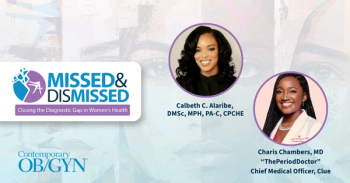
In the debut episode of Missed & Dismissed, Calbeth C. Alaribe, DMSc, MPH, PA-C, CPCHE, talks with Charis Chambers, MD, about PCOS, the push to rename it PMOS, and why diagnostic delays so often begin in adolescence.
Check out the 5 biggest gynecology stories of 2025, and review best practices.
Welcome to another edition of Countdown to 2026, and thank you for visiting the Contemporary OB/GYN website throughout 2025. Below, take a look at the top
A new Clinical Consensus from the American College of Obstetricians and Gynecologists, released May 15, 2025, provides updated recommendations for pain management during in-office uterine and cervical procedures, emphasizing shared decision making and individualized, evidence-based care. The guidance acknowledges that pain during common procedures such as intrauterine device insertion, endometrial biopsy, hysteroscopy, uterine aspiration, and cervical excision is often underestimated and inconsistently managed, and it urges clinicians to proactively discuss pain-control options with all patients.
Procedure-specific recommendations support the use of local anesthetics, particularly paracervical or intracervical blocks, for several procedures, while noting limited or conflicting evidence for some pharmacologic agents and variable effectiveness of nonpharmacologic approaches. The consensus also highlights the importance of considering patient history, anxiety, and prior experiences, and calls for more inclusive research to address gaps in evidence and promote equitable pain management practices.
A large retrospective analysis of more than 2.7 million commercially insured women in the United States found that a diagnosis of uterine fibroids was associated with a substantially higher long-term risk of cardiovascular disease compared with women without fibroids. Using claims data with up to 10 years of follow-up, investigators reported an 81% higher overall risk of cardiovascular disease among women with fibroids, with increased rates of coronary, cerebrovascular, and peripheral artery disease, and a particularly pronounced risk among women younger than 40 years.
Elevated risk was observed across racial and ethnic groups, and findings persisted for up to a decade after diagnosis. The authors noted that fibroids may serve as a marker for identifying women at increased cardiovascular risk and emphasized the importance of incorporating cardiovascular risk discussions into routine gynecologic care, while acknowledging that additional studies are needed to confirm these associations.
A 30-year population-based study of more than 4 million women in England found that women with infertility associated with endometriosis were significantly more likely to conceive than women with infertility due to other causes. Using linked primary care, hospital, and maternity records, investigators identified more than 111,000 women with surgically confirmed endometriosis and reported that conception rates were higher among those with endometriosis-related infertility than among women with ovulatory, tubal, or unexplained infertility.
The analysis also highlighted persistent diagnostic delays, with more than half of affected women receiving an infertility diagnosis before confirmation of endometriosis. Investigators noted that earlier diagnosis, milder disease, and surgical management may contribute to preserved reproductive potential, and emphasized that the findings may support more informed fertility counseling and individualized management for women diagnosed with endometriosis.
A study published in JAMA Network Open found that a self-collected cervical cancer screening device demonstrated high agreement with clinician-collected samples and was preferred by many patients. In an analysis of 599 paired samples, self-collected testing using a dry swab showed high diagnostic performance for high-risk human papillomavirus detection and cervical precancer, with sensitivity comparable to clinician collection for cervical intraepithelial neoplasia grade 2 or higher.
The device was associated with few adverse events and was easy to use, and nearly half of the participants preferred at-home self-collection over in-clinic sampling. Investigators reported that access barriers and discomfort contributed to delayed screening and noted that self-collection may support improved screening adherence and access to cervical cancer prevention services.
A study published in the British Journal of Psychiatry found that women with attention-deficit/hyperactivity disorder had a significantly higher risk of premenstrual dysphoric disorder compared with women without ADHD. In a survey-based analysis of adults aged 18 to 34 years in the United Kingdom, provisional PMDD was reported in nearly one-third of participants with ADHD versus fewer than 10% of those without ADHD, representing more than a threefold increase in risk.
The association was stronger among women with ADHD and comorbid anxiety or depression. Investigators noted that PMDD symptoms were more common regardless of whether ADHD was self-reported or defined using standardized criteria and suggested that routine consideration of PMDD symptoms in women with ADHD may help address unmet clinical needs and inform future research on hormonal influences in this population.