

Amber Watters, MD, MS, explains that emergent delivery after external cephalic version is exceedingly rare and fits within existing protocols, and outlines how to build a version program.
Amber Watters, MD, MS, explains that emergent delivery after external cephalic version is exceedingly rare and fits within existing protocols, and outlines how to build a version program.

Positively Pregnant translates cycle day and cycle length research into individualized pregnancy test sensitivity estimates, according to Alexandra C. Sundermann, MD, PhD.

Kevin Ault, MD, FACOG, explains that all four vaccines in ACOG's 2026-27 guidance carry direct newborn benefit and that prenatal conversations ease downstream pediatric vaccine discussions.

A new SFP Committee Statement in Contraception standardizes protocols for removing deep and nonpalpable contraceptive implants.

Atogepant reduced perimenstrual migraine days vs. placebo and met all 8 secondary endpoints in the Phase 3 LUNA study.
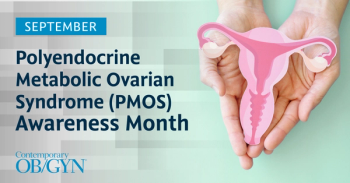
A new, expert-led video series explores the PCOS-to-PMOS rename and what it means for diagnosis, care, and outcomes.
Kevin Ault, MD, FACOG, emphasizes that obstetric clinicians are patients' most trusted vaccine information source, making maternal COVID-19 counseling a high-value opportunity.

FDA granted BTD to certolizumab pegol for preventing adverse pregnancy outcomes in women with antiphospholipid syndrome.
Amber Watters, MD, MS, explains how the ASA's statement encourages obstetric units to integrate neuraxial anesthesia into a formal external cephalic version process.

David Shalowitz, MD, MSHP, describes how OB-GYNs can collaborate with non-gynecologic surgeons to extend salpingectomy and reduce ovarian cancer risk during other abdominal procedures.
Positively Pregnant, built on PRESTO data, gives patients day-specific, evidence-based estimates of home pregnancy test accuracy by cycle timing, as Alexandra C. Sundermann, MD, PhD, explains in this video.

Get caught up with Contemporary OB/GYN! This list helps you navigate our top stories from the week, all in one place.
Kevin Ault, MD, FACOG, explains that maternal COVID-19 and influenza vaccination protects newborns and reduces severe maternal illness, stillbirth, and prematurity.
"Although availability of certain products or brands may vary by pharmacy or location, estradiol transdermal patches remain available," stated the federal agency in an update.
Kevin Ault, MD, FACOG, explains ACOG's extension of the maternal RSV vaccine window to March 1 and the role of passive immunity in protecting newborns.
David Shalowitz, MD, MSHP, explains that stronger effectiveness and safety data in average-risk patients drove ACOG's strengthened salpingectomy recommendation.
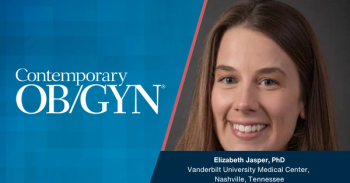
A meta-analysis of 47,000+ GLP-1-exposed pregnancies found no increased risk of major complications, although Elizabeth Jasper, PhD, cautions evidence remains limited.
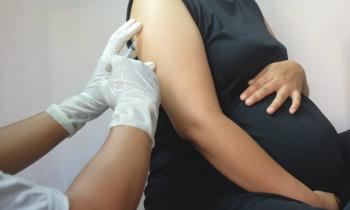
ACOG strongly recommends COVID-19, RSV, and flu vaccines for pregnant patients ahead of the 2026–27 respiratory season.

A recap of the top stories from August 2026 in women's health.
Take a look back at some of the top FDA and pipeline news in women's health from August 2026.
Experts weigh GLP-1 therapy's promise for PMOS against the risks of overly rapid weight loss in teens.
Experts break down which labs actually change PMOS management and how to avoid diagnostic pitfalls.
Experts outline when primary care should manage PMOS versus refer, and why insulin resistance matters.
Experts detail how PMOS diagnostic criteria differ in adolescents, where ovarian ultrasound doesn't apply.
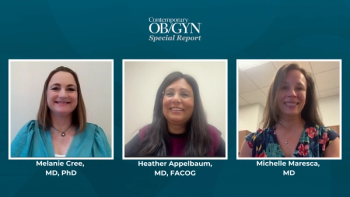
Heather Appelbaum, MD, FACOG, Melanie Cree, MD, PhD, and Michelle Maresca, MD, react to the renaming of PCOS to PMOS in the first of 5 episodes of this Special Report series discussing the new name.
Alexis Totaro, MSN, RN, WHNP-c, CARN-AP, explains how to assess a struggling postpartum patient and execute a clinician-to-clinician warm handoff when escalation is needed.
Peptides are highly specific signaling molecules with a heterogeneous evidence base; clinical application in women's health is most established through metabolic pathways, according to Carrie Carda, MD, MMS, MHS.
Missed the rollout of ACOG's 2026 Maternal Immunization Schedule? This FAQ breaks down everything clinicians need to know about the new guidance.
Alexis Totaro, MSN, RN, WHNP-c, CARN-AP, outlines the criteria guiding the choice between outpatient counseling and emergency psychiatric care in the postpartum period.
Alexis Totaro, MSN, RN, WHNP-c, CARN-AP, explains how sleep behavior helps distinguish normal postpartum deprivation from an emerging psychiatric concern, and how to screen for psychosis.