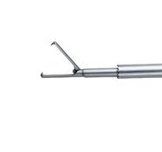




For surgeons who use fascial closure devices, neoClose occupies a place of its own at the head of the class.
For surgeons who use fascial closure devices, neoClose occupies a place of its own at the head of the class.
Vulvovaginal disorders in prepubertal girls-including vulvovaginitis, lichen sclerosus, labial adhesions, urethral prolapse, and genital ulcers-are common and can be managed on an outpatient basis by a skilled clinician.
An analysis of minimally invasive hysterectomies performed at multiple institutions over a 7-year period shows that one in every 368 women who underwent morcellation had uterine cancer. According to the investigators, the study also reveals an association between advanced age and increasing prevalence of underlying cancer and endometrial hyperplasia in these patients.

The morcellation controversy heats up as physicians all over the world who use Ethicon power morcellators are being asked to return the medical devices.
A study in The New England Journal of Medicine funded by the Eunice Kennedy Shriver National Institute of Child Health and Human Development suggests that letrozole may be more effective at helping women with polycystic ovary syndrome (PCOS) become pregnant than clomiphene.
A 2-day meeting of the FDA’s Obstetrics and Gynecology Devices Advisory Committee on the safety of laparoscopic power morcellators produced recommendations, but the committee was not asked to advise as to whether the devices should be banned.
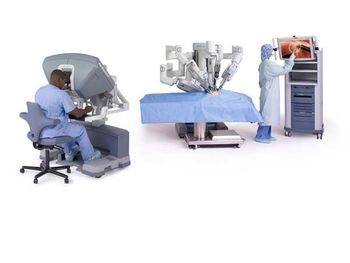
New minimally invasive robotic surgical techniques may offer some benefit to patients, but only once surgeons pass the learning curve.
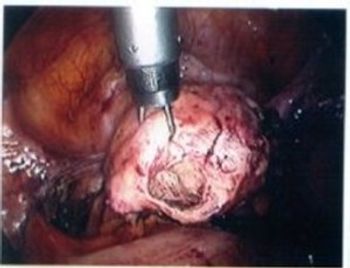
Gyns morcellate fibroids because it benefits patients, not their wallet. Despite the risks, the procedure has a place in treatment, until data say otherwise.
Hormone replacement helps to maintain normal bone mineral density (BMD) in young women with primary ovarian insufficiency (POI), a study by the National Institutes of Health (NIH) has found.

Drs Louise King, Camran Nezhat, and Paul Wetter discuss an effective teamwork model, agreeing that patients have better outcomes when clinicians work as a team.
Do you have inconsistent results treating patients with mixed incontinence? It may be because most treatments are too conservative and symptom-based.
Chemo after surgery for ovarian cancer is the standard of care, but new research discovers that many women, particularly older women, are undergoing chemo before surgery.
Institutions around the country have responded to an FDA advisory by discouraging or banning power morcellation of uterine fibroids. Innovative methods of contained morcellation are now called for.
Although women are often thought of as the drivers for healthcare in their families, many face financial and logistical barriers to obtaining healthcare for themselves, according to a new study by the Kaiser Family Foundation.
A new analysis of data from a nationwide hospital-based dataset shows that black women have higher odds of being diagnosed with triple-negative breast cancer-a subtype associated with poorer prognosis-than do white women, regardless of socioeconomic status (SES). The report was published in the June issue of Breast Cancer Research and Treatment.
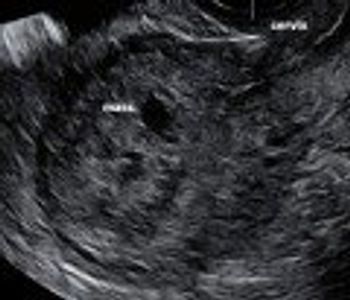
Postabortal placental polyps and uterine arteriovenous malformations can look identical on ultrasonography. Read how saline instillation sonohysterography helped discern the diagnosis.

Informed consent is more than just a signed consent form, says ethics blogger Paul Burcher, MD, PhD, who weighs in on a different way to think about this practice.
According to a new study in Cancer, the incidence of cervical cancer in older women may be higher than has been previously reported.
Women who engage in vigorous physical activity before a diagnosis of ovarian cancer may be at lower risk of dying of the disease, according to a new report by investigators from the Women’s Health Initiative (WHI).
When endometrial ablation fails, ultrasound-guided reoperative hysteroscopic surgery helps patients avoid hysterectomy.
Morris Wortman, MD performs an ultrasound-guided reoperative hysteroscopic surgery on a patient who had undergone endometrial ablation approximately 18 months earlier.

Vaginal hysterectomies are associated with superior patient outcomes and cost less than other methods of hysterectomy. So why is their rate of use declining?
Women undergoing the menopausal transition may be prone to prolonged bleeding with periods of heaviness, according to a new study in BJOG.
A safety communication discouraging use of power morcellation during hysterectomy or myomectomy for fibroids has been issued by the Food and Drug Administration (FDA) because of concern about risk of inadvertent spread of unsuspected cancer to abdominal and pelvic cavities.
The FDA has weighed in on the safety of uterine fibroid morcellation. Given the current evidence, find out what they recommend.