

Peer-reviewed
Diagnosis and treatment of “the great imitator” that has resurged.
Peer-reviewed
Diagnosis and treatment of “the great imitator” that has resurged.

Peer-reviewed
An effective option for refractory cervical insufficiency.

Cervical Cancer Awareness Month
“Reaching these women is critical to reduce cervical cancer rates.”

The Society for Maternal-Fetal Medicine’s (SMFM) 2021 Annual Pregnancy Meeting will be held virtually throughout the month of January, with core meeting activities taking place Jan. 25-30. SMFM’s President, Judette Louis, MD, MPH, and Program Committee Chair, Cynthia Gyamfi-Bannerman, MD, MSc, tell readers what they can expect in the new online format.

With this first issue of 2021, you may notice something different on the cover and on the banner of our website. This special design features a teal ribbon wrap and related content for cervical cancer content.

A case study on diagnosis and management. Could you recognize this rare condition?

General surgeons and ob/gyns are the most likely physicians to get sued, according to data from the American Medical Association’s 2016 Physician Practice Benchmark Survey.

Curbside Consults delivers expert perspectives from physicians outside of the ob/gyn specialty to provide insight into various health issues affecting pregnant women, about which they are experts. This new section is the brainchild of Editorial Advisory Board member Christine Isaacs, MD.

Elizebeth Harmon, MD, MBA, FACOG shares her thoughts on an article from Contemporary OB/GYN®'s November issue.

Snapshot: Protocol 18 - Peripartum Cardiomyopathy
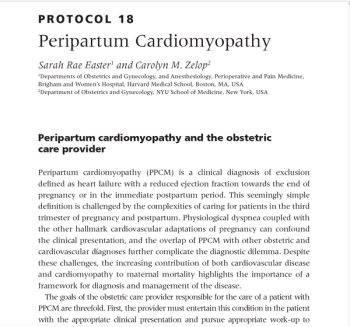
Protocol 18: Peripartum Cardiomyopathy

With the beginning of 2021, we are eager for a resolution to the pandemic.

It has yet to be fully elucidated why postmenopausal women have a higher prevalence of benign paroxysmal positional vertigo (BPPV); however, the sudden decrease in estrogen during menopause can cause a rapid decrease in estrogen receptors, which may disturb otoconial metabolism and thus, increase the prevalence of BPPV.
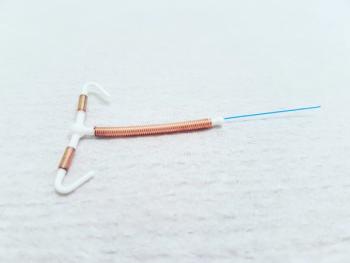
Neither the levonorgestrel-releasing intrauterine system (LNG-IUS) nor the copper intrauterine device (IUD) impact the incidence of cellular atypia, but do interfere with the microbiota over time, according to liquid-based cervical cytology and microbiological analyses.