

A recent study has found that one method offers greater short-term improvement.
A recent study has found that one method offers greater short-term improvement.

Researchers compared LTAP and LAI to determine which is more effective in postoperative pain management.

A recent study indicates that providers may need to rethink their intervention methods when counseling adolescents.

Results from a recent study hold promise for development of biomarkers that could be used to define risk of PTB in African-American women.

New research illustrates why it's important for ob/gyns to discuss syncope history with their pregnant patients.

Dr. Kimble discusses a new progestin hormone that can be used for birth control and identifies which patients could benefit from it.

Haywood Brown, MD, discusses some of the major focuses of the 2019 ACOG conference, including education, burnout, and women's health.

A new study examines if all benzodiazepines, regardless of drug or duration of action, carry the same risk of spontaneous abortion

Marking its third anniversary of working to improve the wellbeing of American mothers, March for Moms rallied on the National Mall in Washington, DC, on May 11.

According to a recent meta-analysis, a woman's race/ethnicity appears to play a role in her likelihood of being diagnosed with endometriosis.

Results from a recent study illustrate the ability of narrow band imaging to identify hard-to-detect endometriosis areas.

Epileptic women are much more likely to die during pregnancy, but a prognostic model may help predict which women are at higher risk of adverse events.
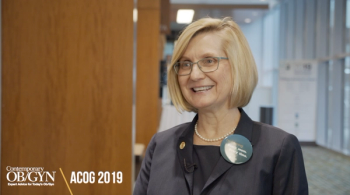
Former ACOG President, Lisa M. Hollier, M.D., discusses what's new at the 2019 Annual Clinical and Scientific Meeting Experience and what she's excited about at this year's meeting.

In the United States, the Edinburgh Postnatal Depression Scale (EPDS) is the validated screening tool for postpartum depression most commonly used in current clinical practice.

A new report analyzed the timing and cause of maternal deaths to determine preventability, factors that contributed to pregnancy-related deaths, and also identified prevention strategies to address contributing factors.

Because CKD is often under-recognized, there is a great benefit to understanding who is at a higher risk.

Although training or access to training in abortion has been a mandated part of the core curriculum for ob/gyns residents, a new survey has found that many programs are not providing education in that area.

Ashley S. Roman, MD, MPH, reviews some of the new updates discussed in ACOG Practice Bulletin #203: Chronic Hypertension in Pregnancy.

This installment in our series looks at postpartum contraceptive options for a pregnant patient with comorbidities

Ob/gyns, support staff, and patients all need to be educated about the needs of the mother/child dyad during the “fourth trimester.”

Oral contraceptives (OCs) may have an additional benefit for young athletes.

Although OCs do not provide total protection of bone mass, they may help limit bone loss in young patients with AN.

The duration and timing of antibiotic exposure during adulthood may increase a women's risk for cardiovascular disease.

A fourth-generation progestogen-only pill (POP) with drospirenone may be an effective and safe alternative for women for whom estrogen-based contraceptives are contraindicated.

Climate change not only threatens public health, but in particular, women’s health.

A recent course at the 2019 American College of Obstetricians and Gynecologists (ACOG) annual meeting in Nashville described three areas of reproduction that ob/gyns need to be well versed in.

Initial excitement about vaginal microbial seeding of cesarean-born babies to bolster their microbiome and future health is under scrutiny, due to the uncertainty of benefits and potential for risk.

Obesity in the setting of polycystic ovary syndrome (PCOS) can be challenging to treat, according to a presentation at the 2019 American College of Obstetricians and Gynecologists annual clinical and scientific meeting in Nashville.

It is imperative that ob/gyns are able to recognize four very common conditions that are highly associated with suicidal thoughts, suicide attempts and suicide completion.

Six services within the realm of minimally invasive gynecologic surgery (MIGS) can easily and inexpensively be incorporated into an ob/gyn practice, according to a panel discussion at the 2019 American College of Obstetricians and Gynecologists annual clinical and scientific meeting in Nashville.