
Laparoscopy for ruptured ectopic pregnancy and massive intra-abdominal bleeding was associated with shorter operative time and less intraoperative blood loss than laparotomy.
Laparoscopy for ruptured ectopic pregnancy and massive intra-abdominal bleeding was associated with shorter operative time and less intraoperative blood loss than laparotomy.
Surgeons who perform a high volume of hysterectomies each year are less likely to injure the lower urinary tract during surgery.
A low-cost instrument that an auto mechanic invented to ease assisted vaginal delivery is being tested by the World Health Organization (WHO). If proven safe and effective, the Odon Device would be the first innovation in operative vaginal delivery since the forceps and vacuum extractor.
Exposure to two organochlorine pesticides may increase risk of endometriosis, according to a new study published in Environmental Health Perspectives.
Asthmatic women may take longer to become pregnant, according to a new study published in The European Respiratory Journal.
Discontinuation rates at 6 months among users of long-acting reversible contraceptive methods are low and not increased among adolescents and young women.
The use of oral contraceptives in women with BRCA1/2 mutations was associated with a reduced risk of ovarian cancer.
Babies born to women who have undergone bariatric surgery for weight loss were more likely to be premature and to be small for gestational age.
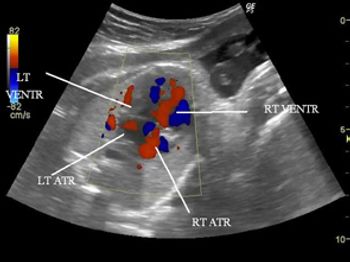
What is your diagnosis based on these images of the fetal heart?
This was the question posed by Javier F. Magrina, MD, in his presidential address at the opening ceremony of the 42nd AAGL global congress on minimally invasive gynecology on November 11. His answer to this question (which of course referred to obstetrics and gynecology) was a resounding "yes," and he backed up this conviction with statistics and anecdotes that illustrated the need for specialized training in minimally invasive gynecologic procedures.
New research shows that babies born to mothers who exercised during pregnancy have more mature brains than babies whose mothers did not exercise.
Outpatient hysteroscopic metroplasty with bipolar electrode is an effective treatment in patients with infertility related to septate uterus.
Data show that maintaining surgical proficiency results in better outcomes for laparoscopic hysterectomy. The magic number for maintenance: 20 procedures a year.
Non-white women with low levels of vitamin D are more likely to deliver preterm than white mothers, according to a new study in the American Journal of Epidemiology.
More than 30% of injuries during robotic surgery are related to operator error or robot failure but the majority of problems are not associated with the technology. So says a retrospective review of complications of robotic surgery reported to the US Food and Drug Administration (FDA) Manufacturer and User Facility Device Experience (MAUDE) database. The findings were presented at the 42nd AAGL Global Congress on Minimally Invasive Gynecology in Washington, DC.
Panelists Leila V. Adamyan, MD, Alan H. DeCherney, MD, and Linda M. Nicoll, MD, went 1 for 2 during the “Stump the Professors” session at the 42nd AAGL Global Congress on Minimally Invasive Gynecology in Washington, DC.
Female providers were twice as likely as their male counterparts to order HPV testing for low-risk women aged 30 to 65 who had normal Pap smear results.
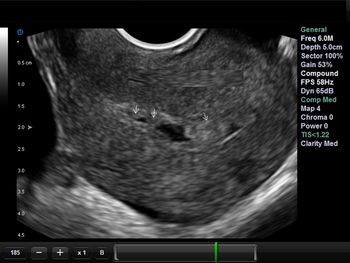
What is your diagnosis based on these images from a young woman with irregular menses?
Women overall know little about urinary incontinence and pelvic organ prolapse, but the knowledge gap is greater for non-white women, survey results show.
The risk of endometriosis is 30% to 70% higher in women exposed to the organochlorine pesticides beta-hexachlorocyclohexane and mirex, new research finds.
All pregnant women should be tested for diabetes by 13 weeks’ gestation and tested again for gestational diabetes between 24 and 28 weeks’ gestation, say new guidelines.
Young women in the South lag behind their counterparts in other regions around the US when it comes to human papillomavirus (HPV) vaccination, according to a recent study in Vaccine.
Six states received an “A” grade on the March of Dimes’s 2013 Premature Birth Report Card but the country overall achieved only a “C.” That is despite a drop in rates of preterm birth for the sixth consecutive year.
Using acetaminophen during pregnancy may not be as risk-free as previously thought, according to a recent study in International Journal of Epidemiology of the drug’s impact on neurodevelopment.
Patients with uterine fibroids have been advised to avoid a hysterectomy as treatment of the condition at all costs. Sound advice or mucky water?
A new study has shown that acetaminophen use in pregnancy may be associated with neurodevelopmental adverse effects in the offspring of women who used the drug.

What is your diagnosis based on these images from a 35-week fetus?
The effectiveness of lamotrigine for bipolar disorder decreases during pregnancy and requires upward dose adjustments until delivery to avoid symptom recurrence.
Lowering the cost of health care requires lowering the cost of medical education, a new perspective suggests.
An ob/gyn continues to fill prescriptions for HRT despite a patient's breast cancer diagnosis.