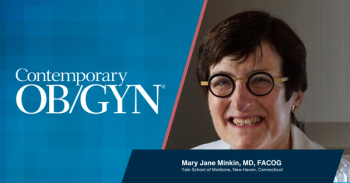
MenoMEC fills a gap in guidance for non-hormone vasomotor symptom therapy, according to Mary Jane Minkin, MD.
According to Jill H. Liss, MD, an AI-enabled avatar simulation won strong expert support as a scalable tool for clinician menopause education.
Menopause has not been taught adequately across specialties or among advanced practice providers for the past 20 years, according to Jill H. Liss, MD, FACOG, MSCP.
"We don't have enough clinicians who are currently practicing really educated on
A 2023 national survey of obstetrics and gynecology residency program directors found that only 31.3% reported having a menopause curriculum.2 Among the gaps Liss and colleagues identified was a shortage of hands-on clinical experiences for residents and medical students. Reading a textbook cannot replicate time in clinic, Liss said, and educational literature supported high-fidelity, realistic, interactive simulation as the next best alternative to direct patient encounters.
The first iteration was a scripted extended reality avatar in which learners selected answers to progress through an encounter. When tested with 57 obstetrics and gynecology residents from multiple institutions, the module increased knowledge and was rated an acceptable learning tool.3 The next-generation avatar, funded by a research grant from The Menopause Society, used conversational AI constrained by evidence-based menopause resources and defined clinical scenarios. The newer version "really allows the learner to have a completely unscripted live verbal interaction that simulates a menopause clinical encounter," Liss said. Learners worked through history-taking, counseling, and treatment discussions, then could break character and ask the avatar for feedback on their strengths and areas for improvement.
Because the newer version relied on open-ended AI, Liss sought expert validation first. A total of 41 participants—including ob-gyns, internists, family medicine physicians, nurse practitioners, and medical educators—completed at least part of the evaluation. Among post-module respondents, 95% said the module could improve learner knowledge of menopausal hormone therapy, 95% said it could improve confidence in menopause care, and 89% said it could address gaps in existing menopause education. Further, 94.8% agreed the scenarios were realistic and representative of clinical practice, and 85.0% said the module represented a meaningful advancement beyond lecture-based education and recommended broader implementation in residency training. Confidence that AI-based simulation could assess both clinical reasoning and communication skills doubled, from 30% before interaction to 60% after, the finding Liss said she was most proud of.
The results reflected expert perceptions rather than learner outcomes, and the next step was to scale the platform to learners. The avatar had since become faster and more dynamic, with more realistic facial expressions. The team planned to refine realism and expand scenarios beyond hormone therapy prescribing to include greater complexity, such as breast cancer, cardiovascular risk, genitourinary syndrome of menopause, and transgender care.
Liss is an adjoint associate professor in the Department of Obstetrics and Gynecology at the University of Colorado Anschutz and a menopause specialist at Denver Health. She previously served as Associate Clinical Professor at the University of Colorado and currently serves as Senior Medical Director, Women's Health, at Bayer.
Disclosure: All research and scholarly work discussed in this article was conducted prior to Liss's employment at Bayer and independently of her current role.
REFERENCES
1. Liss J, Carlson C, Chesnokova A. Advancing menopause education for clinicians with avatar-based simulation. Poster presented at: The Menopause Society Annual Meeting; October 20–24, 2026; San Diego, CA.
2. Allen JT, Laks S, Zahler-Miller C, et al. Needs assessment of menopause education in United States obstetrics and gynecology residency training programs. Menopause. 2023;30(10):1002-1005. doi:10.1097/GME.0000000000002234
3. Liss J, Conageski C, Steinauer J, et al. Virtual patients, real learning: extended reality simulation for clinical menopause education. Menopause. 2026;33(4):420-424. doi:10.1097/GME.0000000000002694