
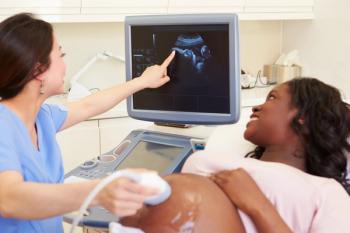
Routine ultrasound screening at 35 to 37 weeks demonstrates limited accuracy for large-for-gestational age according to new data published in AJOG.

Joshua Fitch is the senior editor for Contemporary OB/GYN. He joined the brand in January of 2026, after being the senior editor of our sister publication, Contemporary Pediatrics, since March of 2023. Fitch graduated from Youngstown State University in Youngstown, Ohio, in 2020 with a degree in telecommunications and journalism. He started his career as a news and sports videographer before becoming an on-air sports anchor at the NBC-affiliated news station in Youngstown. Fitch briefly worked as a national content writer for a Chicago-based national television station before joining the Contemporary Pediatrics team. He can be reached at: [email protected].
Routine ultrasound screening at 35 to 37 weeks demonstrates limited accuracy for large-for-gestational age according to new data published in AJOG.

"Given the upper limits of the CI, a relatively higher risk of more than 12% for autism is unlikely to be associated with acetaminophen exposure," the study authors noted.

Get caught up with Contemporary OB/GYN! This list helps you navigate our top stories from the week, all in one place.

While mortality declined by 9.8% in non-ban states, states with abortion bans saw much smaller declines and descriptive increases among non-Hispanic Black and Asian individuals.

New data from JAMA Cardiology indicates that 17.8% of women developed hypertension within 7 years of their first pregnancy, influenced by genetics, BMI, and HDP history.

The FDA cleared the Onclarity HPV Self-Collection Kit, allowing patients to collect samples at home for processing via the FDA-cleared BD Onclarity HPV Assay and BD COR System.

A randomized controlled trial among sexually active premenopausal women found that anterior wall PRP injections vs control led to greater improvement in sexual function.

The Ringza slow-release vaginal ring has launched in Canada and is designed to be re-used for up to 1 year.
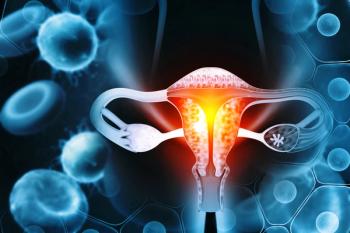
PinkDx announced an IJGC publication of data that demonstrated signals associated with endometrial cancer can be detected from a vaginal swab.
Get caught up with Contemporary OB/GYN! This list helps you navigate our top stories from the week, all in one place.

Researchers developed a porous membrane organ-on-a-chip that replicates the human cervix to study how the microbiome and immune system interact with chlamydia and gonorrhea.


Take a quick look at our top 10 headlines from the first quarter of 2026.

Take a look back at some of the top FDA-related news items—from de Novo clearances to advancing trials—that Contemporary OB/GYN covered in the first quarter of 2026.
Get caught up with Contemporary OB/GYN! This list helps you navigate our top stories from the week, all in one place.

From FDA regulatory updates for products related to women's health, to a preview of upcoming annual meetings and conferences, we keep you updated on what's to come in Q2 of 2026.
The FDA informed manufacturers of its intent to issue draft guidance by August 2026 to regulate unapproved animal-derived thyroid medications used by 1.5 million Americans.

Researchers reported in JAMA Health Forum that while expanded prenatal syphilis mandates improve near-term detection, they require additional public health support to maintain long-term efficacy.

Willow Innovations launched 7 new breastfeeding and maternal care accessories to support postpartum care from feeding to storage of breast milk.
Livi is a single-use, soft polyurethane foam device cleared by the FDA to absorb semen and vaginal discharge within approximately 60 seconds.
Get caught up with Contemporary OB/GYN! This list helps you navigate our top stories from the week, all in one place.
ENDO-205 is EndoCyclic Therapeutics' lead program and consists of a first-in-class, non-hormonal targeted epeptide therapeutic for endometriosis, according to the company.

Flo Health chief medical officer Anna Klepchukova and study investigator Erica Stockwell highlight the benefits of digital symptom checkers for endometriosis.

Among a survey of over 800 providers, menopause care was the top area for expected greatest improvement over the next 5 years.
Among 2029 women in Scandinavian countries who were followed up for 14 years, vaccine effectiveness was 100%.

A randomized clinical trial found that weekly extended-release buprenorphine achieved significantly higher illicit opioid abstinence during pregnancy compared to daily sublingual doses.


Data suggest that thermal biomodulation via radiofrequency improves vaginal lubrication and reduces pain during intercourse for postmenopausal women.
Get caught up with Contemporary OB/GYN! This list helps you navigate our top stories from the week, all in one place.

A longitudinal study found that third-trimester levels of sFlt-1 and hs-cTnI were an independently associated with higher long-term CVD risk.