
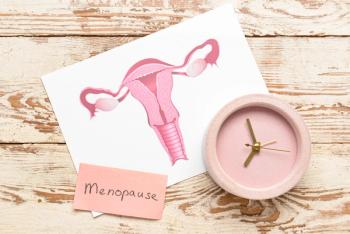
A new study links earlier menopause age to faster cognitive decline and earlier Alzheimer diagnosis.

Joshua Fitch is the senior editor for Contemporary OB/GYN. He joined the brand in January of 2026, after being the senior editor of our sister publication, Contemporary Pediatrics, since March of 2023. Fitch graduated from Youngstown State University in Youngstown, Ohio, in 2020 with a degree in telecommunications and journalism. He started his career as a news and sports videographer before becoming an on-air sports anchor at the NBC-affiliated news station in Youngstown. Fitch briefly worked as a national content writer for a Chicago-based national television station before joining the Contemporary Pediatrics team. He can be reached at: [email protected].
A new study links earlier menopause age to faster cognitive decline and earlier Alzheimer diagnosis.

The FDA office of Women's Health and Center for Drug Evaluation and Research and hosting a public workshop with a focus on testosterone use in menopausal women.

SMFM states abortion care is core to MFM practice and urges institutional action to protect high-risk patient access.
FDA accepted for review an sNDA for MIUDELLA copper IUD for a 6-year duration, with a PDUFA date in Q2 2027.

Get caught up with Contemporary OB/GYN! This list helps you navigate our top stories from the week, all in one place.

A new SFP Committee Statement in Contraception standardizes protocols for removing deep and nonpalpable contraceptive implants.

Atogepant reduced perimenstrual migraine days vs. placebo and met all 8 secondary endpoints in the Phase 3 LUNA study.
A new, expert-led video series explores the PCOS-to-PMOS rename and what it means for diagnosis, care, and outcomes.
FDA granted BTD to certolizumab pegol for preventing adverse pregnancy outcomes in women with antiphospholipid syndrome.
Get caught up with Contemporary OB/GYN! This list helps you navigate our top stories from the week, all in one place.
"Although availability of certain products or brands may vary by pharmacy or location, estradiol transdermal patches remain available," stated the federal agency in an update.

ACOG strongly recommends COVID-19, RSV, and flu vaccines for pregnant patients ahead of the 2026–27 respiratory season.

With brexanolone withdrawn in 2025, zuranolone leads PPD treatment as luvesilocin and LPCN 1154 advance in trials.

A new study finds a 14.9% recurrence risk for severe hypertensive disorders of pregnancy.

A new study finds cesarean delivery occurred in 42.5% of pregnancies with a life-limiting fetal diagnosis.

Get caught up with Contemporary OB/GYN! This list helps you navigate our top stories from the week, all in one place.

A 20-year PMSS analysis identifies cardiovascular conditions as the leading cause of pregnancy-related death.

Livi was cleared by the FDA on March 24, 2026 as a novel device to support vaginal health.

Over 27% of OUD pregnancies had no HCV testing, and only 9.7% with active infection received postpartum DAAs.

Jeff Andrews, MD, FRCSC, discusses raising awareness of at-home HPV self-collection and identifying appropriate candidates as the option rolls out in the US.

TMP-SMX was linked to higher UTI treatment failure vs. nitrofurantoin and fosfomycin in postmenopausal women.

Get caught up with Contemporary OB/GYN! This list helps you navigate our top stories from the week, all in one place.

Mark N. Simon, MD, MMM, discusses the clinical risks tied to maternity care deserts and longer travel times following new March of Dimes data.
“Primary care physicians, who traditionally have referred out for speculum exams, can now offer self-collection during routine appointments or problem visits, preventing missed opportunities for patient preventive care,” said Andrews.

A new cohort study links estrogen-only MHT use to reduced Alzheimer disease pathology.

Included are statements from SMFM, ACOG, and the AAP.

A new LifeStance survey finds many women are unaware that perimenopause can affect mental health.

One in 3 counties in the United States remain maternity care deserts as 96 L&D closures compound access gaps, per March of Dimes.

AbCellera's ABCL635 met primary efficacy endpoints in a Phase 2 trial for moderate-to-severe hot flashes.
Get caught up with Contemporary OB/GYN! This list helps you navigate our top stories from the week, all in one place.

Published: May 13th 2026 | Updated: June 17th 2026
September 26th 2023


