
Opinion|Videos|August 5, 2026
ACOG's New Guidance on Diagnosing Endometriosis Without Surgery
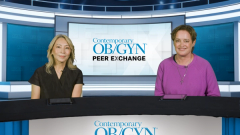
In "ACOG's New Guidance on Diagnosing Endometriosis Without Surgery," Dr. Davitt reflects on what ACOG's March 2026 guideline update means in daily practice.
Advertisement
Episodes in this series
In "ACOG's New Guidance on Diagnosing Endometriosis Without Surgery," Dr. Davitt reflects on what ACOG's March 2026 guideline update means in daily practice.
Dr. Davitt reacts to ACOG's March 2026 update to its diagnostic guidelines, which now allows clinicians to treat endometriosis based on a clinical diagnosis rather than requiring surgical confirmation. He says he was excited to see the change, arguing that it empowers primary care providers to feel more comfortable engaging in the type of history-taking and investigation that leads to a diagnosis and, eventually, to treatment. He was thrilled to see the update and hopeful that primary care providers feel as empowered by it as he expects they will. Dr. Davitt explains that the change encourages more expeditious treatment, since a clinical diagnosis can now be followed by medical management that meaningfully improves a patient's quality of life much earlier than before. That earlier treatment can either serve as a robust therapy on its own or as a bridge toward another specialist or surgical management, depending on how the patient responds. He calls it a fantastic change, made stronger by the guidelines' acknowledgment that more validated tools now exist to support a confident clinical diagnosis. The panel adds important nuance to this shift. One of the biggest changes in the new guidelines is a move away from requiring diagnostic laparoscopy before starting treatment. The panel clarifies that histopathologic confirmation of endometriosis still requires biopsy performed at surgery, but that a clinical diagnosis is now sufficient to proceed without a dedicated diagnostic laparoscopy first. The panel describes this as a huge development and a genuine sigh of relief after years of feeling constrained by a surgery-first diagnostic pathway. Together, the discussion frames this guideline update as a practical unlock for both specialists and generalists managing suspected endometriosis in everyday practice, not just a theoretical shift in policy language.
In "Understanding the Different Types of Endometriosis Lesions," the panel maps out the four distinct types of endometriosis and how they shape treatment goals.
Advertisement
Related to this article

A new Gallup survey found 51% of women in the United States reported negative healthcare experiences.
Hugh Taylor, MD, explains that imaging in endometriosis is best for ruling out other causes of pelvic pain and cannot exclude the diagnosis.

David Shalowitz, MD, MSHP, emphasizes spreading awareness of opportunistic salpingectomy across specialties while grounding its use in shared decision-making.

SMFM states abortion care is core to MFM practice and urges institutional action to protect high-risk patient access.
Hugh Taylor, MD, welcomes ACOG's new guidance allowing clinical, nonsurgical diagnosis of endometriosis and emphasizes it is a systemic disease affecting the whole body.

FDA accepted for review an sNDA for MIUDELLA copper IUD for a 6-year duration, with a PDUFA date in Q2 2027.

Get caught up with Contemporary OB/GYN! This list helps you navigate our top stories from the week, all in one place.

Amber Watters, MD, MS, explains that emergent delivery after external cephalic version is exceedingly rare and fits within existing protocols, and outlines how to build a version program.
Advertisement
Advertisement
Trending on Contemporary OB/GYN
1
Off-label testosterone dosing, access, and lab monitoring in the US
2
Survey: 51% of US-women report negative healthcare experiences
3
FDA holding public meeting on testosterone use in menopausal women
4
Pellet therapy and practical advice for hesitant prescribers
5