

Opinion|Videos|July 29, 2026
Endometriosis Risk Factors and the Cost of Chronic Pelvic Pain
Identifying who is most at risk for endometriosis, and recognizing its hallmark symptoms early, can shorten the path to diagnosis and reduce its enormous economic toll.
Advertisement
Episodes in this series
This episode, "Endometriosis Risk Factors and the Cost of Chronic Pelvic Pain," features Dr. Davitt walking through who is most vulnerable to the disease.
Dr. Davitt outlines the established risk factors for endometriosis. These include early menarche, a shortened menstrual cycle length, a low body mass index, and having a first-degree relative with endometriosis, which significantly increases a patient's risk. He notes that within subgroups of women who already present with pelvic pain or infertility, that risk rises even further. Dr. Davitt then reviews the hallmark signs and symptoms clinicians should recognize. Pain with periods is the classic presentation, and it can be debilitating enough to cause missed school or work during any part of the menstrual cycle. He stresses that clinicians need to educate both patients and other providers that this level of pain is not a normal part of having a period. Beyond dysmenorrhea, patients commonly report pain with intercourse, pain with bowel movements, pain with urination, and pain between periods, often layered on top of a chronic, low-level pelvic pain. Dr. Davitt explains that this constellation of symptoms allows clinicians to build toward a clinical diagnosis even before any imaging or surgery. The discussion then turns to the broader toll chronic pain takes on a woman's life. The panel cites literature showing the health cost burden of endometriosis in the United States can reach as high as $78 billion, a figure driven largely by absenteeism from work, the volume of medical visits patients require over time, and the cumulative cost of treatments pursued along the way. That number underscores why earlier recognition of risk factors and symptoms carries stakes well beyond an individual patient's discomfort, touching workplaces, health systems, and family life. Framing the disease in these economic and quality-of-life terms, the panel argues, gives clinicians another reason to take early symptom reports seriously rather than dismissing them as routine menstrual discomfort.
Up next, in "Why Endometriosis Diagnosis Is Often Delayed by a Decade," the panel examines why so many women wait years for an accurate diagnosis.
Advertisement
Related to this article

Joint guidance from the AHA, AAP, ACOG, and SMFM organizes cardiovascular prevention for girls and women around 4 female life stages.

Get caught up with Contemporary OB/GYN's latest coverage from The Menopause Society Annual Meeting in San Diego, California.

Hormone therapy was associated with more frequent, longer migraines in postmenopausal women, but not with greater severity or analgesic use.

NK receptor antagonists significantly improved sleep disturbance in menopausal women at 4, 12, and 24 weeks in a meta-analysis of RCTs.

Perimenopausal women who were more physically active had significantly lower symptom burden across all domains, a study of 1808 Flo app users found.

Perimenopausal women over-reported total sleep time by a mean of 35.3 minutes and under-reported wake time compared with Fitbit data.

Elinzanetant cut moderate-to-severe VMS frequency by ≥50% in 66.9% of US participants compared with 40.5% on placebo.
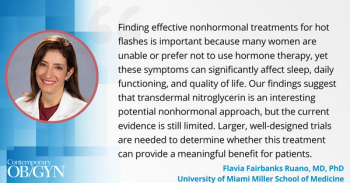
A systematic review found transdermal nitroglycerin may modestly reduce hot flashes, but evidence remains limited.
Advertisement
Advertisement
Trending on Contemporary OB/GYN
1
Missed & Dismissed: From perimenopause to menopause, the transition medicine keeps missing
2
Safety Monitoring and Dosing for NK3 Antagonists in Menopause VMS
3
Multi-society framework ties cardiovascular risk to female life stages
4
Mind, Body, & the Pause: Menopause, brain fog, and screening gaps, with Manisha Parulekar, MD, and Jocelyn Carlo, MD, FACOG
5