


The U.S. teenage birth rate has resumed its decline, reaching a historic low in 2009, according to a report published in the U.S. Centers for Disease Control and Prevention's National Center for Health Statistics (NCHS) February Data Brief.

The U.S. teenage birth rate has resumed its decline, reaching a historic low in 2009, according to a report published in the U.S. Centers for Disease Control and Prevention's National Center for Health Statistics (NCHS) February Data Brief.

Evidence shows that combined oral contraceptives are contraindicative in women who have migraines with auras (MA) due to increased risk of ischemic stroke. So what can these women do?

Despite the wide range of contraceptives available, almost 50% of pregnancies in the United States are unintended, with the highest rates among women aged 18 to 24 years. Meanwhile, few studies have explored contraceptive responsibility and no studies since the 1980s have looked at female college students’ perceptions of such. Without this data, physicians and health educators are unable to adequately and effectively address STD and pregnancy prevention among this patient population.

Women do not appear more likely to seek out psychiatric help after a first-trimester abortion than before one, according to research published in the Jan. 27 issue of the New England Journal of Medicine.

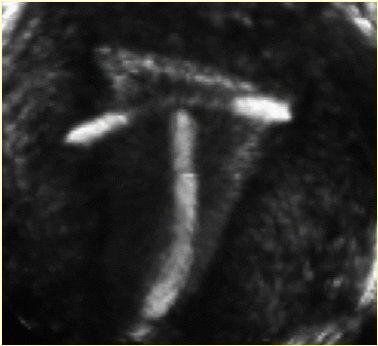
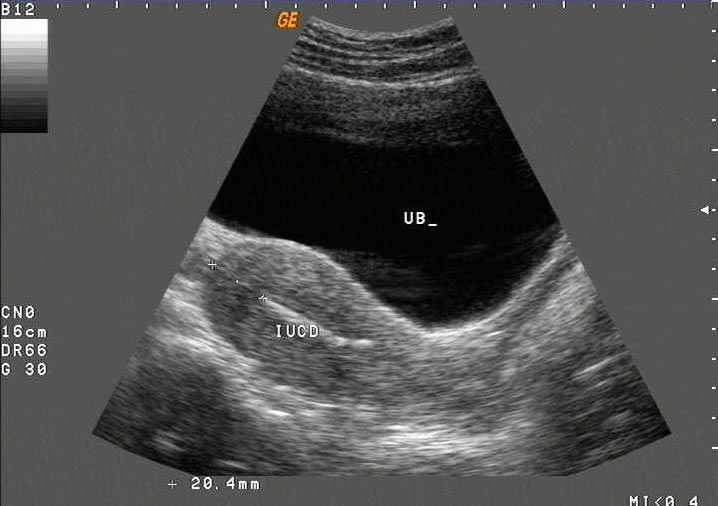
Family physicians have training and knowledge gaps that result in missed opportunities to offer intrauterine contraception (IUC) as a form of birth control to eligible patients, according to a study published online Dec. 3 in Contraception.

A 30 y/o woman, P1001, sought a second opinion from me regarding the following situation: She just had her first baby, and has a history of symptomatic endometriosis including some difficulty in achieving pregnancy (but did so without medical intervention). She was advised by another physician that she should use either depo or the progestin only pill for the next 6-12 months (while she is breastfeeding) to prevent the progression of endometriosis.

Menopausal women treated with the selective serotonin reuptake inhibitor escitalopram have fewer, and less severe, hot flashes than women taking a placebo, according to a study published in the Jan. 19 issue of the Journal of the American Medical Association.

Questions answered by Harvey Marchbein, MD

Questions answered by Harvey S. Marchbein, MD

Question answered by Barry L. Gruber, M.D.


From the Annual Conference of the European Society of Human Reproduction and Embryology in Rome

A Fact Sheet From The Center For Applied Reproductive Science

The statistics are shocking: One in seven US women will be treated for pelvic inflammatory disease (PID) over the course of her lifetime. That translates into more than a million women diagnosed with PID each year.

Q: A request for Information about Premenopause osteoporosis. I am a 31 year old woman and after the birth of my second child 4 months ago have had back pain. After an x-ray that showed a collapse in one part of my spine, I was sent for a bone density test. At the test they took my height and I was 2 inches shorter. I'm looking for information on pre menopause osteoporosis and can find very little. I would like to be informed on what can be done to help me before I go over my test results with my doctor and to better understand my options. Can you help?

Coverage of 36th AAGL Congress November 2007, Washington, DC

Coverage of 36th AAGL Congress November 2007, Washington, DC

This month's questions answered by:Harvey S. Marchbein, MD, Chairman,OBGYN.net Osteoporosis Editorial Advisory Board

Questions this month have been answered by:Maria Luisa Bianchi, MD, Italy, OBGYN.net Osteoporosis Editorial Advisor

Questions this month have been answered by:Maria Luisa Bianchi, MD, Italy, OBGYN.net Osteoporosis Editorial Advisor

Yeasts are normally found on body surfaces in low numbers, and they usually do not cause any problems. But when people are exposed to certain risk factors, yeasts can overgrow causing symptomatic infections.

This month's questions answered by:Harvey S. Marchbein, MD,Chairman, OBGYN.net Osteoporosis Editorial Advisory Board, Paul D. Burstein, M.D., FACOGOBGYN.net Editorial Advisor Ronald Barentsen, MD, PhDOBGYN.net Editorial Advisor Michael Kleerekoper, M.B., B.S.,OBGYN.net Editorial Advisor

Questions this month have been answered by:Michael Kleerekoper, MB, BS, FACP, FACE, OBGYN.net Editorial AdvisorHarvey S. Marchbein, MD, USA, OBGYN.net Osteoporosis Chairman and Editorial Advisor

This month's questions answered by:Harvey S. Marchbein, MD,Chairman, Editorial Advisory Board,Osteoporosis Section, OBGYN.netRonald Barentsen, MD, PhD,Member, Editorial Advisory Board,Osteoporosis Section, OBGYN.net

Question from Johanna: hormone replacement therapy My mother is 69. She had a total hysterectomy in her early 40's. She had to stop hormone treatment due to blood clots. She has not been on any HRT since. She now has bad Osteoarthritis, joint pains, muscle pains, etc. She had Lyme disease a few years ago also in severe stages (10 years ago.) She still feels better when ever they put her on any antibiotics for sore throats for instance. She had a bone density test done recently and her doctor prescribed Miacalcin. Mom has been on 1000 milligrams of Calcium with a combination pill of vitamin D and boron for years. She is becoming more and more bowlegged and has increasingly difficulty walking (it is painful) She does ride her bike since it is not a weight bearing activity. By the afternoon she is very tired. Is it too late for her to have hormone replacement therapy, what kind of doctor should she be seeing, med.'s etc.? Is there a way to reverse this process? Mom has allergies with sinus drainage and gets frequent bronchitis because of it during the winter months. She takes Allegra. Will this interfere with the Miacalcin? Any information you could possibly give me would be appreciated. Thank you very much, Johanna