




Pregnancy and Birth
Latest News

Advertisement
Latest Videos


Shorts

0:25
Navigating early pregnancy testing with Alexandra Sundermann, MD, PhD
2 days ago
by
Alexandra C. Sundermann, MD, PhD(+1 more)

1:13
Kevin Ault, MD, on counseling for COVID-19 vaccination in 2026
12 days ago
by
Kevin Ault, MD(+1 more)

0:23
The power of anesthesia collaboration in ECV, with Amber Watters, MD
14 days ago
by
Amber Watters, MD, MS(+1 more)

0:24
What is the Positively Pregnant tool?
15 days ago
by
Alexandra C. Sundermann, MD, PhD(+1 more)

0:55
Extending eligibility window for RSV vaccine
19 days ago
by
Kevin Ault, MD(+1 more)
1:09
Attempting to identify postpartum psychosis with Alexis Totaro, MSN
a month ago
by
Alexis Totaro, MSN, RN, WHNP-c, CARN-AP(+1 more)
0:52
Reassuring pregnant asthma patients about using inhalers
a month ago
by
Rachel Meislin, MD(+1 more)
0:43
Referring pregnant patients with asthma to allergy/pulmonology
a month ago
by
Rachel Meislin, MD(+1 more)
0:56
Asthma control as fetal protection in pregnancy, with Rachel Meislin, MD
a month ago
by
Rachel Meislin, MD(+1 more)
0:38
Validating the Unity Confirm non-invasive test for high-risk prenatal screenings
a month ago
by
Jennifer Hoskovec, MS, CGC(+1 more)
Podcasts

CME Content


Advertisement
More News

A meta-analysis of 47,000+ GLP-1-exposed pregnancies found no increased risk of major complications, although Elizabeth Jasper, PhD, cautions evidence remains limited.
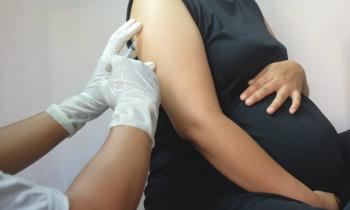
ACOG strongly recommends COVID-19, RSV, and flu vaccines for pregnant patients ahead of the 2026–27 respiratory season.

A recap of the top stories from August 2026 in women's health.

Alexis Totaro, MSN, RN, WHNP-c, CARN-AP, explains how to assess a struggling postpartum patient and execute a clinician-to-clinician warm handoff when escalation is needed.

Missed the rollout of ACOG's 2026 Maternal Immunization Schedule? This FAQ breaks down everything clinicians need to know about the new guidance.
Alexis Totaro, MSN, RN, WHNP-c, CARN-AP, outlines the criteria guiding the choice between outpatient counseling and emergency psychiatric care in the postpartum period.
Alexis Totaro, MSN, RN, WHNP-c, CARN-AP, explains how sleep behavior helps distinguish normal postpartum deprivation from an emerging psychiatric concern, and how to screen for psychosis.
Alexis Totaro, MSN, RN, WHNP-c, CARN-AP, explains that the clinical exam and knowledge of a patient's baseline are essential to catching early signs of postpartum psychosis and depression.

With brexanolone withdrawn in 2025, zuranolone leads PPD treatment as luvesilocin and LPCN 1154 advance in trials.

A new study finds a 14.9% recurrence risk for severe hypertensive disorders of pregnancy.

A new study finds cesarean delivery occurred in 42.5% of pregnancies with a life-limiting fetal diagnosis.

Rachel Meislin, MD, explains that anti-inflammatory reliever and maintenance strategies are standard in pulmonology and ob-gyns should recognize rather than disrupt them.
Rachel Meislin, MD, describes a structured asthma assessment that evaluates comorbidities, triggers, and adherence together.

A 20-year PMSS analysis identifies cardiovascular conditions as the leading cause of pregnancy-related death.
Rachel Meislin, MD, explains that uncontrolled asthma, not its diagnosis or treatment, drives adverse pregnancy outcomes, framing disease control as a fetal-protective strategy.

Over 27% of OUD pregnancies had no HCV testing, and only 9.7% with active infection received postpartum DAAs.

Get caught up with Contemporary OB/GYN! This list helps you navigate our top stories from the week, all in one place.

Mark N. Simon, MD, MMM, discusses the clinical risks tied to maternity care deserts and longer travel times following new March of Dimes data.

Liz Miracle, PT, MPT, WCS, argues that ACOG Committee Opinion No. 736, which supports non-office postpartum assessment, applies equally to virtual pelvic floor physical therapy.
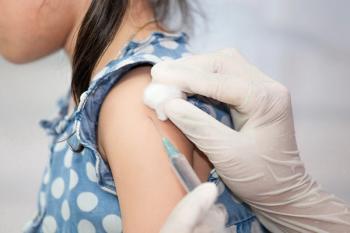
Included are statements from SMFM, ACOG, and the AAP.

One in 3 counties in the United States remain maternity care deserts as 96 L&D closures compound access gaps, per March of Dimes.

Get caught up with Contemporary OB/GYN! This list helps you navigate our top stories from the week, all in one place.

A University of Michigan pilot study, discussed here by lead researcher Alex F. Peahl, MD, MSc, found patient-operated remote ultrasonography feasible for completing biophysical profiles in high-risk pregnancies.

One in 3 FQHCs lack on-site prenatal care, with gaps concentrated in maternity deserts, a national study finds.

Joy Baker, MD, FACOG, explains how zuranolone's rapid onset gives clinicians a meaningfully different counseling conversation for PPD.
Advertisement
Advertisement
Trending on Contemporary OB/GYN
1
Zuranolone shows sustained PPD symptom improvement through day 90
2
FDA approves IDE for pivotal study of Evident ovarian cancer screening test
3
Q&A: Sameena Rahman, MD, on digital symptom tracking in PMOS
4
PMOS Awareness Month: Watch our expert panel discussion on PMOS
5