

Ob/gyns should be familiar with strategies to prevent two of the most common problems associated with vaginal delivery.
Ob/gyns should be familiar with strategies to prevent two of the most common problems associated with vaginal delivery.

A recent study examines whether expanding Medicaid coverage has impacted rates of low birthweight and prematurity among infants.

A new study aimed to better understand why birth control may fail for some women by looking at genetic variants.

The U.S. Food and Drug Administration (FDA) has halted sales after manufacturers failed to demonstrate long-term benefits of the devices.

A newly approved drug can significantly reduce the risk of fractures, but it carries a distressing "black box" warning.

A therapeutic vaccine may be effective and safe for clearing cervical intraepithelial neoplasia (CIN) 2/3 irrespective of HPV subtype.

Incorporating AI into the IVF process could reduce subjectivity in embryo selection and lead to higher success rates for patients.

With small diet modifications, women can significantly reduce their risk of endometriosis.

Younger women with endometriosis seem to be at a higher risk for breast cancer, but several factors could be contributing to this finding.

Information to help your patient better understand polyps and hysterectomies.

What’s your diagnosis in a patient with lesions that are sometimes painful and do not respond to antibiotics?

Practical tips on how to spot these common growths on ultrasound and how to remove them.

Analysis shows that providers aren't including information about all available options when counseling their patients on CHCs.

Unprotected sex without immediate adverse events may empower women to believe they are not at high risk.

Three tests are now FDA-approved for triaging pelvic masses in asymptomatic women.

Dishonesty from patients can not only undermine care, it can cause unexpected harm.

Failure to recognize the warning signs led to poor outcomes for mother and child.

Plan your ACOG 2019 trip with this rundown on board members - both past and current - authors and collaborators who will be presenting in Nashville.


Knowledge of a woman's reproductive span can help ob/gyns identify patients who may be at risk.

Testing circulating concentrations of placental growth factor could improve diagnostic time in suspected preeclampsia cases.

A study looks at two decades worth of data to test whether metformin reduces late miscarriage and PTB in women with PCOS.

Talking with patients about their daughters is one way to build a practice focused on caring for girls, adolescents, and young adults.

Earlier trials are contradicted by the results of a new study, and ob/gyns may want to rethink their prescribing habits.
The proposed changes address mammographic technology, enhancing quality standards, and improving the way results of screening are handled throughout the healthcare system.

A new committee opinion updates ob/gyns about properly identifying and treating survivors in compliance with the necessary medical and legal requirements.
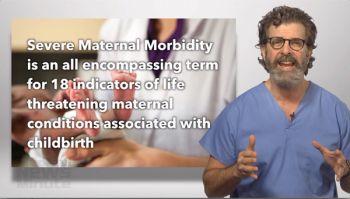
In this Medical News Minute, Dr. Bobby Lazzara discusses the findings of a recent study that examined rates and trends of severe maternal morbidity in terms of race.

Rising incidence rates of hepatitis C virus among pregnant women could indicate the need for universal screening, but as always, everything comes down to cost.

An analog of an endogenous human hormone has been approved as treatment, but it comes with a steep price tag.

A new study suggests that previous research has underestimated the impact of low-intensity movement in reducing CVD risk for women over 63.