
A 14-year-old with altered mental status has a seizure in the ER. Find out why a gynecology consult was called for.
A 14-year-old with altered mental status has a seizure in the ER. Find out why a gynecology consult was called for.
The USPSTF updated recommendations on mammography have sparked discussion on screening in younger women. Plus, does exposure to gestational diabetes increase risk of autism? What are the implications of genome editing?
The Centers for Disease Control and Prevention (CDC) discusses the importance of HPV screening, vaccination, and the role of the clinician in helping prevent HPV and related cancers. The video presents three viewpoints: An OB-GYN who treats cervical cancer, a mother / Pediatrician who had her daughters vaccinated for HPV, and a survivor of cervical cancer.
NASPAG 29th conference featured research on the increased risk of complications in teen pregnancy, the desire on over-the-counter contraception, and a tool to help identify patients with menorrhagia.

This blog discusses how OB/GYNs need not only to understand the science behind genetic screening but also to counsel patients properly about the results.

Pregnancy is possible for women with inflammatory bowel disease, but collaboration is needed between gastroenterologists and obstetricians.
New research looks at the possibility that women who were themselves born prematurely are at greater risk of delivering their children prematurely. Also research on how much women worry about the genetic risks of their breast cancer and a new algorithm for stratifying breast cancer prevention.

Spicing things up in the bedroom can have consequences, and an exhausted on-call Ob/Gyn can attest to that.
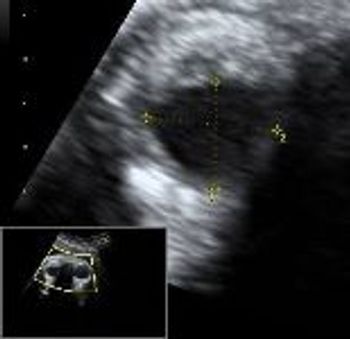
QUIZ: These images of the fetal eyes reveal a clue about the mother's health.

Of the top 10 surgical procedures that are decreasing at the greatest rate, 4 of them are related to obstetrics and gynecology.

Cell-free fetal DNA screening tests for trisomy 21 are more accurate than standard screening with nuchal translucency even in low-risk women.

The term "dense breasts" often leaves patients confused about what it really means to have dense breasts.

These images from a routine ultrasound examination of a 20-week fetus reveal a rare abnormality of the fetal spine.

Now that stand-alone HPV tests have been approved, is it worth changing cervical cancer screening recommendations? Juan Felix, MD, weighs in.
DNA from a genetically dissimilar deceased twin may be counted as part of total fetal DNA, leaving to incorrect test results for the surviving fetus.

Unsuccessful fertility treatment takes a toll on both partners, and knowing their mental health history can help predict depression risk.

QUIZ: These images are of the fetal heart reveal an abnormality. Can you identify it?
A recent report sheds light on how much false-positives and overdiagnosis of breast cancer cost. Additionally, new research examines the impact of the number of live births on future heart health in the mother and provides further evidence of the efficacy of cfDNA testing.
Each day of the 2015 ACOG Annual Clinical and Scientific Meeting will have a clinical theme, such as obstetrical emergencies or contraception.

Miscarriage unfortunately is a common part of OB/GYN, but do you ever wonder what your patients are feeling? This blog addresses one patient's experience.
Nonsteroidal anti-inflammatory drugs are the most common treatment for menstrual pain, though research continues on alternative treatments.
Malpractice payouts aren’t the only factor to look at in determining where to practice in the United States. Ob/gyns should also take into account the status of tort reform and the cost of premiums and taxes in the states they are considering.
Less may be more when it comes to surgical management.
A high/low agreement usually is done to prevent a “runaway” jury from coming back with an unreasonably high award, but ensures the plaintiff of something because they are agreeing to a lower amount than what the jury might have awarded.
Two experts take sides on the clinical merits of performing bilateral salpingectomy alone versus removing the tubes in BRCA mutation carriers.
A review of the causes, surveillance options, and management strategies for the pregnancy at risk of fetal anemia.
Plus: research on systemic HT, type II diabetes and post-pregnancy obesity

A new adjustable single-incision bladder sling placed via the transobturator route for women with stress urinary incontinence shows promise.
OB/GYNs should begin with ultrasound to examine women presenting with pelvic symptoms, urges a physician group.
Take a close look at your documentation in these six areas of OB/GYN to start making improvements now and better prepare for ICD-10-CM.