
Contemporary OB/GYN provides information on the latest research from SMFM's annual Pregnancy Meeting.
Contemporary OB/GYN provides information on the latest research from SMFM's annual Pregnancy Meeting.

Women with polycystic ovary syndrome (PCOS) are at increased risk for metabolic and heart diseases and nearly twice as likely to be hospitalized.

Probiotics don't improve the metabolic health of women with GDM but may help those at risk for future metabolic and cardiovascular disease.
Two experts debate whether unrestricted access to emergency contraception has really translated into awareness about how it works and how to get it.
Patients who have experienced intimate partner violence have reported that positive, supportive encounters with healthcare providers have helped them to improve their situations.
Readers comment on independence, EHRs, tort reform
Six months after a tubal ligation, a woman became pregnant. She gave birth by cesarean to a child who was diagnosed with sickle cell disease.
A commentary on ACOG Practice Bulletin Number 145 by Contemporary OB/GYN editorial board member Haywood L. Brown, MD.
A summary of the evidence-based SMFM guidelines for the evaluation and management of nonimmune hydrops fetalis (NIHF). The guidelines cover the epidemiology, risk factors, work-up, prognosis, and treatment of pregnancies complicated by NIHF.

Two new compounds, oxabicycloheptene sulfonate and chloroindazole, were successfully tested in early studies to treat endometriosis.
A valuable infographic showing types of contraception used by American women of various ages, education levels, and ethnicities.

Neil S. Silverman, MD, addressed the recent measles outbreak and made these suggestions for women who are pregnant or trying to become pregnant.
Tight control of hypertension in pregnancy does not produce better perinatal outcomes or fewer serious maternal complications than looser control, according to results of an international randomized clinical trial. Published in the New England Journal of Medicine, the findings are consistent with those from a meta-analysis of 29 previous trials.
A new Danish study suggests that there may be a link between use of hormonal contraceptives and glioma, a rare brain tumor.
A study of a representative sample of US women shows a clinically significant association between early menopause and exposure to 15 different endocrine-disrupting chemicals.

Consider thyroid disorders, such as hyperthyroidism, when evaluating women with fertility problems and recurrent early pregnancy loss.

Challenge your diagnostic skills. What's your diagnosis based on these fetal abdominal images?

Even in a surgical setting, 3D technology can draw a crowd.

Gynecologists should expect appointment time with patients to include a discussion about the utility and safety of vaginal steam baths.
Results of a retrospective cohort study show that use of intracytoplasmic sperm injection is on the rise but cast doubt on whether the technology is improving reproductive outcomes. Brian Levine, MD, MS provides commentary.

Opioid use in women of reproductive age should be better monitored, and physicians should be more judicious in their prescribing, says a CDC report.
Women with more severe vasomotor symptoms and night sweats may be at risk of having poorer bone health, according to a prospective observational study.
These 5 predictions by Adam Wolfberg, MD, provide insight into how genetic testing-NIPT to microarray and cost to quality-continues to evolve.

Challenge your diagnostic skills. What's your diagnosis based on these abdominal images of a late second trimester fetus?
A Nordic study of more than 92,000 children shows that perinatal outcomes after use of assisted reproductive technology (ART) have improved considerably in the past 20 years.
A first-of-its-kind prospective study by researchers from Australia shows that women who have operative deliveries may be at increased risk of dyspareunia during the postpartum period.

Could the approval of bevacizumab for advanced cervical cancer and platinum-resistant ovarian cancer last year lead to patient-specific therapies?

Almost nobody says "obstetrician-gynecologist" when speaking about these specialist physicians. But what's the "correct" way to pronounce OB/GYN?
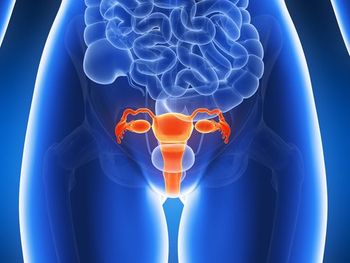
Nearly 1 in 5 hysterectomies for benign indications were unnecessary, and nearly 2 in 5 had unsupportive pathology in women younger than 40.