
The use of a postoperative levonorgestrel-releasing intrauterine device reduces the recurrence of painful periods in women with endometriosis.
The use of a postoperative levonorgestrel-releasing intrauterine device reduces the recurrence of painful periods in women with endometriosis.
A recent discovery suggests that Trichomonas vaginalis may alter the vaginal microbiota in a manner that cultivates bacteria that is beneficial to its survival and transmissibility.
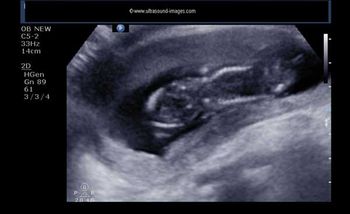
What is your diagnosis in this fetus of 12 weeks gestational age?
Enhancing cardiotocography with ST analysis in fetal monitoring reduces the incidence of instrumental vaginal delivery and the need for fetal blood sampling.
In a group of diverse hospitals across multiple states, an improvement program substantially and rapidly decreased elective scheduled early-term deliveries to less than 5%.
Nearly 70 issues associated with management of endometriosis are outlined in a first-of-its-kind worldwide consensus statement on the disease released by the World Endometriosis Society (WES) Montpellier Consortium, an international group.
Exposure to anti-tumor necrosis factor (anti-TNF) drugs for rheumatoid arthritis (RA) rather than methotrexate may be associated with increased rates of induced abortion, according to the results of a nested case-control study by Canadian researchers. The findings, say the investigators, point to a need for contraceptive counseling for women being treated for RA to lower the likelihood of unplanned pregnancy.
The FDA has approved Diclegis for the treatment of nausea and vomiting in pregnancy.
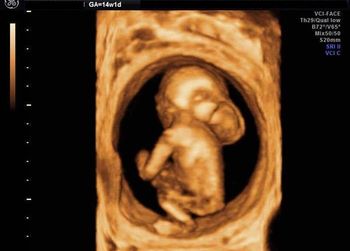
Women with endometriosis who undergo surgery to treat the condition are less likely to have ovarian cancer develop later in life.
There is limited evidence that for transcervical chorionic villus sampling (CVS), the use of small forceps may be more effective and less painful than the use of an aspiration cannula.
A mammogram showing an abnormal finding can result in stress and anxiety for as long as 3 years for some women, even if the finding is determined to be a “false positive,” according to a study that appeared in the March/April issue of The Annals of Family Medicine.
A study appearing in the Journal of Clinical Endocrinology & Metabolism (JCEM) April 2013 issue details a model to help predict when a women will experience her final menstrual period (FMP).
Stillbirth or preterm birth may dramatically increase a woman’s risk of developing a blood clot immediately postpartum, according to the results of a large, population-based study appearing on the website of Blood, the journal of the American Society of Hematology (ASH).
In a groundbreaking procedure, robotically assisted, ultrasound-guided laparoscopic surgery was performed successfully to tighten an incompetent cervix.
The risk of postoperative endometritis is reduced when a vaginal preparation of povidone-iodine is administered immediately before cesarean delivery.
Sexual abuse and neglect are unique predictors of subsequent teen childbirth. This is the conclusion of a study published online by the journal Pediatrics on March 25, 2013.
A study focusing on gender-based differences in gynecologic knowledge among college students has found that college men have less gynecologic knowledge than do college women.
A study supported by the Eunice Kennedy Shriver National Institute of Child Health and Human Development (NICHD) of more than 2000 women shows that stressful life events increase the risk of stillbirth. The findings, published in The American Journal of Epidemiology, point to a need for ob/gyns to include counseling about stress in prenatal care.
There is no association between in utero exposure to selective serotonin reuptake inhibitors (SSRIs) and stillbirth, neonatal mortality, and infant growth rate during the first year of life, according to the results of 2 unrelated studies.
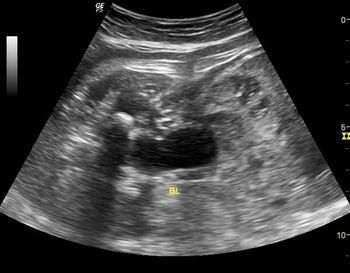
Women in early pregnancy and those attempting conception are often concerned with altering their lifestyles to achieve and maintain a healthy pregnancy. Patients often ask ob/gyns for recommendations about caffeine intake, exercise, alcohol consumption, and use of artificial sweeteners. In addition to quantity, the question of timing arises: When is the appropriate time for a woman to alter her lifestyle-before conception or after pregnancy is established?
Celiac disease is an inherited autoimmune chronic inflammatory intestinal disease that, uniquely, has a known inciting agent-gluten. Ob/gyns are most likely to encounter women with CD presenting with abdominal and pelvic pain. Irritable bowel syndrome and endometriosis are commonly part of the differential diagnosis.
To optimize treatment and prevent sequelae of STIs in adolescents, screening and diagnosis must be tailored to their unique needs.
These cases are interesting in that they were both defense verdicts and the issues were proving when the retained foreign object was left in the abdomen and what the object was.
A new rapid test for Group B Streptococcus (GBS) provides reliable results in hours, compared with traditional culture that takes days.
You may or may not have read Bitter Pill: Why Medical Bills are Killing Us, the cover story of the March 4, 2013, issue of Time magazine. However, I am confident your hospital administrators have read the article and were furious.
Even after stratification by hospital size, teaching status, and geographic location, rates of cesarean delivery among hospitals across the United States vary almost 10-fold-from a low of 7.1% to a high of 69.96%.