
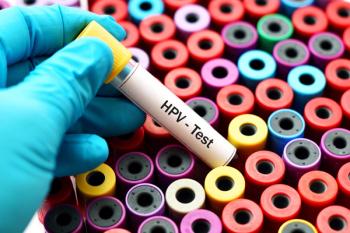
State legislation that allows adolescents to choose to receive the HPV vaccine without parental interference would elevate immunization rates, according to a new study.
State legislation that allows adolescents to choose to receive the HPV vaccine without parental interference would elevate immunization rates, according to a new study.

The "Cures 2.0" bill, if signed into law, would expand medical research, aid development of new therapies and expand telehealth.

The AMA continues its fight against COVID-19 disinformation generated by physicians with a new policy.
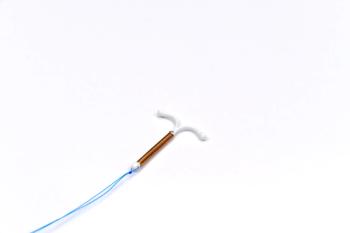
For the analysis as a whole, “The more localized the copper on an IUD frame and the ability of the frame to conform to the uterine cavity, the more favorable were outcomes at one year,” wrote the authors.

At AAGL’s 50th Global Congress on MIGS, Peter L. Rosenblatt, MD, and Cheryl B. Iglesia, MD, FACOG, debated the use of native tissue repair and transvaginal mesh in pelvic reconstructive surgery.
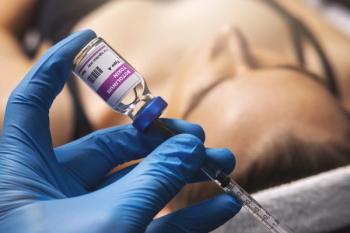
“Studies like ours may open a new venue of treatment for women with chronic pelvic pain, especially when associated with pelvic floor muscle spasm,” said principal investigator Barbara Karp, MD.

Women exposed to pesticides containing trans-nonachlor were 3.38 times more likely to develop endometriosis (P <0.0001), and for PCB 114 the increased risk was 1.83 (P =0.009).

Mauricio S. Abrão, MD, PhD, announced the American Association of Gynecologic Laparoscopists is introducing new classifications for endometriosis.

“My hysteroscope is my stethoscope. I use it in every opportunity when the story doesn’t match,” Linda D. Bradley, MD, said during her presentation at AAGL’s 50th Global Congress on MIGS, “Office Hysteroscopy: Seeing is Believing. A Manifesto for Change.”

“If you want to provide comprehensive care, it is truly impossible as 1 person,” began Jean Uy-Kroh, MD, FACOG, director, Chronic Pelvic Pain Program at the Cleveland Clinic in Cleveland, Ohio, at AAGL’s 50th Global Congress on MIGS in Austin, Texas.

Hear from Mauricio S. Abrão, MD, PhD, 2021 scientific program chair and upcoming president of AAGL, and Executive Director Linda Michels, discuss key topics and critical updates at AAGL 2021 you don’t want to miss.

The American Association of Gynecologic Laparoscopists (AAGL) 50th Global Congress on minimally invasive gynecologic surgery (MIGS) begins today and continues through Wednesday, November 17 in Austin, Texas. Follow along for the latest coverage.

The week in review from Contemporary OB/GYN®

A study has once again validated ultrasound-guided high-intensity focused ultrasound (USgHIFU) as an effective technique to devascularize uterine fibroids.

Findings from a study indicated that non-Hispanic American Indian and Alaskan Native patients with breast cancer were more likely to undergo a mastectomy compared with non-Hispanic White patients.

Due to uterine fibroids being a potential cause of infertility, treatment options like myomectomy should be discussed individually with the patient, according to an article published in Diagnostics that evaluated the relationship.

SMFM Consult Series #56: Hepatitis C in pregnancy: updated screening, treatment, and management guidelines.

One year after the close of the Increasing Access to Contraception (IAC) Learning Community, participants had sustained their efforts in support of at least 1 goal: to improve women’s access to the full range of contraceptive options.

As the 2-year mark since the start of the COVID-19 pandemic creeps in, one can’t help take stock of what the pandemic has shone a light on.

Download a visual summary of SMFM Consult Series #56: Hepatitis C in pregnancy: updated guidelines

Margo B. Minissian, PhD, shares key updates from the newest recommendations for primary prevention of cardiovascular disease in women from the ACC and AHA. Minissian is executive director, Geri & Richard Brawerman Nursing Institute at Cedars-Sinai Medical Center and the Simms/ Mann Endowed Chair of Nursing Education, Innovation and Research at Cedars-Sinai Medical Center.

Results of a cross-sectional study detail characteristics among women with polycystic ovary syndrome (PCOS) who develop type 2 diabetes.
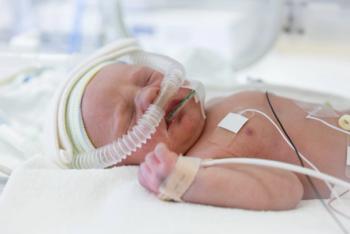
Put your knowledge to the test in honor of Prematurity Awareness Month.
We caught up with Risa Kagan, MD, at the North American Menopause Society's 2021 Annual Meeting to hear about her role on the Scientific Planning Committee and this year's takeaways.
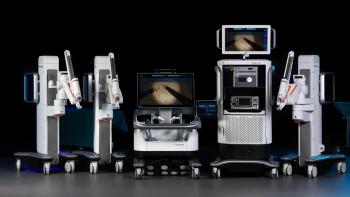
“Today, many of these cases are done as open surgery, including approximately 60% of all hysterectomies performed globally, despite the clear benefits of minimally invasive surgery, which includes fewer complications, a shorter hospital stay, and a faster return to normal activities,” Peron told Contemporary OB/GYN®.

What to watch for this week on Contemporary OB/GYN®

Disparities across the globe continue to surface as we approach year 2 of the COVID-19 pandemic, especially in health care. As one considers its implications, a research team from the American Cancer Society investigated its potential impact on early cancer detection.

The reality is that traditional laparoscopic surgery provides excellent outcomes, great surgical exposure, and the flexibility to tackle almost any clinical situation. As such it is a high bar to overcome—vNOTES is essentially single port vaginal surgery.
It's been a busy week for the Contemporary OB/GYN® team. Here's what you missed.