Infertility

Latest News


Cervical cancer is the second most common gynecological cancer amongst women world-wide. Despite optimized protocols, standard treatments still face several disadvantages. Therefore, research aims at the development of immune-based strategies using tumor antigen-loaded dendritic cells for the induction of cellular anti-tumor immunity.

Evidence supporting a role for estrogen in male reproductive tract development and function has been collected from rodents and humans. These studies fall into three categories: i) localization of aromatase and the target protein for estrogen (ER-alpha and ER-beta) in tissues of the reproductive tract; ii) analysis of testicular phenotypes in transgenic mice deficient in aromatase, ER-alpha and/or ER-beta gene; and, iii) investigation of the effects of environmental chemicals on male reproduction.

Central to any consideration of techniques in the IVF lab is the quality of the gametes that the lab has to work with. Usually there is little opportunity to modify the basic quality of sperm, however, the oocyte is a direct biological end product of ovarian super-ovulation as commonly conducted in human IVF therapy.

Editorial

Our guest editor for this issue of Gynaecology Forum is Hans van der Slikke, who was also guest editor for the last issue of Gynaecology Forum concerned with the Internet in 2000. I typed that editorial on my PC and emailed the draft to the publishers.

Much has changed in the World Wide Web in the 3 years since the first Internet issue of Gynaecology Forum (www.obgyn.net/medforum.asp) was published in September 2000. At that time it was still necessary to cover the history of the Internet and explain the requirements needed to access it.

The Internet has, without question, assumed a place in the life of most physicians and many patients. Though users vary in skill of use and sophistication of inquiry, some issues are common to all. The quandary about which websites may safely be trusted is one such issue. Health website quality guidelines, easily accessed on the Internet, aid users in their decisions.

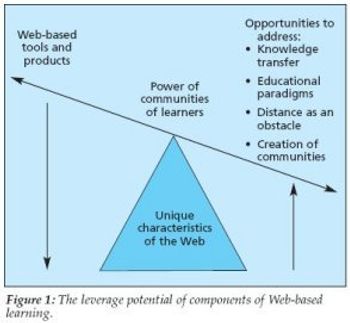
The ubiquitous use of the World Wide Web to facilitate learning has been a benefactor of change, revolutionising the way in which education can be delivered and received. This technological advancement has woven together communities of learners and permitted access to huge repositories of information while eliminating distance as an obstacle to learning (Table I).

Ultra-fast freezing of ovarian tissue from women who have lost their fertility as a result of cancer treatment can lead to it being used in transplants with the same success rate as fresh tissue, a researcher told the 25th annual conference of the European Society of Human Reproduction and Embryology.

For the first time, researchers have been able to identify genetic predictors of the potential success or failure of IVF treatment in blood. Dr. Cathy Allen, from the Rotunda Hospital, Dublin, Ireland, told the 25th annual conference of the European Society of Human Reproduction and Embryology today (Wednesday 1 July) that her research would help understand why IVF works for some patients but not for others.

Ms Vanneste and her team studied each cell from 23 three or four day-old IVF embryos from young (less than 35 years old), fertile couples who had asked for preimplantation genetic diagnosis (PGD). PGD is carried out where one or both parents have a known genetic abnormality, in this case an X-linked disorder or the microdeletions (loss of a tiny piece of a chromosome) that can cause such disorders as the cancer predisposition syndrome neurofibromatosis type 1.

Survivors of childhood cancer run particular risks when pregnant and should be closely monitored, the 25th annual conference of the European Society of Human Reproduction and Embryology heard today (Wednesday 1 July). Dr. Sharon Lie Fong, of the Department of Obstetrics and Gynaecology, Erasmus MC University Medical Centre, Rotterdam, The Netherlands, said that, although such women may have conceived spontaneously and considered themselves to be perfectly healthy, their deliveries should always take place in a hospital.

Making decisions is often one of the most difficult tasks you will face as an infertile couple. Should we stop treatment ? Should we consider adoption ? Should we switch doctors ? Should we move on to IVF ? How many embryos should we transfer ? Should we ask for an assisted hatch or a blastocyst transfer ?

The right to have a baby is something most of us take for granted , and we often lose sight of the fact that 1 in 10 married couples will not be able to have the child they want. Infertility is a very common problem , and if you stop to think about it, you will realize that you know at least one person who is infertile amongst your own group of friends or relatives. However, it remains one of those taboo topics which no one wants to talk about, even though it interferes with one of the most fundamental and highly valued human activities - building a family.