

Barry S. Zuckerman, MD, founder of Reach Out and Read, hopes to personalize the patient-doctor relationship with a new app called Small Moments.
Barry S. Zuckerman, MD, founder of Reach Out and Read, hopes to personalize the patient-doctor relationship with a new app called Small Moments.

President Biden promised that the federal government will have enough vaccine supply to vaccinate approximately 300 million Americans by the end of May.
The American Heart Association published a special issue to discuss current research in cardiovascular disease and outcomes in women.
Since 2012, when South Carolina's Medicaid program became the first state Medicaid program to separate payment for the immediate postpartum placement of long-acting reversible contraception (LARC) from global maternity payment, a significantly greater number of mothers are using LARC, especially among adolescents.

Diverse Voices: COVID-19 and the Health of Women, a virtual speaker series run by the NIH Office of Research on Women’s Health (ORWH), presented compiled research on sex and gender disparities during the COVID-19 pandemic. In addition to identifying issues of concern, the webinar offered actions to improve women’s health despite sex and gender disadvantages.

When it comes to willingness to switch contraception method, a team of researchers has looked into whether method type, satisfaction with use, and confidence in correct use were independently associated with switching intentions.

The mechanism of action (MOA) of emergency contraceptive pills (ECPs) is frequently mischaracterized among the general public, according to authors of a recent study published in the journal Contraception.

It was a very busy week for the Contemporary OB/GYN team.

A narrative review identified gaps in knowledge and considerations for informing sexually transmitted infection (STI) screening guidelines and treatment to improve the health of pregnant women and children.

A study of 30 women who had their post-cesarean section abdominal wall endometriomas (AWE) surgically removed found that the main symptom for detection and for surgery in two-thirds of cases was cyclic pain, whereas 13.3% of patients had no symptoms.
Preimplantation genetic testing for aneuploidy (PGT-A) is not associated with a difference in risk of fetal anomaly detected on mid-trimester anatomical survey, according to a study.

“Our results can further inform the debate on the future uses of NIPT and future policy of its implementation,” said co-principal investigator Hazar Haidar, PhD, a lecturer in bioethics at Université du Québec à Montréal (UQAM), Montréal, Canada.

Fractional microblative CO2 laser therapy was found both effective and safe in treating vulvovaginal atrophy short term, according to a study in the journal Menopause.

“Women show an accelerated loss of muscle mass around menopause, possibly related to the decline in estrogen,” wrote the authors.

What to look for this week on Contemporary OB/GYN®
It was a very busy week for the Contemporary OB/GYN team.

The study provides preliminary evidence of improvements in sexual function in breast cancer survivors who receive laser therapy.

A retrospective chart review has concluded that less than one-third of adolescents and young adults (AYAs) attended an initial follow-up visit after long-acting reversible contraception (LARC) insertion.

Take a poll and see how other ob/gyns are feeling about patient uptake of the COVID vaccine.

Genitourinary Syndrome of Menopause is often overlooked by providers.

“We need to find a good balance between conservative and surgical treatment,” said principal investigator Sylvia Mechsner, MD.

A study in the Journal of Maternal-Fetal and Neonatal Medicine found that the combination of a cervical procedure and vaginal micronized progesterone helped achieve term deliveries in more than 90% of pregnant women with large uterine fibroids (UFs).

Black women are more likely to undergo uterine fibroid (UF) treatments that are uterine-sparing compared with their White counterparts, according to a prospective cohort study in the Journal of Women’s Health.
The protocol presented here provides an algorithm for the initial evaluation of anemia in pregnancy, with treatment algorithms for the most common causes in pregnancy.

Taking all facts into consideration, contemplate the course of action you would have taken under the circumstances presented here.
What to look for this week on Contemporary OB/GYN®
It was a very busy week for the Contemporary OB/GYN team.
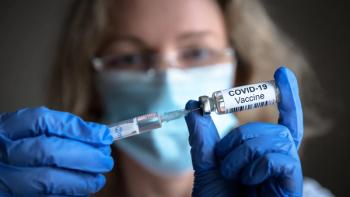
The World Health Organization (WHO) had previously issued guidance recommending that pregnant women should not receive the Moderna Inc. vaccine unless the individual is at high risk of exposure or having a severe case.

Contemporary OB/GYN’s Editor in Chief, Catherine Y. Spong, MD, recently joined Howard Bauchner, MD, Editor in Chief of the Journal of the American Medical Association (JAMA) and Denise J. Jamieson, MD, MPH for a Q&A session to discuss COVID vaccination in pregnant and breastfeeding women.

The protocol presented provides an algorithm for the initial evaluation of anemia in pregnancy, with treatment algorithms for the most common causes in pregnancy.