
A reader comments on the updated performance data for the verifi prenatal test.
A reader comments on the updated performance data for the verifi prenatal test.
Editor-in-Chief Charles J Lockwood, MD, MHCM discusses the recent report from the March of Dimes on the rates of premature deliveries across the United States.
Many women complain of changes in their cognitive function during the menopausal transition. Here's how to tell what's normal and what's not--and how to treat appropriately.
A commentary on Practice Bulletin Number 146 by the Editor-in-Chief of Contemporary OB/GYN.
Questions and answers from SMFM about the implications of uterine fibroids during pregnancy
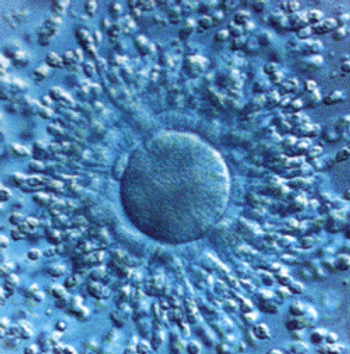
A GnRH agonist for an oocyte maturation trigger may be most useful in cases where pregnancy isn't the immediate goal, a new meta-analysis finds.

In this blog, Paul Burcher, MD, PhD, considers the professional obligations of obstetricians in a hospital setting to women who opt for a home birth.
On November 25, the Food and Drug Agency (FDA) issued a warning against the use of laparoscopic power morcellators in the management of many women undergoing hysterectomy or myomectomy.
A study by researchers from Yale University and Brown University suggests that low-to-moderate alcohol consumption during pregnancy may not increase risk of birth outcomes such as low birthweight.
Prevalence of opioid abuse during pregnancy has more than doubled over the past 14 years, according to a new study in Anesthesiology.
A study by researchers from Yale University and Brown University suggests that low-to-moderate alcohol consumption during pregnancy may not increase risk of birth outcomes such as low birthweight.

Pressure isn't always a bad thing, researchers have found when exploring ways to minimize pain during mammograms without reducing image quality.
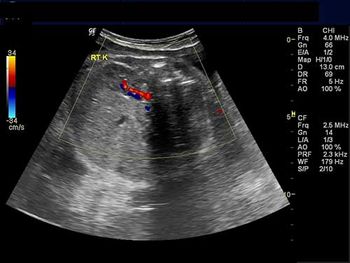
Challenge your diagnostic skills: What's going on with the kidneys in this fetus?


The cybersecurity of medical devices is on the mind of the FDA, which recently issued recommendations for security on wireless medical devices.
Understanding the usual clinical course of periviable PROM helps physicians guide families who are making difficult decisions.

Do you practice in a state that is forgoing Medicaid expansion under the Affordable Care Act? If so, what do you think this means for your patients?
The resurgence of whooping cough has put the Tdap vaccine front and center. Since the vaccine is safe, newborns-via antibodies from mom-can be protected.
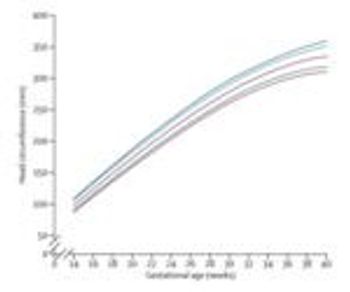
A universal standard for monitoring fetal growth can better detect which fetuses are at risk for intrauterine growth restriction.
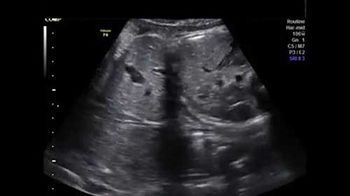
Challenge your diagnostic skills: Is everything normal in this fetal abdomen?

With this new FDA guidance, the group of women for whom laparoscopic power morcellation remains an appropriate treatment option is quite narrowed.
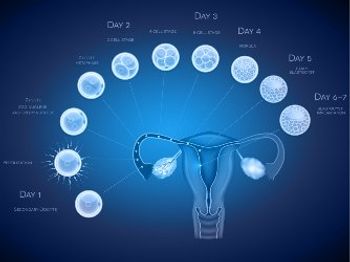
Being overweight can affect fertility, and now there is evidence that maternal weight at conception impacts how a fertilized egg divides and grows.

New technology-inspiring jealousy and one-upmanship everywhere. (Who said pregnant women weren't competitive?)

The inflow Intraurethral Valve-Pump, a device intended for use in women with impaired detrusor contractility (IDC), has been given FDA marketing approval.
AAGL attendees are normally reserved, but on Wednesday they got on their feet to give an ovation to the doctor who engineered the first pregnancy in a woman with a transplanted uterus.
A panel of experts were bested only once at the “Stump the Professors” session at the 43rd AAGL Global Congress on Minimally Invasive Gynecology in Vancouver. A sarcoma was the diagnosis that got away among three complex cases presented to a packed audience.
An isolation bag for morcellation provides the best specimen containment, according to a study presented at AAGL.

What does a cholesterol medication have to do with uterine fibroid tumors? New animal research explains one drug's effect on uterine leiomyoma cells.

Ever wonder about investing in 3D technology, the best candidates for LESS, and the utility of dual-function instruments? Here's one OB/GYN's opinion.
Women who receive the tetanus toxoid, reduced diphtheria toxoid, and acellular pertussis vaccine (Tdap) may not be at increased risk of preterm birth or other adverse birth outcomes, according to a new study in JAMA.