
Expectant mothers might not need to worry about a glass of wine, according to new research published in Obstetrics & Gynecology.
Expectant mothers might not need to worry about a glass of wine, according to new research published in Obstetrics & Gynecology.
A birth plan should not be viewed as an advance directive but rather as a record of aspirations. Labor is a time of improvisation, and no one can foresee its course.
The successful management of heavy menstrual bleeding with endometrial resection or ablation depends more on the surgeon’s skill than the technique used.
Experience should prevail when choosing an antihypertensive for very high blood pressure during pregnancy, because the evidence supporting one drug’s use over another is lacking.
Low levels of adiponectin before pregnancy were associated with a 5-fold increased risk of gestational diabetes. This risk was 7-fold in obese or overweight women.
10 ob/gyn practices to follow on Twitter. If your practice (or department) tweets, let us know!
The US Food and Drug Administration approved the new drug application (NDA) for Merck’s investigational fertility treatment corifollitropin alfa. Merck is seeking approval for the use of corifollitropin alfa in controlled ovarian stimulation (COS). If approved, the drug would be the first sustained follicular stimulant available in the United States.
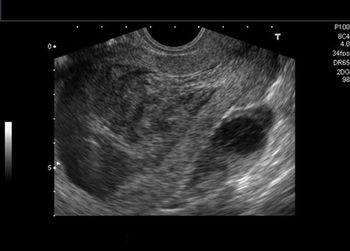
What is your diagnosis in this middle-aged woman with abnormal vaginal bleeding?
Radiofrequency volumetric thermal ablation for uterine fibroids is associated with a significant reduction in symptom severity and with improvements in quality of life even at 2 years’ post treatment.
The results of 2 unrelated studies show that breastfeeding may safeguard against breast cancer and Alzheimer’s disease.
The findings of a recent study have shown that uterine fibroid tumors are more common and more severe in African American women compared with white women. Find out how you can better treat uterine fibroid tumors in this high-risk population.
The best first- and second-line therapies for vulvovaginal atrophy are highlighted in an updated position statement from The North American Menopause Society.
Recent findings by the World Health Organization (WHO) show that around the world, life expectancy for women over age 50 is still increasing.
In 2010, Medicaid financed 48% of all births in the United States, an increase of 19% in the proportion of all births covered by Medicaid in 2008. This finding, from a study published in the Sept. 2013 issue of the journal Women's Health Issues, adds to previous research showing that the numbers of women dependent on Medicaid for health care are growing.
Estrogen therapy is still the mainstay of therapy for moderate-to-severe symptoms and long-term studies on endometrial safety of local estrogen and ospemifene are lacking. Those are the key conclusions from an updated position statement on management of symptomatic vulvovaginal atrophy (VVA) in postmenopausal women issued by the North American Menopause Society (NAMS).
The consumption of green tea extract has been shown to significantly reduce the size of uterine fibroids and improve symptom severity, a small study reported.
The use of an enhanced recovery pathway for perioperative care in complex gynecological surgery can reduce length of hospital stay, need for narcotic pain control, and costs.
To properly measure risk, the author argues, researchers must compare 1 twin pregnancy with 2 consecutive singleton pregnancies.
There is no evidence that UCP can be prevented, but rapid diagnosis and delivery have been shown to be advantageous. The authors present a plan to help you respond surely and swiftly.
The epidemiology of racial disparity in prematurity and infant mortality is a complex problem, say the authors, and public health programs are part of the solution.
The transition to ICD-10 is looming. You'll be ready if you start planning now.
The Contemporary OB/GYN tech experts address the learning curve associated with an EHR adoption.
Better communication between surgeons and pathologists will help to inform understanding of vaginal mesh complications.
The resection was not planned, consented to, or indicated, and this was enough reason to reach a settlement in this case rather than allow a jury to price it.
An innovative, individualized vaccine that may prolong the remission period of ovarian cancer survivors has been developed. Will it work?
The use of weighted vaginal cones for stress urinary incontinence is more effective than no treatment at all, the evidence shows.
A new index using protein markers can identify ovarian cancer cases at high and low risk for recurrence and discriminate between short- and long-term survivors.
A recent study in Nursing Outlook suggests that women who are responsible for full-time care of their grandchildren may be at increased risk of developing depressive symptoms compared with their non-primary caregiver counterparts.
A screening protocol that takes into consideration CA-125 levels over time and results of transvaginal ultrasound (TVS) shows promise in early detection of ovarian cancer, according to a new report from investigators at the University of Texas MD Anderson Cancer Center. In a large, prospective study, the combination demonstrated excellent specificity and positive predictive value (PPV) in a group of women at average risk of ovarian cancer.
Enhanced recovery pathway (ERP) leads to earlier discharge, cost savings, better patient satisfaction, lower narcotic use, and more stable readmission rates in complex gynecologic surgery patients, according to a study recently published in Obstetrics & Gynecology.