
Pressure is a better indicator of adequate pneumoperitoneum than volume or time before trocar entry in laparoscopic surgery, according to a recent study published in Journal of Minimally Invasive Gynecology.
Pressure is a better indicator of adequate pneumoperitoneum than volume or time before trocar entry in laparoscopic surgery, according to a recent study published in Journal of Minimally Invasive Gynecology.
How often do patients develop endometriosis following laparoscopic supracervical hysterectomy with uterine morcellation? To better understand the resulting rates of endometriosis via laparoscopic versus transvaginal or abdominal hysterectomies, researchers conducted a single center case-control study.
Here are two ultrasound images taken during the 3rd trimester of pregnancy.
With common and overlapping symptoms and subjective patient reporting, interstitial cystitis/painful bladder syndrome (IC/PBS) and bladder oversensitivity can be difficult to distinguish, making diagnosis and treatment recommendations tricky.
Poor communication is a leading cause of medical errors in this era of collaborative care. Effective communication strategies can help facilitate the continuity of care, prevent errors, and provide a safe environment for the patient.

What is your diagnosis of this 3rd trimester ultrasound?
Modern society has witnessed great improvements in everyday products, often thanks to advances in chemical compounds that make products better, stronger, and the like. Unfortunately, these advances may come at a cost, as prenatal exposure to some chemical compounds may have deleterious effects on offspring.
The perinatologist found a jaw abnormality on ultrasound but failed to diagnose the disorder. Read the facts, and see what you think.
The woman claimed that her cervix had been weakened by the cone biopsy, causing her to be unable to carry the pregnancy to term. What do you think>
Premature labor, spontaneous rupture of membranes, and a breech presentation. Could this infant have been saved?
Was the gynecologist liabele for the patient's bowel resection? Here are the facts for your review.
Did the obstetrician's failure to perform a cesarean delivery result in the infant's birth trauma and subsequent cerebral palsy?
Although the risk for persistent pumonary hypertension (PPH) in newborns is low (ie, 2 per 1,000 live-born infants), selective serotonin reuptake inhibitors (SSRIs)taken by mothers after the 20th week of pregnancy more than double the risk for this life-threatening condition, according to the findings of a Nordic population-based cohort study.
Results from an international multicenter study suggest that a new plasma-based DNA test detects nearly all cases of trisomy 18 (Edwards syndrome) and trisomy 13 (Patau syndrome), in addition to Down syndrome, with low-false positive rates.
Overweight women with diabetes can cut their risk for developing urinary incontinence (UI) by shedding 5% to 10% of their body weight or as little as 15 pounds (7.7 kg), according to findings from the Look AHEAD trial, a multicenter, randomized, controlled trial of overweight and obese individuals with type 2 diabetes.
About 7% of Americans are infected with oral human papillomavirus (HPV), according to a recent cross-sectional study. Prevalence is almost 3 times higher in men than in women, about 8 times higher in those who are sexually active than in those who are not, and variably higher among cigarette smokers, former and current marijuana users, and heavy alcohol drinkers.
Physicians using smartphones and other mobile devices to access patients' electronic health records are increasingly at risk for data breach, but a new initiative from the Office of the National Coordinator for Health Information Technology (ONC) of the US Department of Health and Human Services (HHS) may allay some fears about possible violations of Health Insurance Portability and Accountability Act (HIPAA) Privacy and Security Rules.
Pregnancy women with low serum 25(OH)-vitamin D concetrations are more than twice as likely to have a child whose language development is impaired by age 5 or 10 years.
As little as two cups of caffeinated coffee per day Is enough to lower free estradiol concentrations in white women and raise them in Asian women.
You would think that after 40 years of study and practice, all issues surrounding the management of gestational diabetes mellitus (GDM) would be settled.
When compared with ciprofloxacin, cefpodoxime failed to meet criteria for noninferiority in women with uncomplicated bladder infections, according to the findings of a randomized, double-blind trial.
In this protocol, Dr, Sibai reviews the pathophysiology, diagnosis, and management of preeclampsia. Included are algorithms for management of mild hypertension-preeclampsia and severe preeclampsia.
The words "compounding" or "compounded" are words heard more frequently in everyday medical practice and hospitals. What is compounding, and how does it benefit patients?
In vitro maturation (IVM) of oocytes is an established technique that provides a treatment option for subfertile patients without the risks and costs associate with COH.
A 25-year old Illinois woman delivered a baby by cesarean. During the procedure a laparotomy pad was left inside her abdomen. She subsequently experienced abdominal pain, bleeding, and diarrhea, and was readmitted to the hospital 4 months after the cesarean delivery. A CT scan revealed the laparotomy pad. Surgery was performed to remove the pad and an abscess that had formed around it. The patient was hospitalized for a week and also was diagnosed with ulcerative colitis. The woman sued those involved with the delivery, claiming that the retained pad caused or contributed to her ulcerative colitis and that she would require colon removal surgery in the future.
The first column in this series reviewed standard electronic fetal monitoring (EFM) definitions and categories proposed by the National Institute of Child Health and Human Development (NICHD).
Cancer survivors are more likely than their healthy counterparts to be currentsmokers, to rate their overall health as "poor," and to report less participation in moderate to strenuous exercise according to the results of a study from the Mayo Clinic.
More than one third of women in the United States will experience some form of intimate partner violence (IPV) in their lifetime. The consequences of IPV can be lifelong and include emotional trauma, long-term physical impairment, chronic health problems, and even death.
Do you Screen all New Mothers for Postpartum Depression?
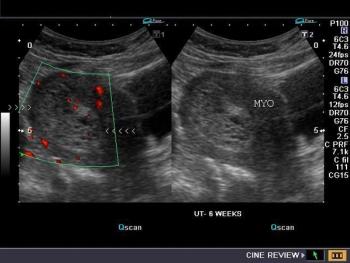
Our patient presents with 6 weeks of amenorrhea. What's your diagnosis?