
To evaluate the impact of osteoporosis on the patients' quality of life, particularly in the absence of fractures.
To evaluate the impact of osteoporosis on the patients' quality of life, particularly in the absence of fractures.
Breast cancer is a growing concern among premenopausal women. With an emphasis on this patient population, this article discusses the known risk factors for breast cancer; models for quantitative risk assessment; and strategies for modifying breast cancer risk, including screening mammography, prophylactic mastectomy, and primary pharmacologic prevention.
Postmenopausal osteoporosis is a major health problem, primarily because of the severe morbidity and mortality associated with osteoporotic fractures.
The age at which a woman reaches menopause is 85% genetically determined, according to new research published Thursday, in Europe's leading reproductive medicine journal, Human Reproduction*.
A report just published in the Journal of the American Medical Association confirmed previous studies which found that women who take hormone replacement therapy (HRT) may develop denser breast tissue, which in turn may make it more difficult to detect breast cancer through mammography.
Both the estrogen receptor (ER) and vitamin D receptor (VDR) belong to the same superfamily of nuclear receptors and both receptors are activated by interaction with their ligands.
Like the proverbial elephant, osteoporosis has been described in ways that vary according to the scientific orientation of the describer. It has been defined clinically as the presence of fracture; biomechanically as decreased bone strength; radiographically as osteopenia; histomorphometrically as reduced bone matrix per unit of bone volume; and epidemiologically as increased fracture risk.
There are many ways to take estrogens and many philosophies of management. The views expressed on this page represent the opinion of the author and may or may not conform to the current "standard of care" prevalent in the United States today.
A 27-year study of 1300 women undergoing retropubic cystourethropexy using either the modified Marshall-Marchetti-Krantz procedure or the modified Pereyra procedure compares long-term results when the type of surgery is selected on the basis of patient criteria.
Natural Estrogens, Selective Estrogens, Fantasy Estrogens... What is the Perfect Estrogen?
Perhaps the principal reason male menopause has never been in the public spotlight is because men who experience the characteristic decline in virility during middle age are reluctant or even unwilling to acknowledge the condition.
This is adapted from an interview with Dr. Howard Glazer, who has developed a treatment for this condition using a form of biofeedback. This initial interview, covers the history of the disease, as well as Dr. Glazer's background.
The Treatment of Vulvovaginal Pain Disorders with Surface Electromyographic Assisted Pelvic Floor Muscle Rehabilitation
Receiving a diagnosis of cancer is a major life change. Neither the patient, the family nor friends will be the same again.
Body Mass Index, Percent Body Fat, and Regional Body Fat Distribution in Relation to Leptin Concentrations in Healthy, Non-Smoking Postmenopausal Women in a Feeding Study
Human, animal, and in vitro research indicates a beneficial effect of appropriate amounts of omega-3 (n-3) polyunsaturated fatty acids (PUFA) on bone health.
Many risk factors for fractures have been documented, including low bone-mineral density (BMD) and a history of fractures.
Urinary incontinence impacts 15 to 35% of the adult ambulatory population. Men after the removal of the prostate for cancer can experience incontinence for several weeks to years after the surgery.
Diagnostic discordance for osteoporosis is the observation that the T-score of an individual patient varies from one key measurement site to another, falling into two different diagnostic categories identified by the World Health Organization (WHO) classification system.
Obtaining reliable hemostasis is crucial as part of laparoscopically assisted vaginal hysterectomies, and over the past 20 years, various methods to do so have been advocated. For instance, in 1989, Harry Reich recommended using sutures to control the uterine vessels, as monopolar, bipolar, and laser instruments available at that time were inherently risky to use along the pelvic sidewall.
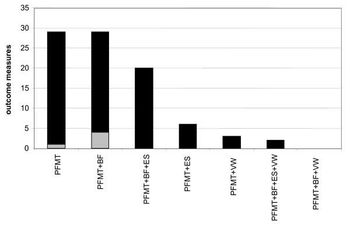
Stress urinary incontinence (SUI) is a prevalent and costly condition which may be treated surgically or by physical therapy.
High blood pressure complicates almost 10 percent of all pregnancies, and the incidence is higher if the women are nulliparous or carrying multiple fetuses.
In an extensive, multi-center clinical treatment trial, Canadian researchers evaluated the outcomes of 538 cases of uterine artery embolization for fibroids. Between 20% and 50% of women develop uterine fibroids, benign tumors in the muscular tissue of the uterus that can seriously impact their health and well-being.
This study was designed to determine whether epidural anesthesia would improve external cephalic version success in a safe and effective manner.
The ability to quickly, cost-effectively and accurately predict fetal pulmonary maturity would be a helpful adjunct in the management of problem pregnancies when either delivery or administration of glucocorticoid are management options.
Virtually half of the articles about genetic testing in the lay press contain the words "simple blood test". In a high-tech medical world of complicated imaging, medications and surgeries, reporters seem intrigued that much genetic testing can be performed on a blood specimen.
There are an increasing number of genetic disorders that can be diagnosed by direct DNA analysis, such as cystic fibrosis.
A recent survey of ob/gyns (N = 308) reported that respondents who indicated they had prior training in office uterine evacuation and/or induced abortion also reported using office uterine evacuation more frequently as compared to those providers without any training. The operation room was used more often by those respondents who did not have any induced abortion training.
In the newborn period, group B streptococcus agalactiae infection is the leading cause of sepsis in the United States. The overall attack rate of early onset GBS infection (EOGBSI) per 1000 deliveries ranges from 0.72 to 5.5.
It is implantation of the fertilised ovum outside the normal uterine cavity. Common site (95%) : the tubes. Rare sites (5%) : The ovaries, a rudimentary horn of a bicornuate uterus , broad ligaments, peritoneum and cervix.