

Maternal RSV immunization creates an important opportunity for obstetric and pediatric clinicians to coordinate newborn prevention strategies, according to Kevin Ault, MD.
Maternal RSV immunization creates an important opportunity for obstetric and pediatric clinicians to coordinate newborn prevention strategies, according to Kevin Ault, MD.

A new Gallup survey found 51% of women in the United States reported negative healthcare experiences.

Hugh Taylor, MD, explains that imaging in endometriosis is best for ruling out other causes of pelvic pain and cannot exclude the diagnosis.
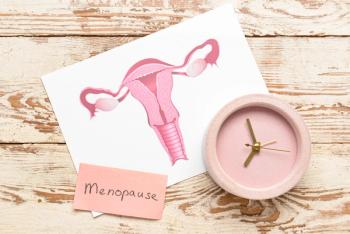
A new study links earlier menopause age to faster cognitive decline and earlier Alzheimer diagnosis.

The FDA office of Women's Health and Center for Drug Evaluation and Research and hosting a public workshop with a focus on testosterone use in menopausal women.
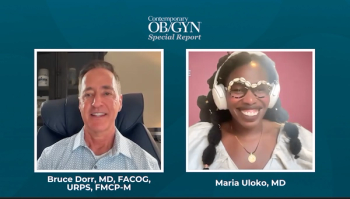
Bruce Dorr, MD, FACOG, URPS, FMCP-M, weighs his own experience with pellet therapy against guideline evidence, then he and Maria Uloko, MD, close with candid advice for clinicians too afraid of hormones to start prescribing.
Bruce Dorr, MD, FACOG, URPS, FMCP-M, and Maria Uloko, MD, walk through real-world dosing, cost workarounds, and the labs that actually matter for safety and efficacy.
Bruce Dorr, MD, FACOG, URPS, FMCP-M, and Maria Uloko, MD, reframe testosterone candidacy around clinical presentation and hormone state, not age cutoffs or a single number on a chart.
Before prescribing testosterone, know what the evidence actually proves. Maria Uloko, MD, draws a sharp line between the one population the data supports and the much wider group of women asking about it.

Drawing on her own successful version, Amber Watters, MD, welcomes the ASA's push for closer obstetrics and anesthesia collaboration.

David Shalowitz, MD, MSHP, emphasizes spreading awareness of opportunistic salpingectomy across specialties while grounding its use in shared decision-making.

SMFM states abortion care is core to MFM practice and urges institutional action to protect high-risk patient access.
Hugh Taylor, MD, welcomes ACOG's new guidance allowing clinical, nonsurgical diagnosis of endometriosis and emphasizes it is a systemic disease affecting the whole body.
FDA accepted for review an sNDA for MIUDELLA copper IUD for a 6-year duration, with a PDUFA date in Q2 2027.

Get caught up with Contemporary OB/GYN! This list helps you navigate our top stories from the week, all in one place.
Amber Watters, MD, MS, explains that emergent delivery after external cephalic version is exceedingly rare and fits within existing protocols, and outlines how to build a version program.

Positively Pregnant translates cycle day and cycle length research into individualized pregnancy test sensitivity estimates, according to Alexandra C. Sundermann, MD, PhD.
Kevin Ault, MD, FACOG, explains that all four vaccines in ACOG's 2026-27 guidance carry direct newborn benefit and that prenatal conversations ease downstream pediatric vaccine discussions.

A new SFP Committee Statement in Contraception standardizes protocols for removing deep and nonpalpable contraceptive implants.

Atogepant reduced perimenstrual migraine days vs. placebo and met all 8 secondary endpoints in the Phase 3 LUNA study.
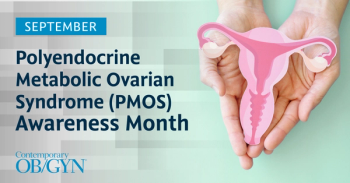
A new, expert-led video series explores the PCOS-to-PMOS rename and what it means for diagnosis, care, and outcomes.
Kevin Ault, MD, FACOG, emphasizes that obstetric clinicians are patients' most trusted vaccine information source, making maternal COVID-19 counseling a high-value opportunity.
FDA granted BTD to certolizumab pegol for preventing adverse pregnancy outcomes in women with antiphospholipid syndrome.
Amber Watters, MD, MS, explains how the ASA's statement encourages obstetric units to integrate neuraxial anesthesia into a formal external cephalic version process.
David Shalowitz, MD, MSHP, describes how OB-GYNs can collaborate with non-gynecologic surgeons to extend salpingectomy and reduce ovarian cancer risk during other abdominal procedures.
Positively Pregnant, built on PRESTO data, gives patients day-specific, evidence-based estimates of home pregnancy test accuracy by cycle timing, as Alexandra C. Sundermann, MD, PhD, explains in this video.
Get caught up with Contemporary OB/GYN! This list helps you navigate our top stories from the week, all in one place.
Kevin Ault, MD, FACOG, explains that maternal COVID-19 and influenza vaccination protects newborns and reduces severe maternal illness, stillbirth, and prematurity.
"Although availability of certain products or brands may vary by pharmacy or location, estradiol transdermal patches remain available," stated the federal agency in an update.
Kevin Ault, MD, FACOG, explains ACOG's extension of the maternal RSV vaccine window to March 1 and the role of passive immunity in protecting newborns.