
News|Videos|September 16, 2026
Pellet therapy and practical advice for hesitant prescribers
Fact checked by: Benjamin P. Saylor
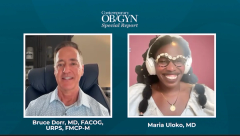
Bruce Dorr, MD, FACOG, URPS, FMCP-M, weighs his own experience with pellet therapy against guideline evidence, then he and Maria Uloko, MD, close with candid advice for clinicians too afraid of hormones to start prescribing.
Advertisement
Maria Uloko, MD, opens by observing that the complexity of testosterone dosing and monitoring discussed in the previous episode helps explain why many physicians hesitate to lead conversations about hormone therapy, a gap patients often fill with misinformation, particularly around testosterone pellets. Pellet therapy remains widely used in community practice, she notes, despite not being recommended by current consensus guidelines, which cite concerns over dose adjustability, supraphysiologic hormone concentrations, and limited long-term safety data. She asks Bruce Dorr, MD, FACOG, URPS, FMCP-M, who has considerable clinical experience with pellets, how he reconciles that experience with the guideline evidence.
Dorr calls the guideline concerns legitimate and says his own clinical experience does not override the strength of the underlying evidence hierarchy. Pellets can work well for some patients, he explains, but they carry real drawbacks: cost, variability in subcutaneous absorption tied to vascularity, and the difficulty of adjusting a dose once it is implanted. He stresses that no single delivery method, whether pellets, creams, or gels, is universally right, and that every option requires careful monitoring, informed consent, and a willingness to accept that some level of testosterone above 0, paired with symptom tracking, is usually better than chasing a specific number. He closes this point by naming his career goal: an eventual FDA-approved testosterone formulation for women in the United States.
Dorr then turns the conversation toward guidance for hesitant clinicians, asking Uloko what one thing she would want an occasional prescriber to do differently tomorrow. Uloko urges clinicians to interrogate their own fear around hormone prescribing, noting that every prescriber was once a beginner and that confidence builds through experience and patient outcomes. Dorr echoes that message in his closing remarks, urging viewers not to avoid the conversation altogether: Start with a low dose, monitor patients closely, and use the evidence-based framework outlined in this series to better serve the next patient who asks about testosterone therapy.
Advertisement
Related Content
Advertisement


Latest CME


Advertisement
Advertisement
Trending on Contemporary OB/GYN
1
David Shalowitz, MD, on spreading awareness of salpingectomy for cancer prevention
2
SMFM: Managing high-risk pregnancies amid abortion care restrictions
3
Endometriosis as a systemic disease, with Hugh Taylor, MD
4
FDA accepts extended duration sNDA for MIUDELLA IUD
5