




Endometriosis
Latest News
Advertisement
Latest Videos


Advertisement
More News

In a recent study, a lower pain-related quality of life was found in patients with preoperative pelvic pain conditions after surgery.
In a recent study, providers were more likely to recommend combined hormone replacement therapy (HRT) than estrogen-only HRT in patients with severe endometriosis because of recurrence risks from estrogen-only HRT.

Reductions in symptom incidence and severity from uterine fibroids and endometriosis have been observed in patients receiving relugolix combination therapy.
In a recent study, the Deep Pelvic Endometriosis Index accurately predicted operating and hospital stay length, along with postoperative complications, in patients with deep pelvic endometriosis.

Pain mechanisms are multifactorial, complex, and still poorly understood.

To close out Endometriosis Awareness Month in March, Rachel Cullifer, MD, discusses clinical pearls for diagnosis and treatment, as well as some common misconceptions about endometriosis.
Sponsored in Part by a Medical Educational Grant by Myovant Sciences. Content Independently developed by Contemporary OB/GYN.
Endometriosis experts describe their takeaway points messages on the management of endometriosis.
Sponsored in Part by a Medical Educational Grant by Myovant Sciences. Content Independently developed by Contemporary OB/GYN.
A panel of a experts provide an overview of the unmet needs and future directions of the endometriosis landscape.
Sponsored in Part by a Medical Educational Grant by Myovant Sciences. Content Independently developed by Contemporary OB/GYN.
A panel of experts provide an overview of the health complications that are associated with endometriosis.
Sponsored in Part by a Medical Educational Grant by Myovant Sciences. Content Independently developed by Contemporary OB/GYN.
Sawsan As-Sanie, MD, Jessica Shim, MD, Robert Taylor, MD, PhD, and Linda Giudice, MD, PhD, discuss the 3 main types of endometriosis and the commonly associated symptoms and risk factors.
Sponsored in Part by a Medical Educational Grant by Myovant Sciences. Content Independently developed by Contemporary OB/GYN.
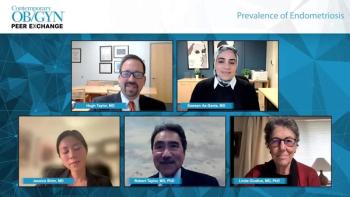
Hugh Taylor, MD, leads a discussion with a panel of experts about the prevalence of endometriosis.

Researchers from the Feinstein Institute in Manhasset, New York, found single-cell RNA sequencing to be an effective and noninvasive way to screen for and diagnose patients with endometriosis.

Myovant Sciences and Pfizer announces the US Food and Drug Administration has approved Myfembree (relugolix combination tablets) for the once-daily treatment of moderate-to-severe endometriosis-associated pain.

Women with endometriosis had a 34% greater risk of stroke than women without the chronic inflammatory gynecological condition, according to an analysis of the Nurses Health Study II.
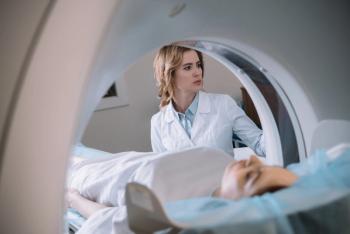
A review of magnetic resonance imaging (MRI) for diagnosing endometriosis and related diseases in the Korean Journal of Radiology has found that the medical imaging technique can help in the early and accurate diagnosis of ovarian endometriotic cysts and deep infiltrating endometriosis (DIE), while avoiding the need for invasive procedures and radiation exposure, due to MRI’s high contrast and objectivity.

Most studies conclude that dietary interventions positively impact endometriosis, according to a systematic review in the journal Reproductive Sciences.

A study published in Cannabis and Cannabinoid Research found that women often used cannabis to manage endometriosis symptoms during the COVID-19 pandemic.

Rates of endometriosis are generally higher in leaner women, yet there still seems to be a connection between the presence and placement of fat tissue and the development of endometriosis. One study team sought to find out why.

A preprogrammed, nomad, easy-to-use, transcutaneous electrical nerve stimulation (TENS) device was well tolerated and provided rapid and lasting pain decrease in women with primary dysmenorrhea (PD), according to a study published in the journal Progrés en Urologie.

A study published in the Journal of Clinical Medicine highlights the high burden of endometriosis, including infertility, comorbidities, health care usage, and medical costs.

An expert reproductive endocrinologist explores the future treatment landscape for patients with endometriosis.
Hugh Taylor, MD, provides insight on remaining gaps in care in the endometriosis treatment landscape.
Dr Hugh Taylor discusses his treatment approach for patients with presumed endometriosis.
An expert in reproductive endocrinology reviews endometriosis treatment options for various patient populations, including patients with infertility, endometriomas, deep endometriosis, and effects on nonreproductive organs.
Dr Robert N. Taylor provides insight on emerging treatments and integrative therapies on the horizon with elagolix as well as real-world challenges using elagolix for endometriosis management.
Advertisement
Advertisement
Trending on Contemporary OB/GYN
1
Safety Monitoring and Dosing for NK3 Antagonists in Menopause VMS
2
Missed & Dismissed: From perimenopause to menopause, the transition medicine keeps missing
3
Neurokinin receptor antagonists improve menopausal sleep disturbance
4
Red flags that point beyond menopause in patients with night sweats
5