
Morris Wortman, MD performs an ultrasound-guided reoperative hysteroscopic surgery on a patient who had undergone endometrial ablation approximately 18 months earlier.
Morris Wortman, MD performs an ultrasound-guided reoperative hysteroscopic surgery on a patient who had undergone endometrial ablation approximately 18 months earlier.
“The c-section you do today impacts the future health of the woman you’re caring for.” So said Aaron B. Caughey, MD, of Oregon Health & Science University, Portland, in his lunch-and-learn “The Cesarean Epidemic: Etiologies, Outcomes and Potential Solutions” on Monday. What’s more, he pointed out, “the c-section you do today leads to the repeat … [which] leads to the repeat … [which] leads to the accreta in 8 years.” But Caughey did not place blame for the so-called epidemic with either doctors or patients.
A small study presented at the 2014 ACOG Annual Clinical Meeting suggests that a selective estrogen receptor modulator (SERM) plus estrogen may have promise in treatment of perimenopausal symptoms. According to Japanese researchers, the combination-known as tissue-selective estrogen complex-improved climacteric symptoms and bone resorption markers without severe side effects.
Concerns about asymptomatic sexually transmitted infection (STI) in women at high risk should not delay placement of an intrauterine device (IUD) in women who also are at risk of undesired pregnancy, according to a study by investigators from the University of Pittsburgh. The results, in 366 patients from an inner-city clinic, were presented at the 2014 ACOG Annual Clinical Meeting.
A systematic review of Smartphone reminder applications (apps) by investigators at the Ohio State University shows that they may be useful as back-up reminders for patients on oral contraceptives (OCs). The research was presented at the 2014 ACOG Annual Clinical Meeting.
Strengthening pelvic floor muscles through yoga just may be helpful for women with urinary incontinence, particularly stress incontinence.
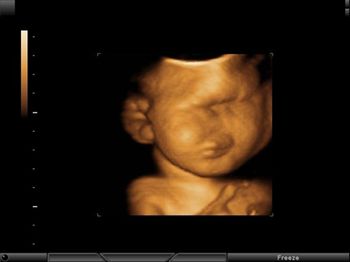
Challenge your diagnostic skills: Can you identify this anomaly of the fetal face and brain?
Contemporary OB/GYN editorial board member Ilana Cass, MD, offers perspective on the recent FDA approval of the first-ever alternative to Pap smear cytology cervical screening.

Vaginal hysterectomies are associated with superior patient outcomes and cost less than other methods of hysterectomy. So why is their rate of use declining?
A second-prize paper presented at ACOG 2014 evaluates the risk of uterine perforation for levonorgestrel IUDs and copper IUDs and reports an unexpected finding.
New research presented at ACOG 2014 shows that inadequate weight gain in the second trimester is an independent risk factor for spontaneous preterm birth.
A population-based study suggests that there may be a link between autism spectrum disorder (ASD) in boys and prenatal exposure to selective serotonin reuptake inhibitors (SSRIs). The researchers caution, however, that interpretation of their findings is complicated by potential recall bias and residual confounding and that maternal depression alone is risky for a fetus.
According to a recent study in the British Medical Journal, women who suffer from chronic hypertension are at higher risk of adverse pregnancy outcomes like low birth weight and neonatal death.
Women undergoing the menopausal transition may be prone to prolonged bleeding with periods of heaviness, according to a new study in BJOG.
Reports of women being criticized for “intense” workouts in late pregnancy are circulating the Web. Are these criticisms clinically warranted, or are the criticizers just bullies?
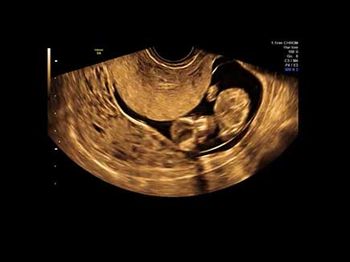
Challenge your diagnostic skills: Can you identify this anomaly?
A safety communication discouraging use of power morcellation during hysterectomy or myomectomy for fibroids has been issued by the Food and Drug Administration (FDA) because of concern about risk of inadvertent spread of unsuspected cancer to abdominal and pelvic cavities.
The FDA has weighed in on the safety of uterine fibroid morcellation. Given the current evidence, find out what they recommend.
New research shows that too much or too little maternal weight gain in pregnancy is associated with the child’s risk of being overweight or obese in early childhood.
A new meta-analysis has quantified the risk of preeclampsia and other adverse pregnancy outcomes in women with chronic hypertension.
According to a recent study in Pediatrics, paternal obesity could be an even greater risk factor than maternal obesity for developmental disorders such as autism spectrum disorders (ASD).
New research suggests that ankle fractures should be considered in the same category as forearm fractures when it comes to assessing risk of bone breaks in postmenopausal women. The findings were presented at the World Congress on Osteoporosis, Osteoarthritis and Musculoskeletal Diseases in Seville, Spain.
Don’t let time constraints and large patient loads prevent you from providing a thorough well-woman visit. Are you covering all the bases?
Prolonged bleeding as women transition into menopause is common. Although disconcerting, these changes generally require nothing more than watchful waiting.
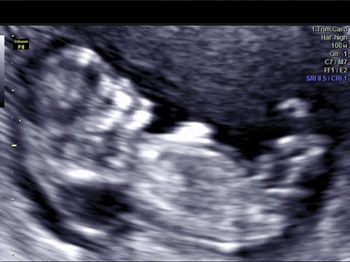
Challenge your diagnostic skills: Can you identify this well-known anomaly?
What does the world look like through Google Glass?
Not losing any baby weight within 1 year after delivery increases a woman’s risk of diabetes and heart disease, new research shows.
A randomized controlled trial (RCT) calls into question the benefit of administering hyperimmune globulin to pregnant women with primary cytomegalovirus infection (CMV) as a way to prevent intrauterine transmission. CMV is a major cause of morbidity and mortality.