

Experts contrast traditional hormone therapy with newer nonhormonal agents, outlining patient suitability and limitations.
Experts contrast traditional hormone therapy with newer nonhormonal agents, outlining patient suitability and limitations.
Discussion centers on the daily and long-term consequences of untreated VMS, including sleep disruption, fatigue, and cognitive decline.
Panelists describe how hypothalamic KNDy neuron dysregulation drives hot flashes and night sweats following estrogen decline.
Pauline Maki, MD, welcomes the expert panel and introduces the focus on novel mechanisms and emerging therapies for vasomotor symptoms in menopause.
Declining national screening rates highlight the need for increased investment, education, and innovative approaches to expand access.

Study finds women on hormone therapy lost more weight with tirzepatide, though researchers stress association—not causation—needs confirmation.

Fertility expert Lucky Sekhon, MD, and Olympic gold medalist Tara Lipinski discuss the psychological challenges of infertility.

New data suggest hormone therapy may increase autoimmune disease risk in postmenopausal women, highlighting the need for clinical vigilance.
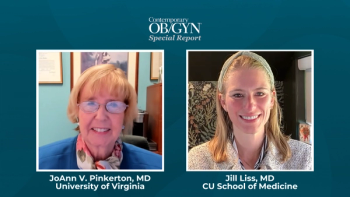
Experts highlight future research in personalized menopause care, exploring hormone safety, the microbiome, cognition, and metabolic health.
Experts compare hormone and nonhormonal options for menopause, emphasizing tailored care, persistent symptom relief, and safe use of local estrogen.
Experts discuss how neurokinin receptor antagonists offer rapid, durable, and nonhormonal relief for vasomotor symptoms, reshaping menopause care.
Experts discuss neurokinin receptor drugs, CBT, and lifestyle tools for managing vasomotor symptoms, emphasizing innovation and evidence-based care.
Experts discuss contraindications to hormone therapy and evolving care for women with early or surgical menopause, emphasizing individualized treatment.
Experts review updated VMS treatment guidelines and stress shared decision-making to personalize hormone and nonhormone therapy options.
Experts emphasize normalizing menopause discussions early to reduce stigma and improve communication in both clinical and workplace settings.
Experts discuss how culture, stigma, and inequities shape menopause care and leave many women without adequate symptom management.
Experts highlight education, equity, and access gaps in vasomotor symptom care, calling for stronger clinician training and awareness.
Experts discuss updates in the management of vasomotor symtpoms in menopause, including unmet needs, quality of life impacts, and new therapies.

Nearly 30% of long COVID patients show signs of postural orthostatic tachycardia syndrome, a condition tied to worsened fatigue and recovery.
Estrogen decline during menopause alters fat, muscle, and lipid metabolism; multimodal lifestyle strategies help reduce cardiovascular risk.
Early intervention during perimenopause can prevent long-term osteoporosis through timely screening and intermittent therapy strategies.
Cynthia Stuenkel, MD, reviews diagnosis, management, and fertility considerations in women with primary ovarian insufficiency.
CBT adapted for menopause shows benefits for vasomotor symptoms, mood, and sleep, according to Danette Conklin, PhD, at The Menopause Society.
Elinzanetant shows a strong safety profile with no liver toxicity and minimal side effects in menopausal women with vasomotor symptoms.
Levonorgestrel IUD offers localized progesterone delivery for endometrial protection during hormone therapy, with minimal systemic effects.

Melissa Mauskar, MD, discusses overlapping vulvar conditions, patient counseling, and the importance of multidisciplinary care
At The Menopause Society Annual Meeting, Caroline Mitchell, MD, MPH, emphasized individualized, evidence-based care and the safety of topical hormones for GSM.
Menopause remains a taboo topic in many cultures, yet women seek to educate themselves and support each other through shared experiences.
Andrew Kaunitz, MD, shares how older women can explore safe contraceptive options while understanding fertility risks.

In a study led by Eugene Declercq, PhD, MBA, infants born to mothers who died during or after pregnancy faced higher mortality rates.