

Anita Nelson, MD, discusses the FDA's approval extending etonogestrel implant use to 5 years and the new REMS certification clinicians must complete by February 23, 2026.
Anita Nelson, MD, discusses the FDA's approval extending etonogestrel implant use to 5 years and the new REMS certification clinicians must complete by February 23, 2026.

Placentas from older mothers held less NAD+, and in aged pregnant mice, nicotinamide riboside or the CD38 inhibitor 78c restored placental NAD+ and improved fetal growth.

Hugh Taylor, MD, outlines a stepwise approach to endometriosis therapy, from first-line oral contraceptives to oral GnRH antagonists for progestin-resistant patients.

Hosted by Calbeth C. Alaribe, DMSc, MPH, PA-C, CPCHE, the monthly series brings clinicians, researchers, innovators, advocates, and other voices across women’s health into conversations that rarely happen in the same room.

A new book from Sameena Rahman, MD, reclaims "brown girls' disease" as a lens for examining how dismissal—of conditions, anatomy, and patients—undermines sexual medicine care for all women.

Menopause proteomics were consistently associated with inflammatory brain aging and Alzheimer’s dementia risk across nearly 15,000 women in a new study published in Nature Medicine.

The FDA approved an IDE allowing Mercy BioAnalytics to evaluate its Evident blood-based ovarian cancer screening test in the prospective pivotal SOARA study of average-risk women.

Sameena Rahman, MD, discusses how digital symptom trackers can shorten PMOS diagnostic delays and support earlier cardiometabolic care.
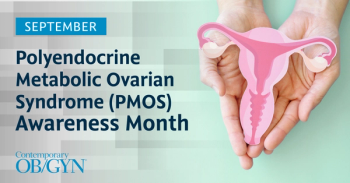
A new, expert-led video series explores the PCOS-to-PMOS rename and what it means for diagnosis, care, and outcomes.

Seventy-one percent of women miss their first perimenopausal symptom because anxiety, brain fog, and mood changes precede hot flashes—and most attribute them to stress, per the Bonafide 2026 State of Menopause Survey.

A real-world study presented at Psych Congress found that zuranolone's PPD symptom improvements were sustained through day 90.

Get caught up with Contemporary OB/GYN! This list helps you navigate our top stories from the week, all in one place.

Maternal RSV immunization creates an important opportunity for obstetric and pediatric clinicians to coordinate newborn prevention strategies, according to Kevin Ault, MD.

A new Gallup survey found 51% of women in the United States reported negative healthcare experiences.
Hugh Taylor, MD, explains that imaging in endometriosis is best for ruling out other causes of pelvic pain and cannot exclude the diagnosis.
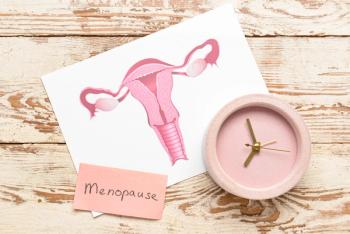
A new study links earlier menopause age to faster cognitive decline and earlier Alzheimer diagnosis.

The FDA office of Women's Health and Center for Drug Evaluation and Research and hosting a public workshop with a focus on testosterone use in menopausal women.

Bruce Dorr, MD, FACOG, URPS, FMCP-M, weighs his own experience with pellet therapy against guideline evidence, then he and Maria Uloko, MD, close with candid advice for clinicians too afraid of hormones to start prescribing.
Bruce Dorr, MD, FACOG, URPS, FMCP-M, and Maria Uloko, MD, walk through real-world dosing, cost workarounds, and the labs that actually matter for safety and efficacy.
Bruce Dorr, MD, FACOG, URPS, FMCP-M, and Maria Uloko, MD, reframe testosterone candidacy around clinical presentation and hormone state, not age cutoffs or a single number on a chart.
Before prescribing testosterone, know what the evidence actually proves. Maria Uloko, MD, draws a sharp line between the one population the data supports and the much wider group of women asking about it.

Drawing on her own successful version, Amber Watters, MD, welcomes the ASA's push for closer obstetrics and anesthesia collaboration.

David Shalowitz, MD, MSHP, emphasizes spreading awareness of opportunistic salpingectomy across specialties while grounding its use in shared decision-making.

SMFM states abortion care is core to MFM practice and urges institutional action to protect high-risk patient access.
Hugh Taylor, MD, welcomes ACOG's new guidance allowing clinical, nonsurgical diagnosis of endometriosis and emphasizes it is a systemic disease affecting the whole body.
FDA accepted for review an sNDA for MIUDELLA copper IUD for a 6-year duration, with a PDUFA date in Q2 2027.
Get caught up with Contemporary OB/GYN! This list helps you navigate our top stories from the week, all in one place.
Amber Watters, MD, MS, explains that emergent delivery after external cephalic version is exceedingly rare and fits within existing protocols, and outlines how to build a version program.

Positively Pregnant translates cycle day and cycle length research into individualized pregnancy test sensitivity estimates, according to Alexandra C. Sundermann, MD, PhD.
Kevin Ault, MD, FACOG, explains that all four vaccines in ACOG's 2026-27 guidance carry direct newborn benefit and that prenatal conversations ease downstream pediatric vaccine discussions.