

The study found that both patient- and treatment-related factors contributed to noncompliance.
The study found that both patient- and treatment-related factors contributed to noncompliance.

The study in the Journal of Clinical Oncology is a follow-up to a study conducted by the same authors to evaluate if pregnancy is safe in breast cancer patients who have hormone-sensitive breast cancer.
Here’s the latest data, updated on July 23:
Many of the goals mentioned in the plan intersect with the mission of the NIH Office of Research on Women’s Health (ORWH).

The results of this study allowed researchers to identify the onset mechanism of recurrent pregnancy loss (RPL), especially in some cases that would have otherwise remained unexplained.
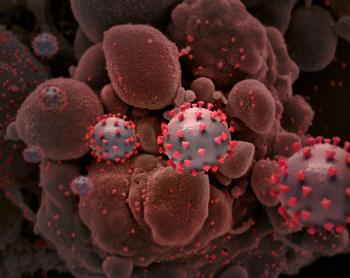
A new study from the National Institutes of Health (NIH) may shed light on why the virus has rarely been found in fetuses and newborns of mothers infected with COVID-19.

Did you know that up to 75% of medical residents develop burnout during their training period, with nearly 30% developing clinical symptoms of depression?

According to a new study in the American Journal of Health-System Pharmacy, chemotherapy stewardship programs may result in cost savings to both patient and health systems.

Contemporary OB/GYN Senior Editor Angie DeRosa interviews Maternal-Fetal Medicine Specialist Dr. Washington Hill to get his perspective on what practicing ob/gyns can do to address implicit bias and racism in the health care system.

A recent systematic review found that climate change-related exacerbation of the two exposures may be having an adverse effect on obstetric outcomes.

Although clinicians are getting used to incorporating telehealth into everyday practice, ensuring they get paid for these virtual visits is essential.

Read about the impact when long-acting reversible contraception (LARC) was offered to teenage mothers prior to hospital discharge.

Lack of patient knowledge about the natural process of menopause and lifestyle interventions are two major challenges to symptom control.

Last month, the Society for Reproductive Investigation (SRI) announced the passing of Robert Jaffe, MD, a Professor Emeritus of obstetrics, gynecology, and reproductive sciences, and physiology.

A new study, published in the Journal of the American Heart Association, examined the reasons for which women with HIV (WLWH) tend to have increased risk of plaque buildup in their arteries (atherosclerotic).

New research suggests levonorgestrel IUDs are successful in treating adolescents with HMB and AUB.

The Centers for Disease Control and Prevention (CDC) recommends using nucleic-acid amplification tests (NAAT) when testing female patients under the age of 25 for Chlamydia trachomatis.

This episode of Pap Talk by Contemporary OB/GYN features an interview with Dr. Emily S. Miller, with Northwestern Medicine in Chicago.

Two calculators for practitioners to estimate fetal growth percentiles, velocity and account for racial and ethnic variation from the NICHD are now available.

To date, COVID-19 continues to challenge public health infrastructure, out-pace hospital and physician capacity, make people ill, and kill on a global scale.

Here are some practical steps you can take to secure your practice's future.

Inaugural continuing medical education-certified webcast will bring together world-renowned obstetricians and gynecologists to discuss hot topics in women’s health

The American Cancer Society (ACS) has updated its guidelines for human papillomavirus (HPV) vaccination.

In the United States, marijuana use by adults has increased in recent years.
Data on COVID-19 during pregnancy, as reported by the CDC, in collaboration with state, local, and territorial health departments and external partners.

Results of a nationally representative study indicate that many young women receive bimanual pelvic exams (BPEs) and Pap tests that may be unnecessary, and not in compliance with the latest guidance from the American College of Obstetricians and Gynecologists (ACOG).

A peak in hot fl ash reports was observed in July, while January had a trough in hot fl ash reports.

A new analysis by researchers who analyze crime statistics shows that in two major metropolitan areas, domestic violence reports increased during the COVID-19 pandemic.

“This wouldn’t have happened if I was still in Brazil!” exclaimed my patient.

This case involves induction of labor for a suspected large for gestational age (LGA) baby in a mother with a normal antepartum course.