






Gynecologic Oncology
Latest News
Advertisement
Latest Videos




Shorts

0:47
Being aware of salpingectomy opportunities with David Shalowitz, MD
14 days ago
by
David I. Shalowitz, MD, MSHP(+1 more)

1:21
David Shalowitz, MD, on adding salpingectomy to an already-scheduled surgery
22 days ago
by
David I. Shalowitz, MD, MSHP(+1 more)

0:55
David Shalowitz, MD, on ACOG's updated recommendation for salpingectomy
a month ago
by
David I. Shalowitz, MD, MSHP(+1 more)

0:41
Exploring non-invasive ways to detect endometrial cancer with Elle Kielar Grevstad, PhD
3 months ago
by
Elle Kielar Grevstad, PhD(+1 more)

1:03
Sequencing endometrial stromal sarcoma to find treatment pathways
7 months ago
by
Alessandro Santin, MD(+1 more)

0:47
New guidelines can reduce barriers to care, with Barbara Levy, MD
8 months ago
by
Barbara Levy, MD, FACOG, FACS(+1 more)

0:49
How AI can improve cancer detection
a year ago
by
Jesus Gonzalez Bosquet, MD, PhD

0:53
Increased anal cancer risk found in cervical cancer patients
a year ago
by
Haluk Damgacioglu, PhD
Podcasts

CME Content


Advertisement
More News

ACOG now recommends a combination of transvaginal ultrasonography and endometrial tissue sampling for the initial evaluation of most patients presenting with postmenopausal bleeding.
According to ACOG, approximately 90% of patients diagnosed with endometrial cancer have postmenopausal bleeding. Read more on the College's updated recommendations below.

The FDA cleared the Onclarity HPV Self-Collection Kit, allowing patients to collect samples at home for processing via the FDA-cleared BD Onclarity HPV Assay and BD COR System.
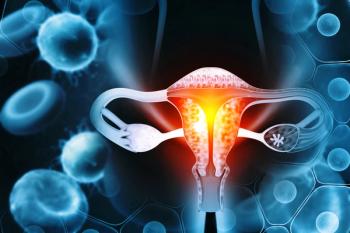
PinkDx announced an IJGC publication of data that demonstrated signals associated with endometrial cancer can be detected from a vaginal swab.
Among 2029 women in Scandinavian countries who were followed up for 14 years, vaccine effectiveness was 100%.


Clinicians are advised to discuss reproductive risks and fertility preservation options with all cancer patients prior to initiating therapy to maximize future reproductive potential.

Federal guidance now designates primary hrHPV testing every 5 years as the preferred cervical cancer screening method for most average-risk women aged 30 to 65 years and adds patient self-collection as an acceptable option.

New HRSA guidelines strengthen cervical cancer prevention by adding self-collected hrHPV testing and clarifying no-cost coverage for additional diagnostic services.

CBD and THC reduced ovarian cancer cell growth and migration in vitro, with strongest effects seen when the compounds were combined in equal ratios.

ACS updates cervical cancer screening guidance, adding HPV self-collection and clarifying criteria for safely discontinuing screening at older ages.

A review found that indocyanine green performs similarly to technetium-99m and blue dye in identifying vulvar cancer.

A study found greater consumption of ultra-processed foods significantly increases the risk of early-onset colorectal cancer precursors.

Black women at risk for endometrial cancer favor biopsy-first approaches when provided education, trust, and shared decision-making.

Women with a history of cervical cancer face nearly double the risk of anal cancer, highlighting the need for tailored screening guidelines.

Counties with persistently low cervical cancer screening rates have nearly double the rates of late-stage diagnoses and mortality, study finds.

A new study shows that a self-collected cervical cancer screening device is highly accurate, easy to use, and preferred over clinician collection.

A comparison of 4 ultrasound-based algorithms demonstrated strong performance, with nuanced implications for clinical practice, according to a new study presented at the 2025 ACOG ACSM.

A new study found that while cervical cancer risks remain low for women who meet screening exit criteria, they increase with age and time since last screening.
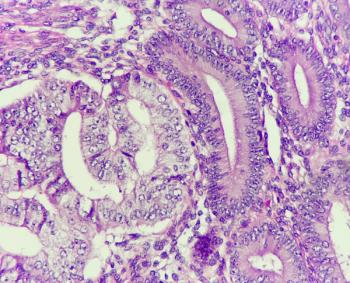
A new study highlights that sentinel lymph node mapping poses a low risk of lymphedema in women with low-grade endometrial cancer, supporting its use for accurate surgical staging.
A new study reveals that robotic-assisted laparoscopy surgery offers a slight overall survival advantage over conventional laparoscopy surgery for endometrial cancer patients.
Vvax001, a new HPV16 vaccine, offers a potential alternative to surgery for treating precancerous cervical lesions, with promising trial results.

Myriad Genetics' study shows online tools boost hereditary cancer testing rates, improving patient identification, education, and clinician confidence.

A novel ultrasound-based diagnostic algorithm with 98.1% sensitivity enables accurate stratification of patients with mesenchymal uterine malignancies, paving the way for personalized care.

A recent study highlights the growing adoption of less invasive and organ-preserving techniques in gynecologic oncology, with promising implications for patient care.
Advertisement
Advertisement
Trending on Contemporary OB/GYN
1
FDA grants priority review to elinzanetant for VMS in women receiving endocrine therapy for breast cancer
2
Q&A: Anita Nelson, MD, on etonogestrel implant's 5-year approval and REMS certification
3
Missed & Dismissed: The diagnostic gap starts in childhood
4
FAQ: How should clinicians manage histoplasmosis during pregnancy?
5