

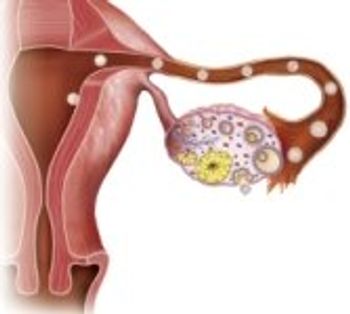
The GnRH agonist goserelin, when given during chemotherapy, may protect against ovarian failure and early menopause in women with breast cancer.

The GnRH agonist goserelin, when given during chemotherapy, may protect against ovarian failure and early menopause in women with breast cancer.
Hormone replacement therapy won't protect postmenopausal women against stroke or heart disease, but don't discount it for symptoms of menopause just yet.

Women with hot flashes related to menopause carry the burden of these symptoms, but new research highlights the economic toll if left untreated.

Women taking compounded bioidentical hormones for symptoms of menopause don't know as much as they should about the therapy.
A review of the latest research on the persistence of vasomotor symptoms, the link between hormone therapy and ovarian cancer risk, and the prevalence of substance use in pregnant adolescents.

New research shows hot flashes last longer than once thought, and when they begin can indicate how long hot flashes will linger.
Even brief use of hormone replacement therapy in menopause can increase risk of the 2 most common forms of ovarian cancer, a meta-analysis finds.

Women with higher levels of endocrine-disrupting chemicals from both environmental and household exposure have an earlier onset of menopause.
A study of a representative sample of US women shows a clinically significant association between early menopause and exposure to 15 different endocrine-disrupting chemicals.

Women who experience menopause before age 46 have an increased risk of heart disease, and smoking status can modifying this risk in older women.
Women with more severe vasomotor symptoms and night sweats may be at risk of having poorer bone health, according to a prospective observational study.
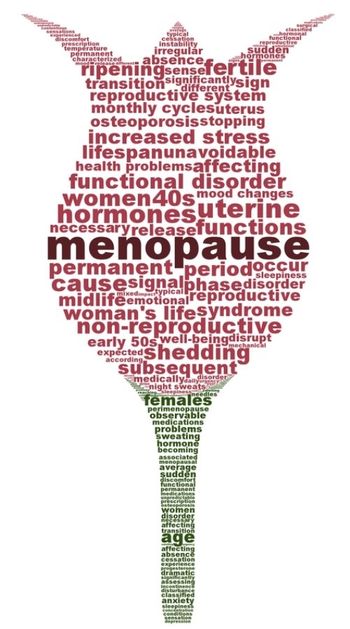
Vaginal estrogens are effective options for managing bothersome symptoms related to genitourinary syndrome of menopause in postmenopausal women.
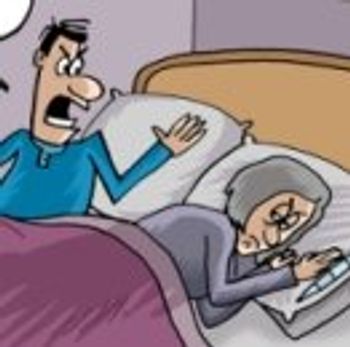
Cartoon: Changes in hormone levels aren't the only cause of sleep disturbances in menopausal and postmenopausal women.
Approved treatments of menopause-related symptoms can have narrow indications, but they may offer broader relief of the most bothersome menopause symptoms.

Paroxetine may be a reliable nonhormonal treatment option to help reduce vasomotor symptoms and improve sleep in postmenopausal women.

Go ahead and recommend exercise for overall health benefits, but don't advise patients that exercise can reduce hot flashes and night sweats during menopause.
Removal of the ovaries and fallopian tubes at the time of a hysterectomy doesn't increase the risk of pelvic organ prolapse, new research finds.

Two studies revealed that treatments for symptoms of menopause differed based on when physicians trained and perception of patient understanding.
Many women complain of changes in their cognitive function during the menopausal transition. Here's how to tell what's normal and what's not--and how to treat appropriately.
How much does ospemifene really help in the improvement of sexual function in postmenopausal women? David Portman, MD, discusses new study findings.

Mid-life changes: you never know what menopause may bring.

New research has found that certain troublesome lower urinary tract symptoms are significantly associated with other troubling characteristics.
Sheryl Kingsberg, PhD, professor of reproductive biology and psychiatry, explains how OB/GYNs can provide office-based sex therapy by telling patients these 5 things.
Many sexual desire problems in women can be addressed without a prescription, but OB/GYNs must first develop skills for frank discussions with patients about sex.
When evaluating vasomotor symptoms in menopause, including sleep-wake cycles, have you ever considered the utility of an activity tracker?