
In this first installment of a regular series, a doctor test-drives two surgical tools and finds them friendly and functional.
In this first installment of a regular series, a doctor test-drives two surgical tools and finds them friendly and functional.
The American College of Obstetricians and Gynecologists and the American Academy of Pediatrics have issued a joint statement on water births, the first for the increasingly popular practice.
In the first study looking at latent labor experiences among disadvantaged populations of women, researchers at Baylor University’s Louise Herrington School of Nursing and Parkland Health & Hospital System found that 41% of low-income women discharged from the hospital due to a diagnosis of false or early labor did not want to be sent home.
Although stroke is the number-3 cause of death in women, a recent study presented at the American Heart Association’s (AHA) Epidemiology and Prevention/Nutrition, Physical Activity, and Metabolism 2014 Scientific Sessions indicates that many US women are unfamiliar with the warning signs of a stroke.
Justices recently heard oral arguments in Sebelius v. Hobby Lobby Stores Inc. and Conestoga Wood Specialties Corp. v. Sebelius, in which the for-profit employers say they should be allowed to refuse to offer their workers no-cost contraceptive coverage-which is guaranteed by the Affordable Care Act (ACA)-based on the company owners’ religious beliefs.
The Physician Payment Sunshine Act was enacted as part of the Patient Protection and Affordable Care Act. Designed to increase the transparency of financial relationships in the healthcare industry, the Sunshine Act requires the collection and reporting of certain financial transactions to the Centers for Medicare and Medicaid Services (CMS).
The Centers for Medicare and Medicaid Services (CMS) has provided more details for hospitals and Eligible Professionals (EPs) who may qualify for the Meaningful Use Stage 2 (MU2) hardship exception for the 2015 reporting year.
Tdap vaccination is both safe and recommended for all pregnant women during every pregnancy, regardless of the timing of their last Tdap immunization.
The American College of Obstetricians and Gynecologists (ACOG) holds its Annual Clinical Meeting (ACM) in Chicago from April 26 to 30. Contemporary OB/GYN will be there-in person and on Facebook and Twitter-providing coverage of colloquia, clinical seminars, postgraduate courses, and more.
Miscarriage and stillbirth can occur in pregnant women with Haemophilus influenzae infection. Here, new data quantify the risk and reveal which bacteria type poses the most threat.
A first-of-its-kind report from the National Center for Health Statistics (NCHS) suggests that many teens and women in small towns or suburbs or who lack health insurance are receiving routine prenatal care from providers who are not ob/gyns.
According to a new study in the Annals of Epidemiology, high levels of vitamin D do not prevent hypertension in pregnancy. The report adds to the literature on vitamin intake and preeclampsia while contradicting some previous reports that have suggested a link between low maternal levels of the vitamin and the disorder.
According to a recent study in Human Reproduction, women who produce a low number of oocytes during in vitro fertilization (IVF) seem to have an increased risk of miscarriage.
New research reveals opportunities to improve care in women in latent labor and tips to keep them happier when you send them home.
New research expected this year will bring about significant changes to clinical practice. Here, society leaders share what’s on their radar for 2014.
The two widely used surgeries for apical prolapse work equally well for both apical prolapse and stress urinary incontinence two years postsurgery, research shows.
A history of gestational diabetes could be a risk factor for later heart disease, highlighting that reproductive complications may unmask future disease risk.
What research from the past year will have the most significant impact on women's health care? The leaders of five major ob/gyn societies weigh in.
In a unanimous vote, a Food and Drug Administration (FDA) advisory committee has recommended that the agency give premarket approval to a human papillomavirus (HPV) DNA test as first-line screening for cervical cancer.
According to a recent study in JAMA, neither the sacrospinous ligament fixation (SSLF) nor the uterosacral ligament vaginal vault suspension (ULS) procedure is superior to the other in the treatment of vaginal prolapse and stress urinary incontinence.
Women who develop gestational diabetes mellitus (GDM) may be at greater risk for developing early atherosclerosis during midlife, according to a new study in the Journal of the American Heart Association.

Respect but do not protect: How we treat colleagues affects patient care and how patients perceive us. Here are practical tips for navigating difficult professional moments.
A head-to-head comparison of salpingotomy and salpingectomy finds that removing the affected tube after an ectopic pregnancy doesn’t affect fertility as expected.
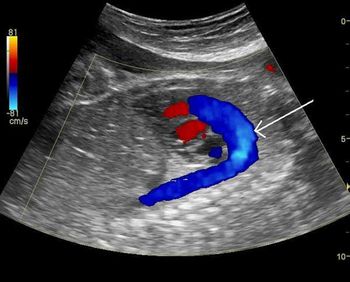
Challenge your diagnostic skills: Can you identify this structure in the fetal thorax?
One of my favorite features of Glass is its ability to connect to my online-based life. I use a number of Google products (Gmail, GCal, Google Drive, etc. ... ), but I don't use an Android phone. I use an iPhone, which is supported by Glass!
Physicians’ groups are urging ob/gyns to have difficult conversations with obese women about their weight. Here’s one example of how utter bluntness can be an effective tactic.
Exercise during pregnancy prevented excessive gestational weight gain, but the benefit of the intervention was not observed in the groups most at risk.
Women whose male partners have been exposed to three common environmental chemicals may have a harder time getting pregnant, according to the results of a prospective study published in Fertility & Sterility by researchers at the National Institutes of Health (NIH) and other institutions.
Expectant mothers with excessive gestational weight gain have a higher risk of delivering a large-for-gestational age (LGA) infant than those whose weight gain falls within standard guidelines, according to a recent study in Obstetrics & Gynecology.
According to a recent report from the NCHS Data Brief, out-of-hospital births, while still rare, are on the rise and at their highest level since 1975. If the number of out-of-hospital births continues to increase, changes to resource allocation, clinician training, and healthcare costs are expected.