
For many years I too had advised that the proper way to perform Kegel exercises was to activate those pelvic floor muscles that would allow the patient to stop and then start the urinary stream.
For many years I too had advised that the proper way to perform Kegel exercises was to activate those pelvic floor muscles that would allow the patient to stop and then start the urinary stream.
Sometimes it seems that the best science results come from keen observation rather than factual knowledge or experimentation. You remember the story of Jenner, don't you? He observed that milkmaids who contracted cowpox seemed not to become infected with smallpox.
Do pregnancy and childbirth affect bladder control? Yes. But don't panic. If you lose bladder control after childbirth, the problem often goes away by itself. Your muscles may just need time to recover.
Planning to start a family is an exciting time. Many women and their partners wonder if there is anything they can do to help make this both successful and safe. In fact there are many things that can be done to increase the chances of a healthy mother and baby.
In order to stimulate an adequate milk supply, newborns need to nurse a minimum of eight times, and optimally ten to twelve times or more during a twenty-four hour period.
You and your baby have been happily nursing for several months. You have overcome the common problems nursing couples have in the early weeks, such as sore nipples or engorgement, and things are progressing nicely.
Many babies switch forth effortlessly between breast and bottle from day one. Others become “nipple confused” if artificial nipples are introduced during the early days of nursing.
Candida (also called yeast, or thrush) is a fungus that occurs naturally in the mucous membranes and on the skin. Use of antibiotics promotes the overgrowth of yeast by killing off the ‘good’ bacteria that normally keep the yeast from multiplying too quickly.
Breast fullness is a normal part of lactation which nearly all women experience when their milk comes in 2 – 5 days after birth.
There may be times when, for a variety of reasons, nursing mothers need or want to leave their nursing baby with a caregiver. This may be a ‘once only’ event, or a regular daily arrangement.
Breastfeeding is the natural, physiologic way of feeding infants and young children milk, and human milk is the milk made specifically for human infants.
Breastfeeding is as good as combined contraceptive pills (about 2% failure rate) if all the following conditions apply (no exceptions):
Breastfeeding is the natural, physiologic way of feeding infants and young children milk, and human milk is the milk made specifically for human infants.
Severe engorgement about the third or fourth day after the baby is born can usually be prevented by getting the baby latched on well and drinking well from the very beginning. If you do become engorged, please understand that engorgement diminishes within 1 or 2 days even without any treatment.
Mastitis needs to be differentiated from a plugged or blocked duct, because the latter does not need to be treated with antibiotics, whereas mastitis often, but not always, does require treatment with antibiotics.
Because more and more women are now breastfeeding their babies, more and more are also finding that they enjoy breastfeeding enough to want to continue longer than the usual few months they initially thought they would do it.
Fluconazole (Diflucan™) is a synthetic antifungal agent which can be used for the treatment of a variety of Candida albicans infections. For the breastfeeding mother in particular, it can be used to treat recurrent Candida infections of the nipples, and, if such an thing exists, Candida infections of the milk ducts.
Domperidone (Motilium™) is a drug which has, as a side effect, the increased production of the hormone prolactin. Prolactin is the hormone which stimulates the cells in the mother's breast to produce milk.
All health professionals say they are supportive of breastfeeding. But many are supportive only when breastfeeding is going well, and some, not even then. As soon as breastfeeding, or anything in the life of the new mother is not perfect, too many advise weaning or supplementation.
This is not an information sheet on all the ins and outs of working outside the home and breastfeeding. This sheet provides information on how your baby can be fed when you are not with him.
Regular X-rays such as a chest X-ray or dental X-rays do not affect the milk or the baby and the mother may nurse without concern. Mammograms are harder to read when the mother is lactating, but can be done and the mother should not stop breastfeeding just to get this done.
Babies do not breastfeed on nipples, they breastfeed on the breast. Though it may be easier for a baby to latch on to a breast with a prominent nipple, it is not necessary for nipples to stick out.
The vast majority of women produce more than enough milk. Indeed, an overabundance of milk is common.
Breast milk is the only food your baby needs until at least 4 months of age and most babies do very well on breast milk alone for 6 months or more. There is no advantage to adding other sorts of foods or milks to breast milk before 4 to 6 months, except under unusual or extraordinary circumstances.
Over the years, many, many, many women have been wrongly told to stop breastfeeding. The decision about continuing breastfeeding when the mother must take a drug, for example, involves more than consideration of whether the medication appears in the mother's milk.
Finger feeding is a technique which allows you to feed the baby without giving the baby an artificial nipple. Finger feeding is also a method which helps train the baby to take the breast. If you want to breastfeed successfully, it is better to avoid the use of artificial nipples before your milk supply is well established.
Jaundice is due to a buildup in the blood of bilirubin, a yellow pigment which comes from the breakdown of old red blood cells.
Gentian violet (1% solution in water) is an excellent treatment for Candida albicans. Candida albicans is a yeast which may cause an infection of skin and/or mucous membranes in both children and adults.
Find out how your income, bonus structure, overhead, and work hours compare to that of your peers.
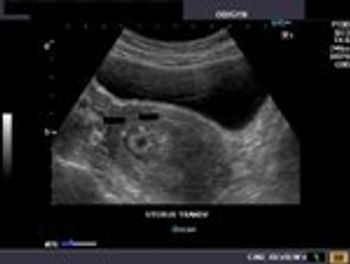
Test your ob/gyn knowledge in our DailyDx.