






As we were going to press with the July issue, the United States Supreme Court overturned Roe v Wade, eliminating the constitutional right to an abortion, and leaving the question of abortion rights to the states.
As we were going to press with the July issue, the United States Supreme Court overturned Roe v Wade, eliminating the constitutional right to an abortion, and leaving the question of abortion rights to the states.

How you can help patients during the current attack on their reproductive autonomy

A research letter in JAMA Health Forum found significant improvements in consistent postpartum coverage in the United States during the COVID-19 pandemic, driven by increases in consistent Medicaid and lower rates of Medicaid loss for postpartum mothers.

A study in JAMA found that pregnant women with chronic or gestational hypertension who self-monitored their blood pressure via telemonitoring failed to achieve improved blood pressure control compared to usual care of blood pressure measured by health care professionals at regular antenatal clinics.

Using National Inpatient Sample data from a nearly 2 decade period, investigators detail the increased risk of cardiovascular complications among women with PCOS during delivery hospitalizations and predictors of this increased risk.

This painful skin disease may lower the odds of live birth and trigger comorbidities.

Postpartum mothers at elevated cardiovascular risk significantly increased their physical activity throughout 12 weeks by engaging in a digital health intervention that used remote monitoring, gamification and social incentives, according to the results of a randomized clinical study published in JAMA Cardiology.

The disproportionate negative impact of sociopolitical stressors on Black women and Latinas in the United States exacerbates prenatal anxiety in these 2 groups, according to a review and recommendations published in the journal Frontiers in Psychiatry.

A research letter published in JAMA Network Open has found no difference in clinical outcomes for in vitro fertilization (IVF) via intracytoplasmic sperm injection (ICSI) between COVID-19 vaccinated and unvaccinated women of reproductive age.

Research from the Developing Brain Institute found maternal psychological distress during the COVID-19 pandemic had disrupted critical processes of fetal brain development.

Significant racial and ethnic disparities exist in the management of postdural puncture headache with an epidural blood patch among obstetric patients, according to a New York State study published in JAMA Network Open.

Local community needs for obstetric care trump financial viability and staffing challenges at rural hospitals, according to a national survey in JAMA Health Forum.
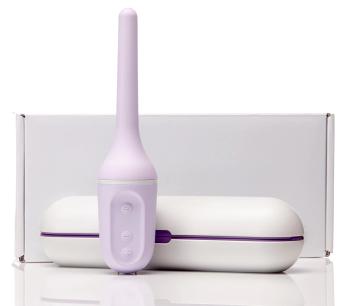
Tracy MacNeal, president and CEO of Materna Medical, sits down to discuss the company's recently FDA-cleared Milli Vaginal Dilator for vaginismus and associated dyspareunia, as well as a potential new use for the device currently being studied.

Investigators may have found a piece of the puzzle into what causes sudden infant death syndrome.

Intravenous immunoglobulin shows promise as a treatment option for pregnant patients with SARS-CoV-2, influenza, and other respiratory viruses.

Recommendations are often vague, contradictory, according to investigators.
Diagnosis, management imperative for gestational hypertension and preeclampsia.

Active immunization of pregnant women with investigational vaccine protected infants from RSV from birth through at least 6 months.

When helping patients in the hardest moments of their lives, it is important to have empathy for them—and for ourselves.

Catherine Cansino, MD; Andrea Braden, MD; and Lisa Foglia, MD, spoke on how Metrics, wellness models, and management change are essential to advancing diversity, equity, and inclusion (DEI) in obstetrics and gynecology at the 2022 ACOG Annual Clinical & Scientific Meeting.

In this EdTalk, presented at the 2022 American College of Obstetricians & Gynecologists' Annual Clinical & Scientific Meeting, Lisa Foglia, MD; Andrea L. Braden, MD; and Catherine Cansino, MD, MPH, discuss strategies for improving diversity and equity within obstetrics and gynecology.

The FDA recently issued a statement warning the public of the risks and potential false results obtained with noninvasive prenatal screening tests, noting that inappropriate usage and interpretation has resulted in improper medical decisions.

The use of labor neuraxial analgesia for vaginal delivery was associated with a 14% decrease in the risk of severe maternal morbidity (SMM), including postpartum hemorrhage (PPH), compared to vaginal delivery without neuraxial analgesia, according to a study published in JAMA Network Open.

A retrospective cohort study published in JAMA found that pregnant and postpartum women with SARS-CoV-2 infection were at a significantly increased risk of maternal mortality or serious morbidity from common obstetric complications.

An integrated model for prenatal care that incorporates both virtual and in-person visits has been well-received by patients and health care providers alike, according to a review in the Journal of Midwifery & Women’s Health.